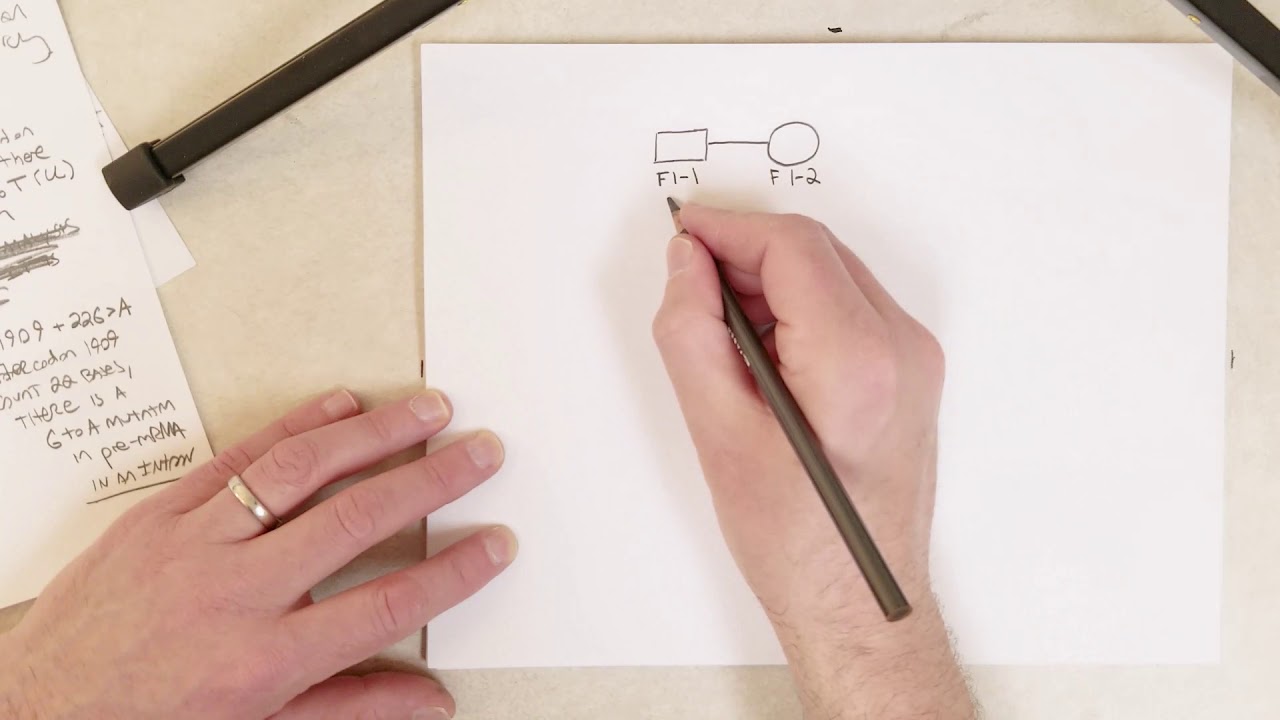
Genetics: L16-GA: Intron mutations, hereditary spastic paraplegia (Recommend 1.5x Speed)
Keywords
Summary
158 words
Critical Evaluation
Value of the Information & Strength of the Argument
The video provides valuable educational content by connecting fundamental concepts of splicing to a real clinical example. The argumentation is solid: the presenter uses a peer-reviewed study to illustrate the impact of an intronic mutation, and he carefully explains the molecular mechanism, including the shift in the splice site and the resulting frameshift. He also addresses potential counterpoints, such as why the mutant allele is not completely non-functional, by suggesting that splicing is sometimes correct. The reasoning is logical and well-structured, making it a useful teaching resource.
Scientific Rigor, Source Quality, Title Accuracy
The scientific rigor is generally high for an educational video. The presenter accurately describes the genetic concepts and cites a specific research paper (Guo et al., 2018) from the journal Brain. However, he does not provide the full citation details in the video, and the paper is not directly accessible from the description. The title accurately reflects the content, focusing on intron mutations and HSP. The video is a lecture, so it relies on the presenter’s interpretation of the paper, but he appears to represent the findings faithfully.
190 words
Title / Content Match
The title accurately reflects the content, which focuses on intron mutations and their link to hereditary spastic paraplegia.
Quality & Reliability
7/10
The video is an educational lecture that accurately explains the role of introns and uses a specific research paper (Guo et al., 2018) to illustrate the impact of an intronic mutation. The information is consistent with established molecular biology concepts, and the presenter clearly distinguishes between known facts and hypotheses. However, the video is a lecture, not a peer-reviewed source, and the presenter's informal style may lead to oversimplification.
Key Moments
Markers derived by PSI from the transcript: the creator did not define chapters.
- Introduction to introns and exons; questions about coding sequences.
- Discussion on the importance of intron sequences, including splice sites.
- Introduction to the paper on POLR3A mutations and HSP.
- Pedigree analysis showing compound heterozygosity for POLR3A mutations.
- Explanation of the intronic mutation c.1909+22G>A and its effect on splicing.
- Molecular mechanism: shift of 5' splice site, longer exon, frameshift.
- Connection to tRNA transcription and neurological symptoms.
- Conclusion and preview of next video on alternative splicing.
Cited Sources
- POLR3A variants in hereditary spastic paraplegia and ataxia — The presenter refers to this paper as the source of the example of intron mutation causing HSP.
Concurring Sources
- Molecular Biology of the Gene (textbook) — General molecular biology concepts align with the video's explanations.
Contribution & Novelties
The video provides a clear and accessible explanation of how intron mutations can affect gene function, using a specific clinical example. It bridges basic molecular biology concepts with a real disease, enhancing understanding of splicing regulation.
Pour aller plus loin :
- RNA splicing — Overview of splicing mechanisms.
- Hereditary spastic paraplegia — Clinical features and genetics.
- POLR3A gene — Gene information and associated disorders.
64 words
Radar Profile
The radar profile shows balanced scores across information quantity, quality, technical level, and reliability, indicating a well-rounded educational resource. The high quality and reliability scores reflect the use of a peer-reviewed source, while the moderate technical level makes it accessible to students.