Genetics: L19-A, Random versus Directed Mutations (Recommend 1.5x speed)
Keywords
Summary
148 words
Critical Evaluation
Value of the Information & Strength of the Argument
The video provides a solid explanation of the random versus directed mutation debate, using the Lederberg experiment as a key piece of evidence. The argumentation is logical and easy to follow, with clear diagrams and examples. The instructor effectively contrasts the two hypotheses and explains how the experimental design distinguishes between them. The value lies in its pedagogical clarity, making complex concepts accessible. However, it lacks depth in discussing alternative experiments or nuances, and does not cite primary sources directly.
Scientific Rigor, Source Quality, Title Accuracy
The scientific rigor is adequate for an introductory course. The content is accurate and aligns with established knowledge. The video does not cite specific sources, but the experiment described is well-known and correctly presented. The title accurately reflects the content. The correction note shows attention to accuracy. The lack of citations and limited depth prevent a higher score.
153 words
Title / Content Match
The title accurately reflects the content, which focuses on random versus directed mutations.
Quality & Reliability
7/10
The video provides a clear and accurate explanation of the random versus directed mutation debate, using the classic Lederberg replica plating experiment. The content is scientifically sound, but lacks depth and detailed citations. The correction note indicates attention to accuracy.
Key Moments
Markers derived by PSI from the transcript: the creator did not define chapters.
- Introduction to mutation terminology: directed, random, induced, spontaneous.
- Explanation of directed mutations using E. coli and T1 bacteriophage example.
- Explanation of random mutations and the competing hypothesis.
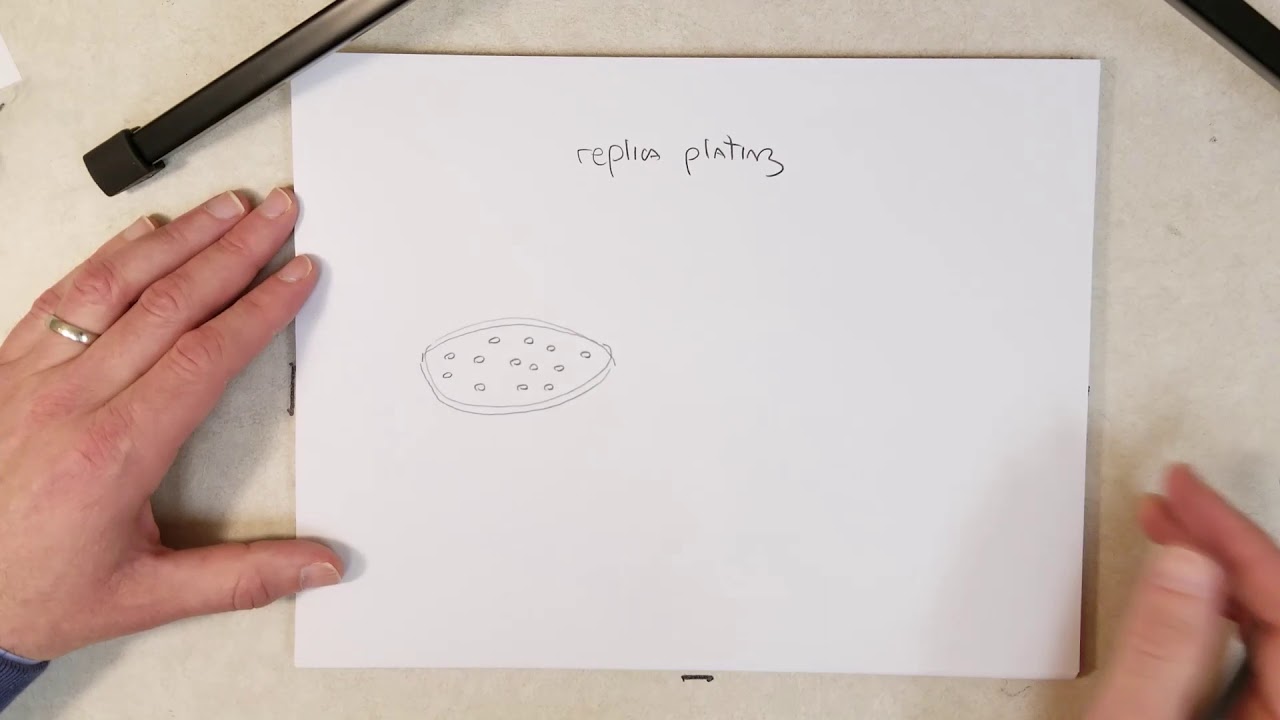
- Introduction to replica plating technique and its purpose.
- Description of the Lederberg experiment setup and procedure.
- Results of the experiment: resistant colonies at same positions on all plates.
- Interpretation: mutations occur randomly, not directed by environment.
- Mention of exceptions like somatic hypermutation in immune system.
- Conclusion and summary of the random versus directed mutation debate.
Contribution & Novelties
The video provides a clear pedagogical explanation of the random versus directed mutation debate, using the classic Lederberg replica plating experiment. It effectively distinguishes between related terms and presents the experimental evidence in an accessible manner. The main contribution is educational, clarifying a fundamental concept in genetics.
Pour aller plus loin :
- Replica plating — Wikipedia article on the technique.
- Lederberg, J. & Lederberg, E.M. (1952). Replica plating and indirect selection of bacterial mutants. — Original paper on replica plating.
- Somatic hypermutation — Wikipedia article on the directed mutation mechanism in immune system.
93 words
Radar Profile
The radar profile shows moderate scores across all dimensions, with slightly higher quality and reliability compared to quantity and technical level. This indicates a balanced but not deeply technical presentation, suitable for an introductory audience.