Genetics: L27-E, SNP Genotyping and GWAS (Recommend 1.5x Speed)
Keywords
Summary
210 words
Critical Evaluation
Value of the Information & Strength of the Argument
The video provides a valuable conceptual framework for understanding GWAS, which is a cornerstone of modern genetic research. It effectively explains why GWAS is necessary for complex traits and how the method works, using the Manhattan plot as a visual aid. The argumentation is logical and accessible, building from the problem of complex traits to the solution offered by GWAS. However, the presentation is somewhat superficial, lacking details on statistical methods, multiple testing correction, and potential pitfalls like population stratification. The instructor’s caveat that he has not personally conducted GWAS adds honesty but also limits the depth of practical insight. Overall, the information is accurate and well-structured, but it remains at an introductory level.
Scientific Rigor, Source Quality, Title Accuracy
The scientific rigor is moderate: the instructor provides a correct overview of GWAS concepts, but no specific sources are cited within the video. The description contains no links to external references. The title accurately reflects the content, which is a lecture segment on SNP genotyping and GWAS. The video is part of a university course, suggesting a certain level of academic oversight, but the lack of citations and the instructor’s admission of not being a GWAS practitioner reduce the overall source quality. The content aligns with established knowledge in genetics, but for a deeper understanding, viewers would need to consult textbooks or primary literature.
233 words
Title / Content Match
The title accurately reflects the content, which covers SNP genotyping and GWAS as part of a genetics lecture.
Quality & Reliability
7/10
The video provides a clear conceptual overview of GWAS methodology, but lacks depth in statistical details and does not cite specific studies or sources. The instructor acknowledges not having performed GWAS himself, which limits the practical expertise conveyed.
Key Moments
Markers derived by PSI from the transcript: the creator did not define chapters.
- Introduction to GWAS and complex traits
- Study design: collecting volunteers and genotyping SNPs
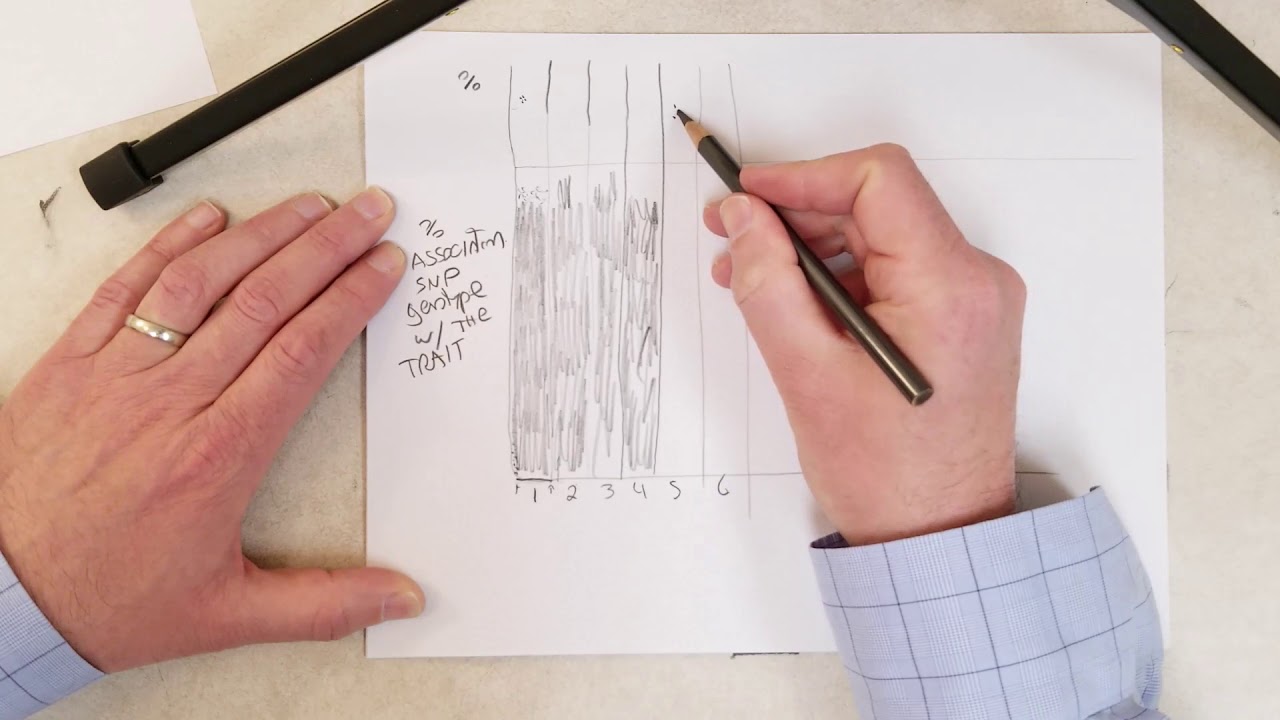
- Manhattan plot explanation: x-axis chromosomes, y-axis significance
- Interpreting peaks above significance line
- Using GWAS to identify genes for complex diseases
- Example of monogenic trait (albinism) in GWAS
- Future implications and conclusion
Contribution & Novelties
The video offers a clear, didactic introduction to GWAS, emphasizing the conceptual workflow and interpretation of Manhattan plots. It is particularly useful for students new to the topic, as it demystifies the process and highlights the utility of GWAS in studying complex traits. However, it does not present novel research or advanced insights, serving more as a pedagogical tool.
Pour aller plus loin :
- Genome-wide association study - Wikipedia — Provides a comprehensive overview of GWAS methodology, history, and applications.
- Manhattan plot - Wikipedia — Explains the visualization technique used in GWAS.
- The Wellcome Trust Case Control Consortium — A landmark GWAS study that identified genetic variants associated with common diseases.
111 words
Radar Profile
The radar profile shows moderate scores across all dimensions, with slightly higher quality and reliability scores compared to quantity and technical depth. This indicates a balanced but introductory-level educational content, suitable for beginners but not for advanced researchers.