Problem 4.17
Keywords
Summary
248 words
Critical Evaluation
Value of the Information & Strength of the Argument
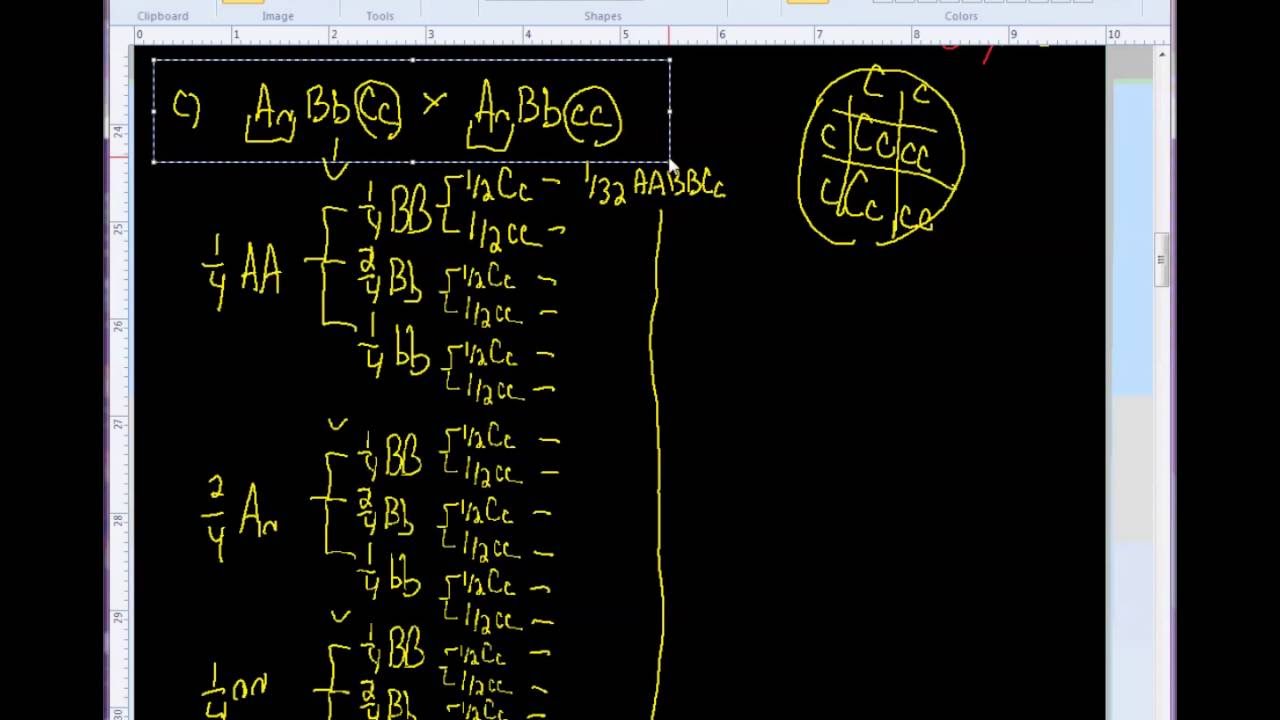
The video provides a step-by-step solution to a genetics problem, which is valuable for students learning about epistasis and phenotypic ratios. The instructor explains the reasoning behind each step, including the use of Punnett squares and the forked-line method, and emphasizes the shortcut of considering phenotypes directly. The argumentation is logical and clear, with the instructor correcting mistakes and re-evaluating calculations, which reinforces the learning process. However, the video does not provide any external sources or references, and the informal style may not be suitable for all audiences.
Scientific Rigor, Source Quality, Title Accuracy
The scientific rigor is adequate for a tutorial: the genetic principles are correctly applied, and the calculations are accurate. However, the video does not cite any sources, which limits its credibility as a standalone reference. The title ‘Problem 4.17’ is appropriate but not descriptive; it does not indicate the topic or the level of the content. The video is part of a course series, so it likely aligns with the course curriculum, but without additional context, the title alone is insufficient for a general audience.
188 words
Title / Content Match
The title 'Problem 4.17' is concise and directly indicates the specific problem being solved, which is appropriate for a tutorial series.
Quality & Reliability
7/10
The video is an instructional tutorial on solving a genetics problem involving epistasis. The content is accurate and follows standard genetic principles, but it lacks citations and references to external sources. The explanations are clear but somewhat informal.
Key Moments
Markers derived by PSI from the transcript: the creator did not define chapters.
- Introduction to the problem and explanation of coat color genetics in rats.
- Diagram of the genetic pathways for coat color and introduction of the C gene.
- Solving cross A: all offspring are gray.
- Solving cross B: all offspring are gray.
- Solving cross C using the forked-line method and calculating phenotypic ratios.
- Continuing cross C: determining phenotypes and summarizing the ratio.
- Solving cross D: ratio of 9 gray: 3 black: 4 albino.
- Briefly mentioning cross E and leaving it for the viewer to solve.
Contribution & Novelties
The video provides a clear, step-by-step tutorial on solving a genetics problem involving epistasis, which is a common but sometimes challenging topic. It demonstrates the use of Punnett squares and the forked-line method, and highlights a shortcut for calculating phenotypic ratios by focusing on phenotypes rather than genotypes. This approach can help students understand the underlying principles more intuitively.
Pour aller plus loin :
- Epistasis — Overview of epistasis and its types.
- Punnett square — Explanation of the Punnett square method.
- Forked-line method — Description of the forked-line method for calculating ratios.
92 words
Radar Profile
The radar profile shows a balanced performance across all dimensions, with slightly higher scores in quality of information and reliability, reflecting the accurate and clear explanations. The lower score in technical level indicates that the content is accessible to beginners, while the quantity of information is moderate, as the video focuses on a single problem.