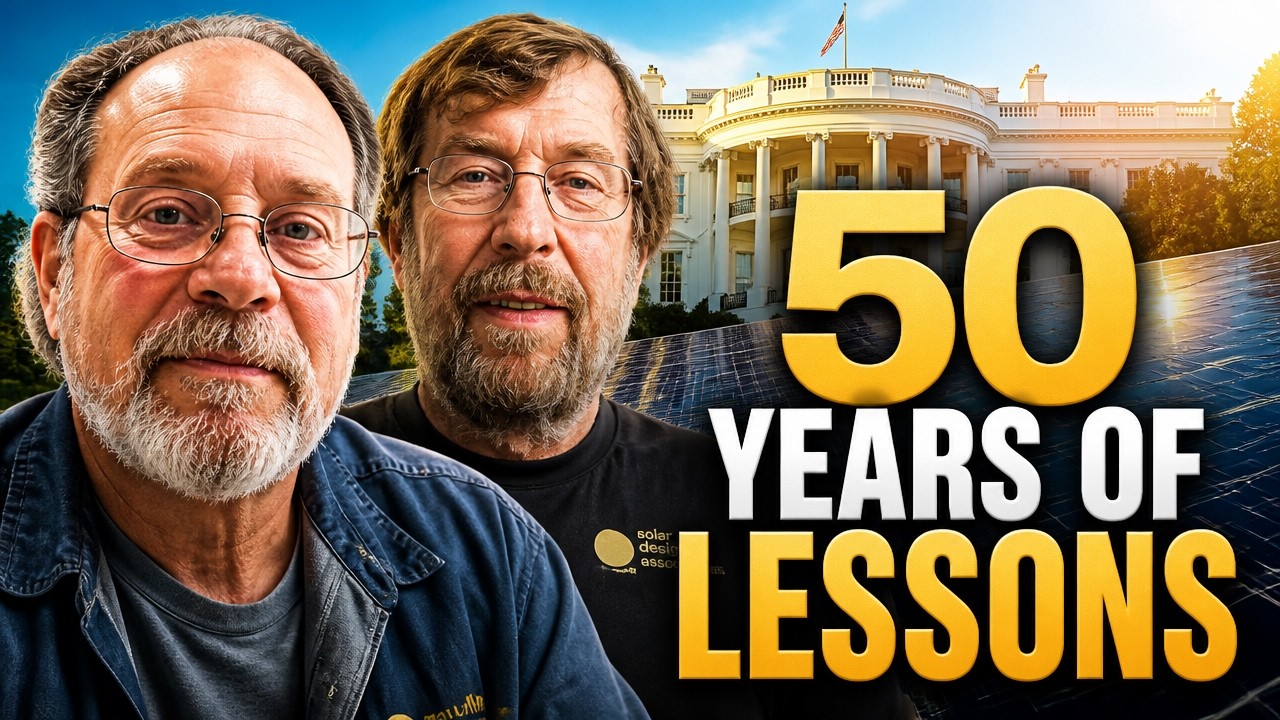
They Put Solar on the White House. Here's What They Learned
Keywords
Summary
176 words
Critical Evaluation
Value of the Information & Strength of the Argument
The video provides valuable insights from industry veterans with hands-on experience in solar projects, including unique historical perspectives like the White House installations and the first community solar garden. The argumentation is based on anecdotal evidence and professional experience rather than rigorous data, but the guests make compelling points about cost trends and the potential of battery storage. They effectively argue that solar and storage are becoming economically viable and that the industry is moving towards resilience and grid defection. However, the discussion lacks quantitative analysis and relies on general statements, which weakens the overall argumentation.
Scientific Rigor, Source Quality, Title Accuracy
The video does not cite specific scientific sources, but the guests reference their own projects and industry experience. The title accurately reflects the content, focusing on the White House solar installations and lessons learned. The discussion is scientifically plausible but not rigorously sourced; the guests make claims about cost declines and market trends without providing references. The video is more of an expert opinion piece than a research-based analysis, which limits its scientific rigor. The title is appropriate and not misleading.
192 words
Title / Content Match
The title accurately reflects the content, as the video discusses the White House solar installations and broader lessons from the company's history.
Quality & Reliability
7/10
The video features two experienced professionals from Solar Design Associates with decades of practical experience in solar and storage projects. They provide concrete examples and historical context, but the discussion is largely anecdotal and lacks rigorous data or citations. The claims about cost trends and market dynamics are plausible but not substantiated with specific sources.
Key Moments
Markers derived by PSI from the transcript: the creator did not define chapters.
- Introduction of guests Steven Strong and Haskell Werlin, and the company's history.
- Discussion of the White House solar installation during Carter administration.
- Story of the first community solar garden in Harvard, Massachusetts.
- Details on the Bullitt Center project and net-zero design challenges.
- Discussion on cost decline of solar and the rise of battery storage.
- Insights on policy, ITC, and the future of solar and storage.
- Closing remarks and advice on staying nimble in the industry.
Cited Sources
- Solar Design Associates — Company website of the guests, providing information about their projects and services.
- Clean Power Hour — Podcast website with additional content and resources.
- CPS America — Sponsor of the show, mentioned in the advertisement segments.
Concurring Sources
- Solar Energy Industries Association — Industry association that provides data and reports on solar market trends, supporting the cost decline claims.
External References
Contribution & Novelties
The video offers a unique historical perspective on the solar industry through the lens of a company that has been involved since the 1970s. It provides practical insights into project design, community solar, and the evolution of costs. The discussion on battery storage following a similar cost curve to solar is insightful, and the emphasis on resilience and microgrids is timely. The guests’ experience with high-profile projects adds credibility.
Pour aller plus loin :
- Community solar — Overview of community solar models and benefits.
- Net-zero energy building — Explanation of net-zero design principles.
- Virtual power plant — Concept of aggregating distributed energy resources.
- Investment Tax Credit (ITC) — Information on the federal solar tax credit.
115 words
Radar Profile
The radar profile shows strong scores in quantity and quality of information, reflecting the depth of experience shared. The technical level is moderate, suitable for a professional audience. Reliability is good but not excellent due to lack of citations. Overall, the video is informative and credible for industry professionals.
💬 No comments were provided for analysis.