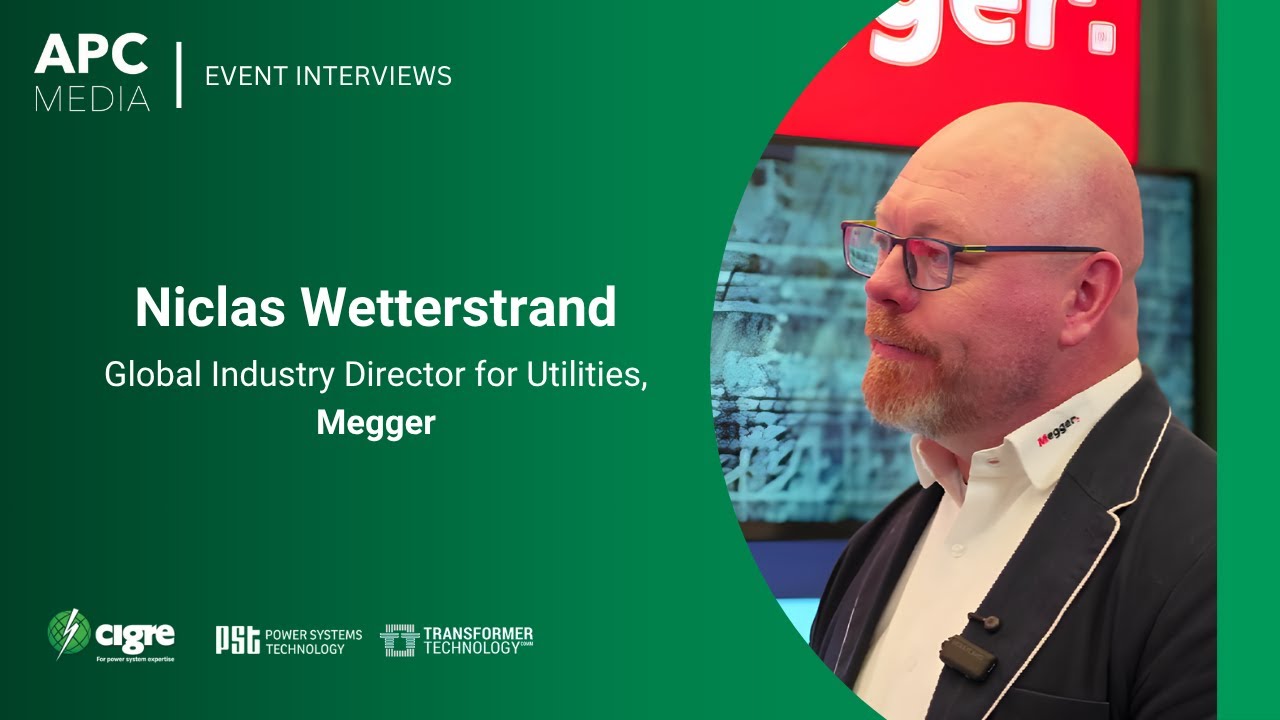
Measuring the Pulse of the Power Grid | Niclas Wetterstrand, Megger
Keywords
Summary
158 words
Critical Evaluation
Value of the Information & Strength of the Argument
The value of the information lies in the practical, industry-specific insights provided by an expert with over 30 years of experience. Wetterstrand’s explanations of online testing and low-power instrument transformers are clear and relevant, offering viewers a glimpse into current challenges and solutions in power grid maintenance. The argumentation is solid, based on professional experience and industry statistics, such as the 70% failure rate in operating mechanisms. However, the discussion is high-level and lacks detailed technical depth, making it more suitable for a general audience than for specialists.
Scientific Rigor, Source Quality, Title Accuracy
The scientific rigor is moderate; the content is based on expert opinion rather than peer-reviewed research. The sources cited are limited to company and event-related links, which are not academic references. The title accurately reflects the content, and the interview stays on topic. No public comments were provided for analysis.
153 words
Title / Content Match
The title accurately reflects the content, which focuses on measuring and monitoring power grid assets.
Quality & Reliability
7/10
The content is an expert interview with a senior industry professional, providing practical insights based on decades of experience. While not peer-reviewed, the information is grounded in established engineering practice and reflects current industry trends.
Key Moments
Markers derived by PSI from the transcript: the creator did not define chapters.
- Introduction by Ben Lans and Niclas Wetterstrand's background
- Discussion on Megger's products and challenges in grid maintenance
- Explanation of online testing for circuit breakers
- Innovations in low-power instrument transformers and testing challenges
- Future challenges: energy transition, electrification, and need for talent
- Extending asset life and avoiding unplanned outages
- Observations from CIGRE 2025 and closing remarks
Cited Sources
- Power Systems Technology LinkedIn — Company page for updates and behind-the-scenes content
- Transformer Technology LinkedIn — Company page for transformer-related content
- Women in Power Systems LinkedIn — Company page for women in power systems
- Power Systems Technology Website — Main website for resources and offerings
- Newsletter Subscription — Subscribe for exclusive content and updates
Concurring Sources
- CIGRE — International organization for electric power systems, aligns with the conference mentioned.
Contribution & Novelties
The interview provides a concise overview of current testing and monitoring practices in the power industry, with a focus on online testing and low-power instrument transformers. It offers practical insights from an industry expert, highlighting the importance of condition monitoring in grid reliability. While not groundbreaking, it serves as a useful update for professionals and interested laypersons.
Pour aller plus loin :
- CIGRE — International council on large electric systems, relevant for grid technology discussions.
- IEC 61850 — Standard for communication in substations, related to relay testing.
- Rogowski coil — Principle behind low-power instrument transformers.
95 words
Radar Profile
The radar profile shows moderate scores across all dimensions, indicating a balanced but not highly technical or detailed content. The highest score is in reliability, reflecting the expert's credibility, while quantity and technical level are moderate, suitable for a general audience.