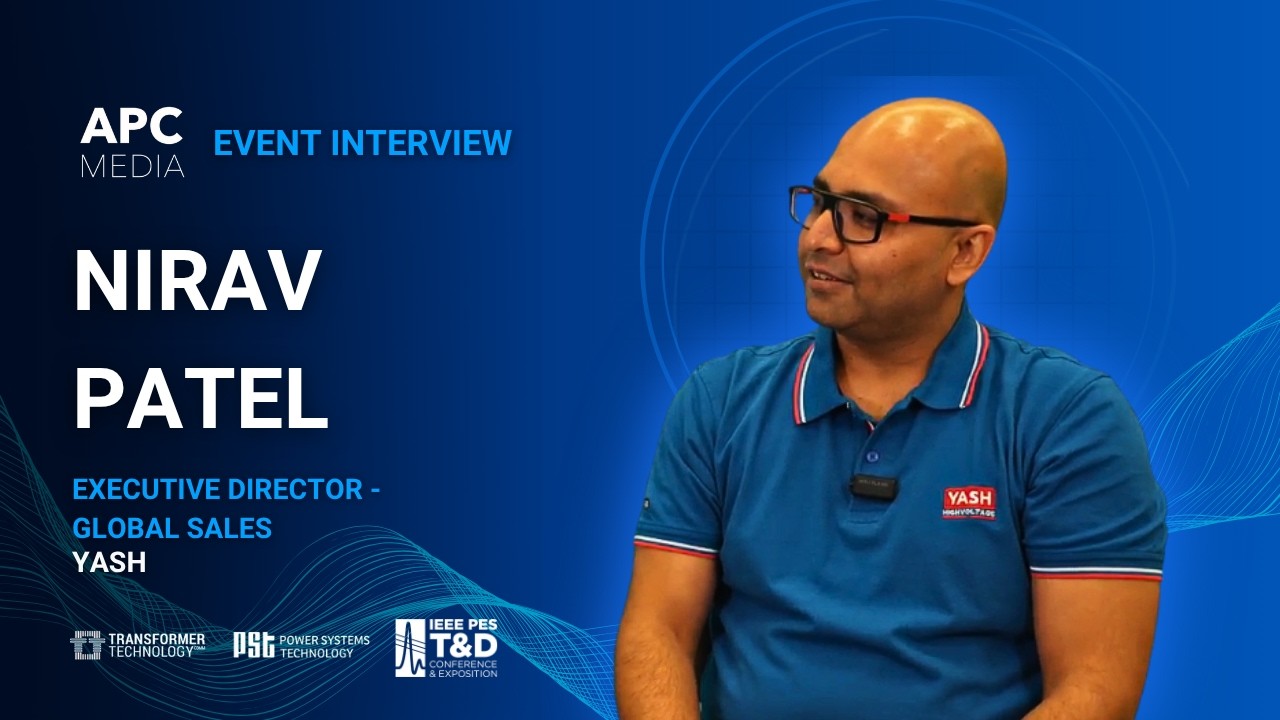
Balancing Reliability, Capacity, and Supply Chain in Today’s Transformer Market | Nirav Patel, YASH
Keywords
Summary
216 words
Critical Evaluation
Value of the Information & Strength of the Argument
The video provides valuable insights into the transformer bushing market, particularly the technological evolution and the factors driving the shift to dry bushings. Patel’s argumentation is coherent, supported by industry statistics (e.g., 52% failure rate, $3.6 trillion grid value) and his extensive experience. He effectively explains the technical and commercial considerations in bushing selection, and the discussion on supply chain constraints is relevant and timely. However, as a company representative, there is an inherent promotional aspect, and the arguments are not independently verified.
Scientific Rigor, Source Quality, Title Accuracy
The video is an expert interview, not a scientific study, so the rigor is limited by the lack of cited sources. The information is based on Patel’s professional experience and industry knowledge, which lends credibility but is not peer-reviewed. The title accurately reflects the content, focusing on reliability, capacity, and supply chain. The description provides links to the company’s website and LinkedIn pages, but no specific technical references are cited. The content is consistent with industry trends, but viewers should seek additional sources for verification.
183 words
Title / Content Match
The title accurately reflects the content, which discusses reliability, capacity expansion, and supply chain issues in the transformer market.
Quality & Reliability
7/10
The video features an industry expert with 20 years of experience, providing credible insights into transformer bushing technology and market trends. However, it is an interview with a company representative, so there is a potential commercial bias. The content is not peer-reviewed and relies on anecdotal evidence and industry statistics.
Chapters
- Introduction — IEEE PES T&D 2026
- Nirav Patel: Penn State, 20 Years in Transmission & YASH
- The Big Grid Trends: Renewables, Data Centers & Urbanization
- The $3.6 Trillion Grid — and Why 1% Isn't Enough
- YASH: Products, EHV Bushings & Nirav's Role
- Bushing Evolution: Oil → RBP → OIP → Dry/RIP Bushings
- Why Utilities Are Moving to Dry Bushings
- 52% of Transformer Failures Start with the Bushing
- Porcelain Shortage & Its Impact on Bushing Supply Chain
- YASH Doubles Capacity: New Greenfield Factory for Dry Bushings
- Sustainability: Solar, Rainwater Harvesting & EV Infrastructure
- YASH's Competitive Advantage: Independent, Agile & Retrofit-Ready
- Long-Term Forecasting, Frame Contracts & Supply Chain Collaboration
Cited Sources
- Power Systems Technology — Official website of the media outlet hosting the interview.
- Power Systems Technology Newsletter — Subscription page for newsletter, mentioned in the description.
- Power Systems Technology LinkedIn — LinkedIn page for the media outlet.
- Transformer Technology LinkedIn — LinkedIn page for Transformer Technology, a related publication.
- Women in Power Systems LinkedIn — LinkedIn page for Women in Power Systems, a related community.
Concurring Sources
- IEEE PES — The interview took place at an IEEE PES event, and the organization is a key source for industry standards.
Contribution & Novelties
The video offers a practitioner’s perspective on the transformer bushing market, highlighting the shift to dry bushings and the supply chain challenges. It provides specific insights into YASH’s capacity expansion and sustainability efforts, which may be of interest to industry professionals. However, the content is largely promotional and does not present novel research or data.
Pour aller plus loin :
- Transformer bushing — Overview of transformer bushings, including types and functions.
- Resin impregnated paper — Explanation of RIP technology used in dry bushings.
- IEEE PES — Official site of IEEE Power & Energy Society, relevant for industry standards and conferences.
100 words
Radar Profile
The radar profile shows moderate to high scores across all dimensions, with the lowest being technical depth (6) and the highest being information quantity and reliability (7 each). This indicates a balanced but not deeply technical presentation, suitable for a general industry audience.