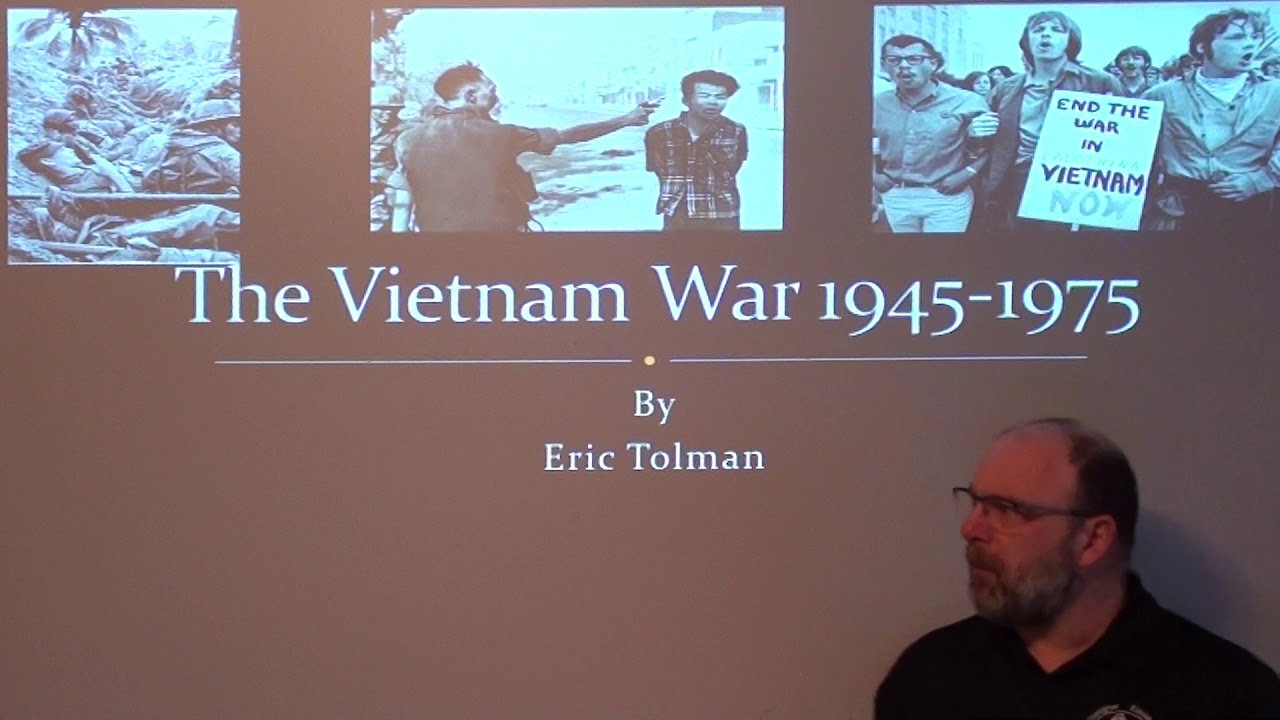
The Vietnam War - Lecture by Eric Tolman
Keywords
Summary
153 words
Critical Evaluation
Value of the Information & Strength of the Argument
The lecture offers valuable insights into the Vietnamese perspective, emphasizing nationalism as the primary driver of the Viet Minh’s struggle, with communism as a secondary ideology. Tolman argues that the American involvement was based on a flawed understanding of the situation, leading to tragic consequences. He supports his arguments with historical examples, such as Ho Chi Minh’s initial admiration for the US and the missed opportunity for a different relationship. The argumentation is coherent and balanced, acknowledging both the American and Vietnamese viewpoints. However, the lecture is more of a narrative overview than a rigorous analytical piece, with limited engagement with historiographical debates.
Scientific Rigor, Source Quality, Title Accuracy
The lecture demonstrates a reasonable level of scientific rigor for a general audience. Tolman references Stanley Karnow’s ‘Vietnam: A History’ as a key source, which is a well-regarded and objective account. He also mentions primary sources like Ho Chi Minh’s speeches and the Geneva Accords. However, he does not provide specific citations or a bibliography, and some details are presented from memory, which may introduce inaccuracies. The title accurately reflects the content, and the lecture is well-structured. The presenter’s Canadian perspective adds a layer of objectivity, but it is not explicitly stated how this influences the narrative.
215 words
Title / Content Match
The title accurately reflects the content: a comprehensive lecture on the Vietnam War.
Quality & Reliability
7/10
The lecture provides a broad historical overview with personal anecdotes and references to a well-regarded book (Stanley Karnow's Vietnam). It is educational but lacks detailed citations and primary sources, and the presenter's perspective is acknowledged as Canadian.
Key Moments
Markers derived by PSI from the transcript: the creator did not define chapters.
- Introduction to the lecture and the Vietnam War's contentious legacy.
- Overview of Vietnam's history of resisting foreign invaders, including Chinese and French.
- Discussion of Ho Chi Minh's early life, his time in Paris, and his inspiration from Woodrow Wilson.
- Explanation of the French Indochina War and the Battle of Dien Bien Phu.
- The Geneva Accords and the temporary division of Vietnam at the 17th parallel.
- American involvement and the fear of democratic elections bringing Ho Chi Minh to power.
- Impact of the war on American society, including civil rights and anti-war movements.
- Conclusion and reflections on the war's legacy and the importance of multiple perspectives.
Cited Sources
- Vietnam: A History — Recommended by the lecturer as a well-written and objective history of the Vietnam War.
Concurring Sources
- Vietnam: A History — The lecturer's main reference, which aligns with the narrative presented.
Contribution & Novelties
The lecture provides a comprehensive and accessible overview of the Vietnam War, emphasizing the Vietnamese perspective and the role of nationalism. It highlights the missed opportunity for a different US-Vietnam relationship, as Ho Chi Minh initially admired the US. The lecture also connects the Vietnam War to broader social movements in the US.
Pour aller plus loin :
- Vietnam War - Wikipedia — For a comprehensive overview and further references.
- Ho Chi Minh - Wikipedia — Detailed biography of the key figure.
- Geneva Accords - Wikipedia — Context on the 1954 agreements.
92 words
Radar Profile
The radar profile shows high scores in quantity and quality of information, with moderate technical level and reliability. This indicates a well-rounded lecture that is informative and reliable for a general audience, but not deeply technical or heavily cited.