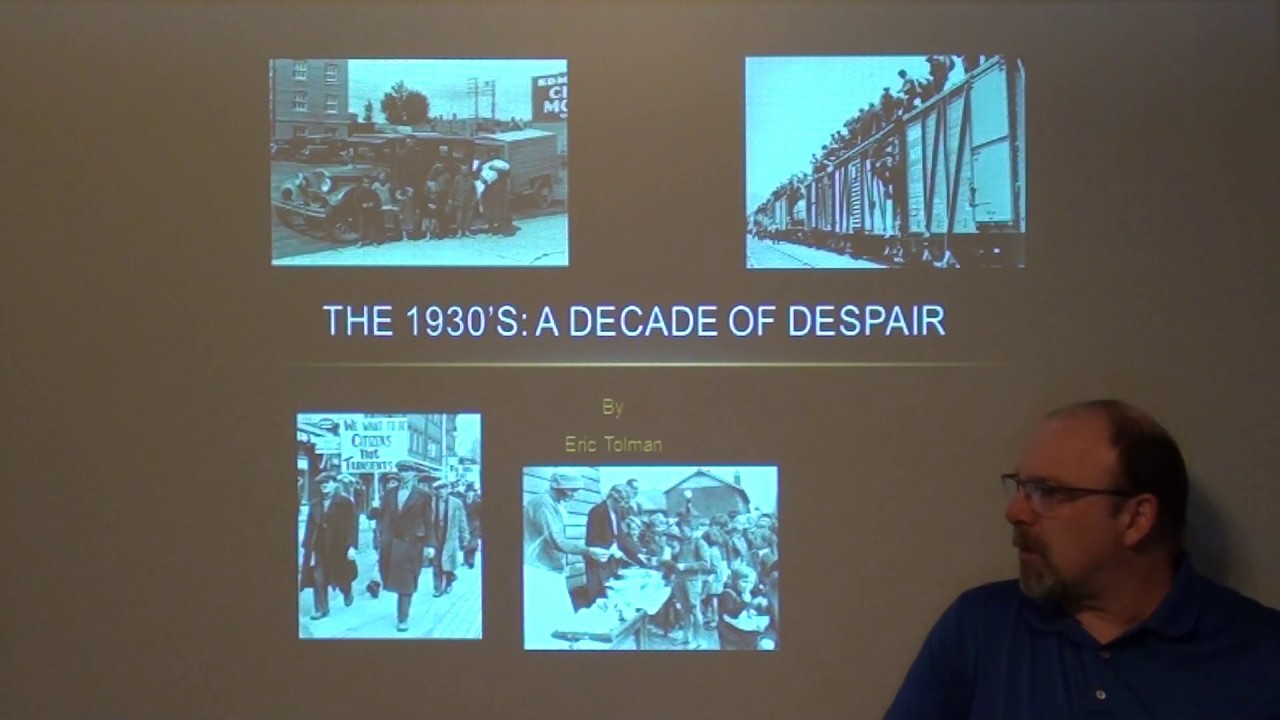
Canada in the 1930s - Lecture by Eric Tolman
Keywords
Summary
136 words
Critical Evaluation
Value of the Information & Strength of the Argument
The lecture offers a valuable synthesis of key events and themes of the Great Depression in Canada, making it accessible to a general audience. The argumentation is generally sound, presenting a clear narrative of cause and effect. However, it sometimes oversimplifies complex historical processes, such as the causes of the depression, and does not engage with alternative interpretations. The inclusion of specific examples, like the On-to-Ottawa Trek and the Regina Riot, adds concreteness, but the lack of citations weakens the overall argumentative rigor.
Scientific Rigor, Source Quality, Title Accuracy
The lecture demonstrates a reasonable level of scientific rigor, with accurate historical facts and a coherent structure. However, it does not explicitly cite sources, which limits its scholarly value. The title accurately reflects the content, and the lecture stays on topic throughout. The absence of a bibliography or references to primary sources is a notable weakness for a scientific evaluation.
158 words
Title / Content Match
The title accurately reflects the content, which is a focused lecture on Canada during the 1930s.
Quality & Reliability
7/10
The lecture provides a coherent overview of the Great Depression in Canada, with specific examples and references to key events and figures. However, it lacks explicit citations to primary sources or academic literature, and the narrative is presented from a single perspective without engaging with historiographical debates.
Key Moments
Markers derived by PSI from the transcript: the creator did not define chapters.
- Introduction to the lecture and comparison of 1920s optimism with 1930s hardship.
- Discussion of causes of the Great Depression, including overproduction and protectionism.
- Impact on Canada: unemployment, Dust Bowl, and effects on marginalized groups.
- Mackenzie King's response and the 1930 election.
- R.B. Bennett's policies, including work camps and the ban on the Communist Party.
- The On-to-Ottawa Trek and the Regina Riot.
- Rise of alternative parties: CCF and Social Credit.
- Vancouver sit-ins and suppression of labor movements.
Cited Sources
- Canada in the 1920s - Lecture by Eric Tolman — Referenced as a prerequisite for understanding the causes of the Great Depression.
- The Rise of Dictatorships - Lecture by Eric Tolman — Mentioned as a follow-up lecture on the causes of World War II.
- Canada in the Second World War - Two-part series — Recommended for further study on Canada's involvement in WWII.
Concurring Sources
- The Canadian Encyclopedia - Great Depression — Provides factual information consistent with the lecture's narrative.
Contribution & Novelties
The lecture provides a concise and engaging overview of Canada during the 1930s, synthesizing key events and political responses. Its novelty lies in its accessible narrative style, making it suitable for educational purposes. However, it does not present new research or original insights.
Pour aller plus loin :
- Great Depression in Canada — Comprehensive article on the topic.
- On-to-Ottawa Trek — Detailed account of the protest.
- Social Credit Party — Overview of the party’s history and ideology.
77 words
Radar Profile
The radar profile shows a balanced distribution across information quantity, quality, and technical level, with a slightly lower score for global reliability due to the lack of explicit citations. This suggests a lecture that is informative and accessible but not deeply rigorous in its sourcing.
💬 No comments were provided for analysis.