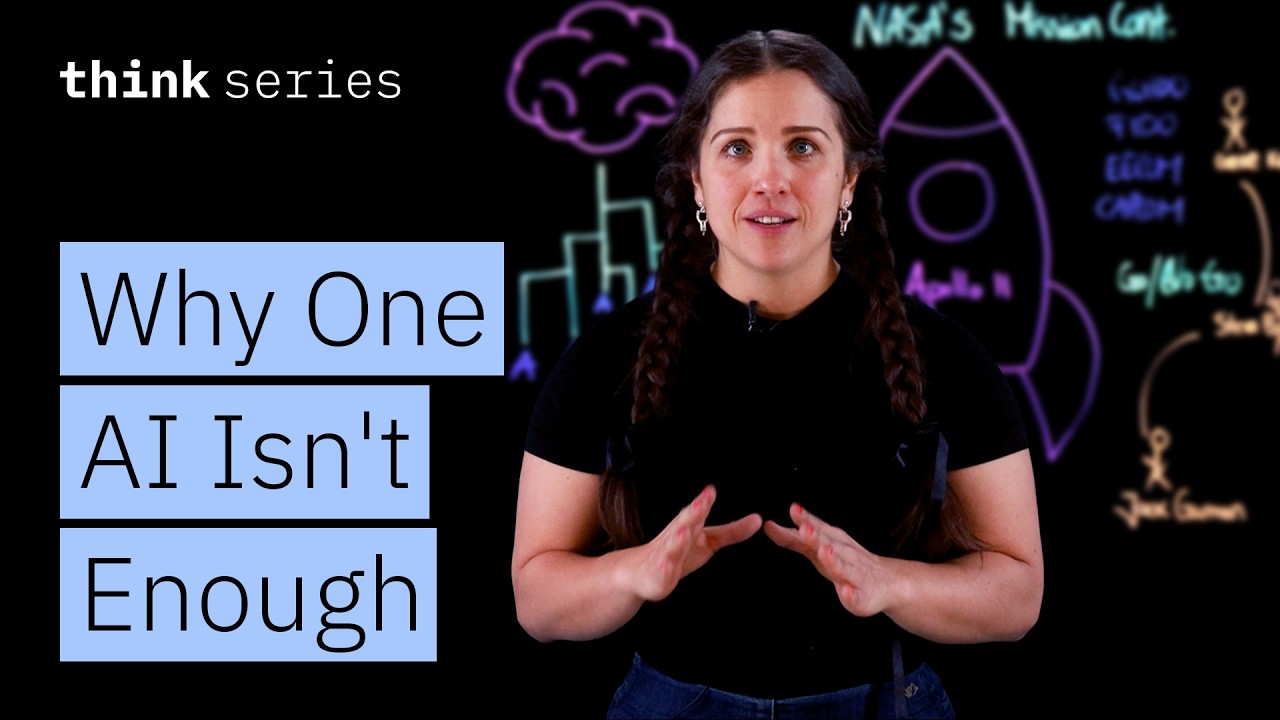
Multi AI Agent Systems: When One AI Brain Isn’t Enough
Keywords
Summary
126 words
Critical Evaluation
The video provides a compelling and accessible introduction to multi-agent AI systems, effectively using the Apollo 11 analogy to illustrate the value of verification and redundancy. The argument is well-structured: it identifies a real problem (AI hallucinations), draws parallels with established human practices (second opinions, four-eyes principle), and proposes a concrete solution (generator-verifier-adversary architecture). The use of the Apollo 11 story is particularly effective, as it is both historically accurate and directly relevant to the concept of multi-agent decision-making. The presenter’s communication style is clear and engaging, making complex ideas understandable without oversimplifying. However, the video lacks technical depth. It does not delve into the specifics of how multi-agent systems are implemented, such as the underlying algorithms, communication protocols, or potential challenges like coordination overhead. It also does not cite any specific research papers or industry case studies, which limits its scientific credibility. The claims about the effectiveness of multi-agent systems are plausible but not backed by empirical evidence. The video is more of an opinion piece or a high-level overview than a rigorous scientific analysis. The adéquation between title and content is strong, as the title accurately reflects the focus on multi-agent systems. The video does not mention any specific sources, but the description includes links to IBM resources, which are relevant. Overall, the video is valuable for raising awareness and providing a conceptual framework, but it would benefit from more technical details and references to support its claims.
240 words
Title / Content Match
The title accurately reflects the content, which focuses on the limitations of single AI agents and the benefits of multi-agent systems for improving trust and reliability.
Quality & Reliability
7/10
The video provides a clear and engaging explanation of multi-agent systems, using the Apollo 11 analogy effectively. It correctly identifies the hallucination problem in LLMs and proposes a practical architecture (generator, verifier, adversary) inspired by real-world verification processes. However, it lacks technical depth and does not cite specific research or sources, limiting its scientific rigor.
Key Moments
Markers derived by PSI from the transcript: the creator did not define chapters.
- Introduction: The problem of confident but wrong AI agents.
- Explanation of hallucination problem and lack of uncertainty in LLMs.
- Analogy to human verification systems: second opinions, four-eyes principle, co-pilots.
- Apollo 11 mission control as an example of a multi-agent system.
- Proposed multi-agent architecture: generator, verifier, adversary.
- When to use single vs. multi-agent systems; conclusion.
Cited Sources
- Learn more about Multi-Agent Systems — Provided in the video description as a resource for further learning.
- IBM AI Newsletter — Monthly newsletter for AI updates from IBM, mentioned in the description.
Concurring Sources
- Multi-agent system — General concept of multi-agent systems, supporting the video's premise.
- AI hallucination — Explains the hallucination problem, which the video addresses.
Contribution & Novelties
The video offers a fresh perspective on AI trust by framing multi-agent systems as a modern application of long-standing verification principles. It provides a clear, memorable analogy (Apollo 11) and a simple architecture (generator-verifier-adversary) that is accessible to a broad audience. The emphasis on ’earned confidence’ rather than consensus is a valuable conceptual contribution.
Pour aller plus loin :
- Multi-agent system — Provides a broader academic overview of multi-agent systems.
- AI hallucination — Explains the phenomenon of AI hallucinations in detail.
- Red team (AI) — Discusses the concept of adversarial testing in AI, relevant to the adversary agent.
98 words
Radar Profile
The radar profile shows high scores in information quantity and quality, reflecting the video's clear and informative content. The technical level is moderate, indicating accessibility to a general audience. Overall reliability is good, though the lack of cited sources prevents a higher score.
💬 Très positif. Sur les 30 commentaires analysés, les spectateurs expriment une forte appréciation, saluant la clarté de l'explication et l'analogie avec Apollo 11, avec quelques demandes de contenu plus technique.