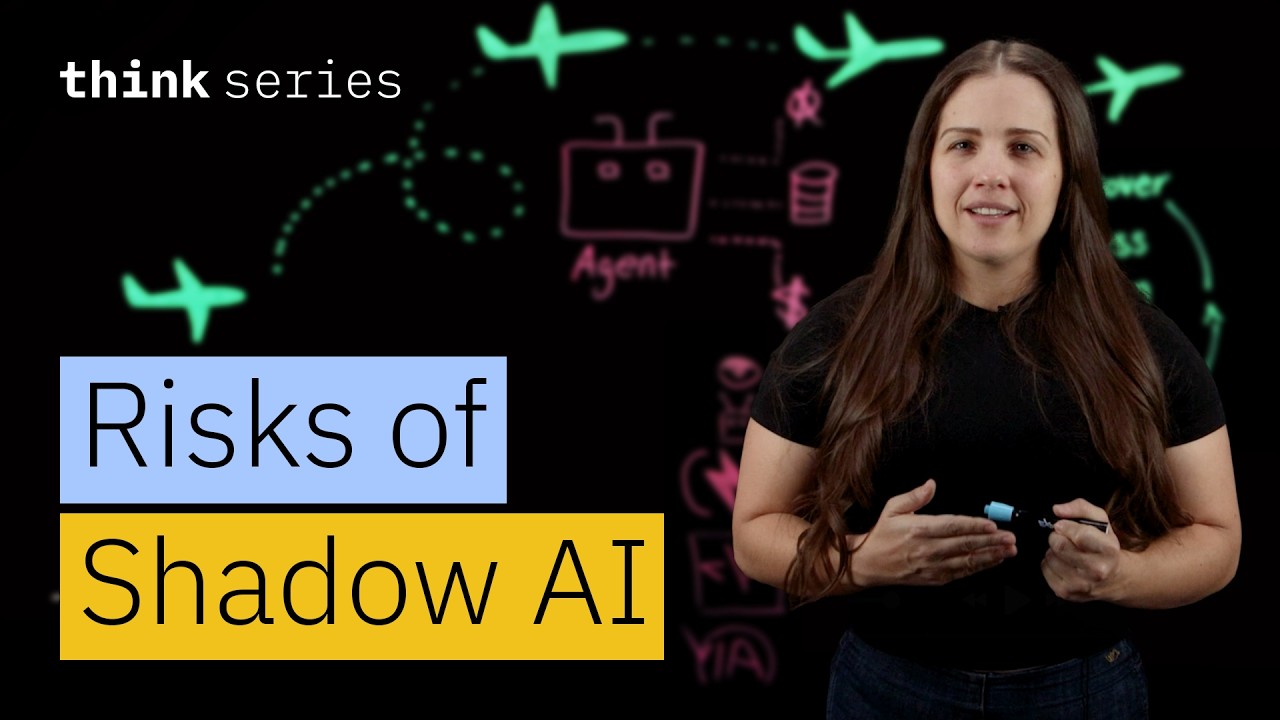
Agentic AI Meets Shadow AI: Zero Trust Security for AI Automation
Keywords
Summary
134 words
Critical Evaluation
The video provides a high-level, practitioner-oriented overview of security and governance for agentic AI, focusing on the intersection with shadow AI. The presenter, Bri Kopecki, articulates the concepts clearly, using analogies and concrete examples to make the material accessible. The argumentation is coherent: it identifies the core risks (visibility, data leakage, compliance, over-permission, incident response) and proposes a structured approach (discover, assess, govern, secure, audit) that aligns with zero trust principles. The two use cases (healthcare and public sector) effectively illustrate how the framework applies in practice, emphasizing human-in-the-loop, least privilege, and audit trails. However, the video lacks depth in technical specifics; it does not delve into implementation details, such as specific tools or protocols, nor does it cite external sources or empirical evidence. The content is largely based on IBM’s perspective, which may introduce bias. The adéquation titre/contenu is strong, as the title accurately reflects the focus. The video’s strength lies in its clarity and practical guidance, but it would benefit from more rigorous sourcing and technical depth. Overall, it serves as a useful introduction for professionals seeking to understand and address AI security challenges, but it is not a comprehensive technical reference.
194 words
Title / Content Match
The title accurately reflects the content, focusing on the intersection of agentic AI and shadow AI within a zero trust security framework.
Quality & Reliability
8/10
The video provides a clear, structured overview of security and governance challenges in agentic AI, with practical examples and a coherent framework. It is based on IBM's expertise and references IBM resources, but lacks detailed citations or empirical data, limiting its depth.
Key Moments
Markers derived by PSI from the transcript: the creator did not define chapters.
- Introduction to agentic AI and the risk of shadow AI.
- Definition of shadow AI and why it matters.
- Overview of the unified control plane: discover, assess, govern, secure, audit.
- Healthcare use case: AI agent assisting clinicians with guardrails.
- Public sector use case: AI agent for citizen services with consent and least privilege.
- Conclusion: integrating security and governance for safe AI automation.
Cited Sources
- IBM Cloud Pak for Data Certification — Mentioned as a certification opportunity for architects.
- Learn more about Shadow AI — Referenced for further information on Shadow AI.
- IBM AI Newsletter — Sign-up for monthly AI updates from IBM.
Concurring Sources
- IBM Shadow AI Resource — IBM's own resource on shadow AI, aligning with the video's content.
Contribution & Novelties
The video provides a clear, actionable framework for integrating security and governance in agentic AI environments, emphasizing the need to address shadow AI. It offers practical guidance through use cases, highlighting the importance of least privilege, red teaming, and auditability. The contribution is primarily educational, synthesizing existing concepts into a coherent approach.
Pour aller plus loin :
- Zero Trust Architecture — Foundational concept for the security model discussed.
- OWASP Top 10 for Large Language Model Applications — Relevant for understanding risks like prompt injection.
- NIST AI Risk Management Framework — Provides a broader governance framework for AI.
97 words
Radar Profile
The radar profile shows balanced scores across information quantity, quality, technical level, and reliability, with a slight emphasis on quality and reliability. This indicates a well-rounded presentation that is informative and trustworthy, though not extremely technical.
💬 Positive. Sur les 30 commentaires analysés, les téléspectateurs expriment une appréciation générale, soulignant la clarté des explications et la pertinence des exemples, avec quelques questions techniques sur les défenses recommandées.