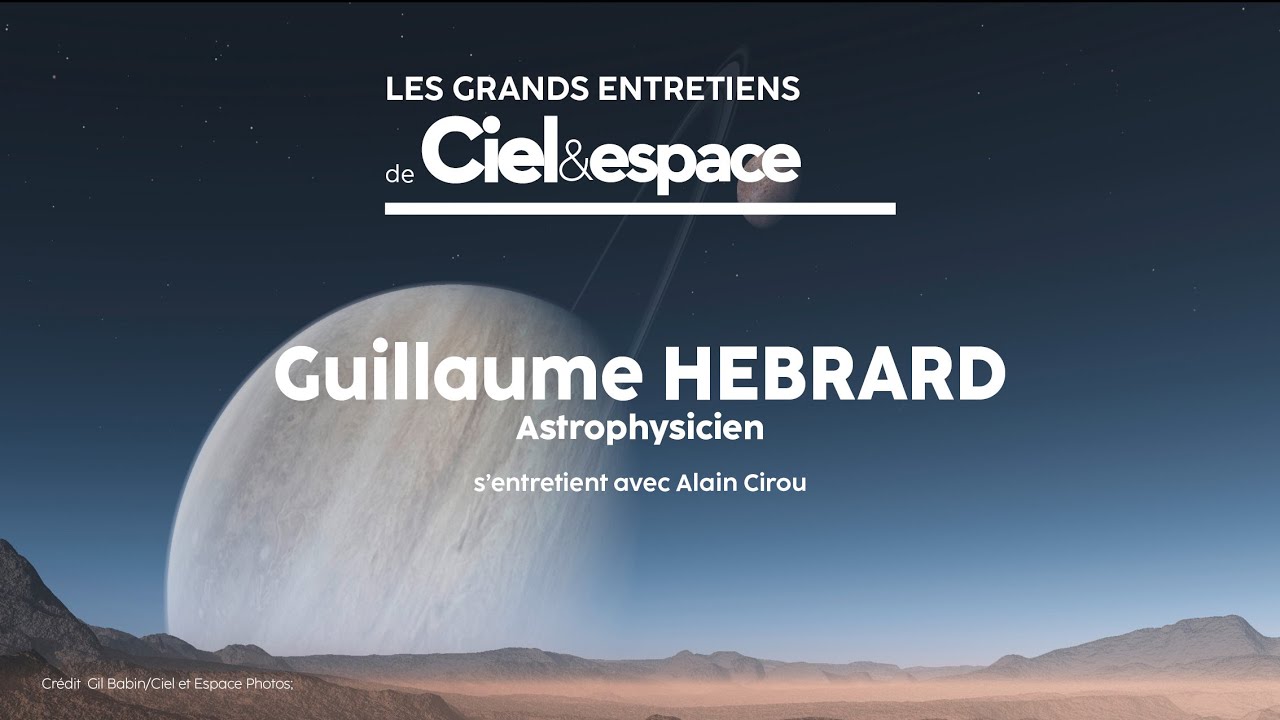
Extraordinaires planètes extrasolaires, Grand entretien de Ciel et espace avec Guillaume Hébrard
Keywords
Summary
137 words
Critical Evaluation
The interview provides a valuable and authoritative overview of exoplanet science, delivered by a leading expert actively involved in observations. The information is accurate and up-to-date, reflecting the current state of the field. The discussion of methods (radial velocity and transits) is clear and technically sound, with appropriate emphasis on the observational challenges and the complementary roles of different telescope sizes. The historical context, including the discovery of 51 Pegasi b and the role of the Observatoire de Haute-Provence, is well presented. The argumentation is solid, relying on the speaker’s expertise and direct experience. However, the format is an interview, so there is limited depth on specific research findings, and no formal citations are provided. The content is accessible to a general audience but still maintains scientific rigor. The title accurately reflects the content, and the discussion is well-structured. Overall, this is a high-quality educational resource, though it is not a formal scientific presentation with peer-reviewed references.
157 words
Title / Content Match
The title accurately reflects the content, which is an in-depth discussion about exoplanets with Guillaume Hébrard.
Quality & Reliability
8/10
The speaker is a CNRS research director at the Institut d'Astrophysique de Paris, with direct involvement in exoplanet research. The content is based on his expertise and current observations, but it is an interview without formal citations or peer-reviewed references.
Key Moments
Markers derived by PSI from the transcript: the creator did not define chapters.
- Introduction and context of the interview
- Discussion of the 1995 discovery of 51 Pegasi b
- Historical background and Giordano Bruno
- Methods of detection: radial velocity and transits
- Observations at Observatoire de Haute-Provence
- Role of small telescopes and follow-up programs
- Personal experience of observing nights
- History of the observatory and Jean Perrin
- Future of exoplanet research and upcoming instruments
Cited Sources
- Observatoire de Haute-Provence — Mentioned as the site of the discovery and current observations.
- TESS mission — Mentioned as a source of transit candidates.
Concurring Sources
- NASA Exoplanet Archive — Provides a comprehensive database of confirmed exoplanets, consistent with the numbers and diversity mentioned.
Contribution & Novelties
The interview provides an expert perspective on the current state of exoplanet research, emphasizing the ongoing revolution and the importance of ground-based follow-up observations. It offers insights into the practical aspects of observing and the historical significance of the Observatoire de Haute-Provence.
Pour aller plus loin :
- Exoplanet — Overview of exoplanets and detection methods.
- Radial velocity method — Explanation of the radial velocity technique.
- Transit method — Description of the transit method for detecting exoplanets.
- 51 Pegasi b — Details on the first exoplanet discovered around a Sun-like star.
- TESS — Information on the TESS space telescope.
98 words
Radar Profile
The radar profile shows high scores in information quantity, quality, and reliability, with a slightly lower technical level, indicating a balanced and accessible expert discussion.