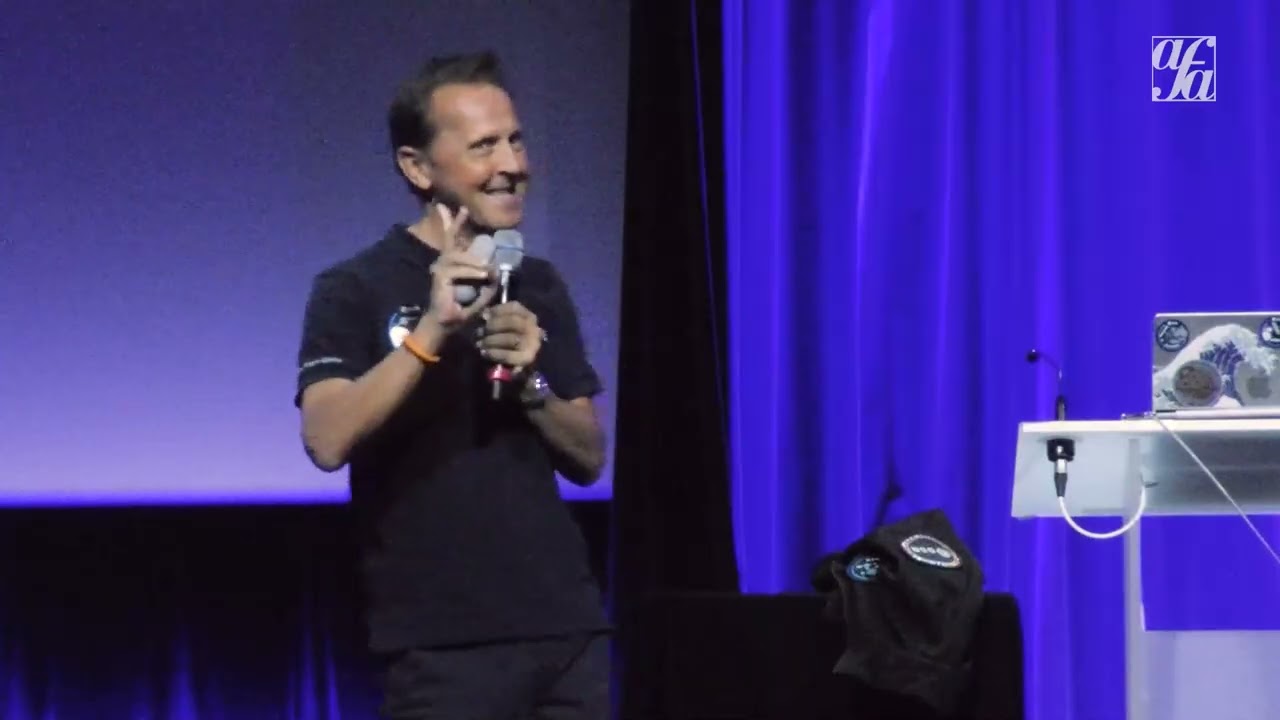
L’exploration des astéroïdes, un âge d’or par Patrick Michel
Keywords
Summary
141 words
Critical Evaluation
The conference by Patrick Michel is an excellent overview of the current state of asteroid exploration. Michel, as a leading scientist involved in several missions, provides authoritative and up-to-date information. The talk is well-structured, starting with the scientific rationale for studying asteroids, then moving to recent missions and their surprising findings, and finally discussing planetary defense. The technical level is accessible to a general audience while still providing depth for those with some background. The use of images and mission examples makes the content engaging and concrete. The speaker’s expertise is evident, and the information is consistent with current scientific knowledge. The talk does not shy away from the challenges and surprises encountered, such as the unexpected roughness of Bennu’s surface, which adds to its credibility. The only minor weakness is the lack of detailed citations, but this is typical for a conference talk. Overall, this is a high-quality, informative presentation that successfully conveys the excitement and importance of asteroid exploration.
161 words
Title / Content Match
The title accurately reflects the content, which focuses on the current golden age of asteroid exploration, covering recent missions and planetary defense.
Quality & Reliability
9/10
The speaker is a leading expert in asteroid science, involved in major missions (OSIRIS-REx, Hayabusa2, Hera). The content is up-to-date, accurate, and based on direct mission experience. The talk is a conference presentation, not peer-reviewed, but the information is consistent with current scientific knowledge.
Key Moments
Markers derived by PSI from the transcript: the creator did not define chapters.
- Introduction by the host, presenting Patrick Michel and his involvement in missions like Hayabusa2 and OSIRIS-REx.
- Patrick Michel begins his talk, explaining the asteroid belt and the diversity of asteroid compositions.
- Discussion of the scientific, planetary defense, and economic reasons for studying asteroids.
- Overview of past and current missions, including flybys, rendezvous, and sample return missions.
- Focus on the OSIRIS-REx mission to Bennu, highlighting the surprising abundance of boulders and the challenge of finding a landing site.
- Description of the sample collection process using the TAGSAM mechanism.
- Discussion of the DART mission and its successful kinetic impact on Dimorphos, and the upcoming Hera mission to study the aftermath.
- Introduction of the Apophis asteroid and the planned missions (Ramses and OSIRIS-APEX) to study it during its close approach in 2029.
- Discussion of the technical challenges of asteroid missions, including navigation and autonomy.
- Conclusion and emphasis on the golden age of asteroid exploration and the importance of international cooperation.
Cited Sources
- OSIRIS-REx Mission — Mentioned as a NASA mission that collected samples from asteroid Bennu.
- Hayabusa2 Mission — Mentioned as a JAXA mission that collected samples from asteroid Ryugu.
- DART Mission — Mentioned as the first test of asteroid deflection by kinetic impact.
- Hera Mission — Mentioned as an ESA mission to study the aftermath of the DART impact.
- Apophis — Mentioned as an asteroid that will make a close approach to Earth in 2029.
Concurring Sources
- NASA OSIRIS-REx — Confirms the mission details and findings mentioned in the talk.
- ESA Hera Mission — Confirms the mission objectives and status.
Contribution & Novelties
The talk provides an up-to-date overview of recent and upcoming asteroid missions, emphasizing the surprising geological complexity of these bodies and the technical challenges of exploring them. It highlights the international collaboration in planetary defense and the upcoming Apophis encounter.
Pour aller plus loin :
- Asteroid mining — Discusses the economic potential of asteroids.
- Planetary defense — Overview of strategies to protect Earth from asteroid impacts.
- Rubble pile asteroids — Concept explaining the structure of many asteroids.
77 words
Radar Profile
The radar profile shows high scores in information quantity, quality, and reliability, with a slightly lower technical level, indicating a talk that is both informative and accessible to a general audience.
💬 No comments were provided for analysis.