Taylor Ducharme: The Lac Opasatica igneous complex; Abitibi greenstone basement, Pontiac Group
Keywords
Summary
154 words
Critical Evaluation
Value of the Information & Strength of the Argument
The presentation provides valuable new geochronological data that challenge existing tectonic models for the Pontiac Group. The argumentation is well-structured, systematically presenting evidence from zircon dating, geochemistry, and structural observations. The speaker acknowledges complexities, such as inherited zircon cores and data filtering, which strengthens the credibility of the conclusions. The link between the Lac Opasatica complex and the Abitibi’s Pacaud assemblage is compelling and supported by multiple lines of evidence.
Scientific Rigor, Source Quality, Title Accuracy
The research is rigorous, with detailed methodology and data filtering. The study is published in a peer-reviewed journal (GSA Bulletin), ensuring quality. The title accurately reflects the content. The presentation is part of scientific meetings, indicating peer scrutiny. No external sources are cited beyond the speaker’s own work and previous studies mentioned, but the reliance on primary data and established literature is appropriate.
148 words
Title / Content Match
The title accurately reflects the content, focusing on the Lac Opasatica igneous complex and its implications for the Pontiac Group basement.
Quality & Reliability
8/10
The presentation is based on original research published in a peer-reviewed journal (GSA Bulletin, open access). The methodology is rigorous, including detailed geochronology with careful data filtering. The speaker acknowledges uncertainties and alternative interpretations, indicating scientific integrity.
Key Moments
Markers derived by PSI from the transcript: the creator did not define chapters.
- Introduction and context of the study
- Geological background of the Pontiac Group
- Previous models and the goal of the study
- Field observations and sample collection
- Geochemistry of TTG and felsic volcanic rocks
- Zircon dating methodology and data filtering
- Results: ages of TTG and volcanic rocks
- Inherited zircon cores and implications
- Comparison with Abitibi and tectonic implications
- Exhumation and future directions
Cited Sources
- GSA Bulletin article (open access) — The speaker mentions that the full study is published in this month's issue of GSA Bulletin, open access.
Concurring Sources
- Pitcairn et al. (2021) on gold source — The speaker references this work as suggesting the Pontiac sediments as a gold source.
Dissenting Sources
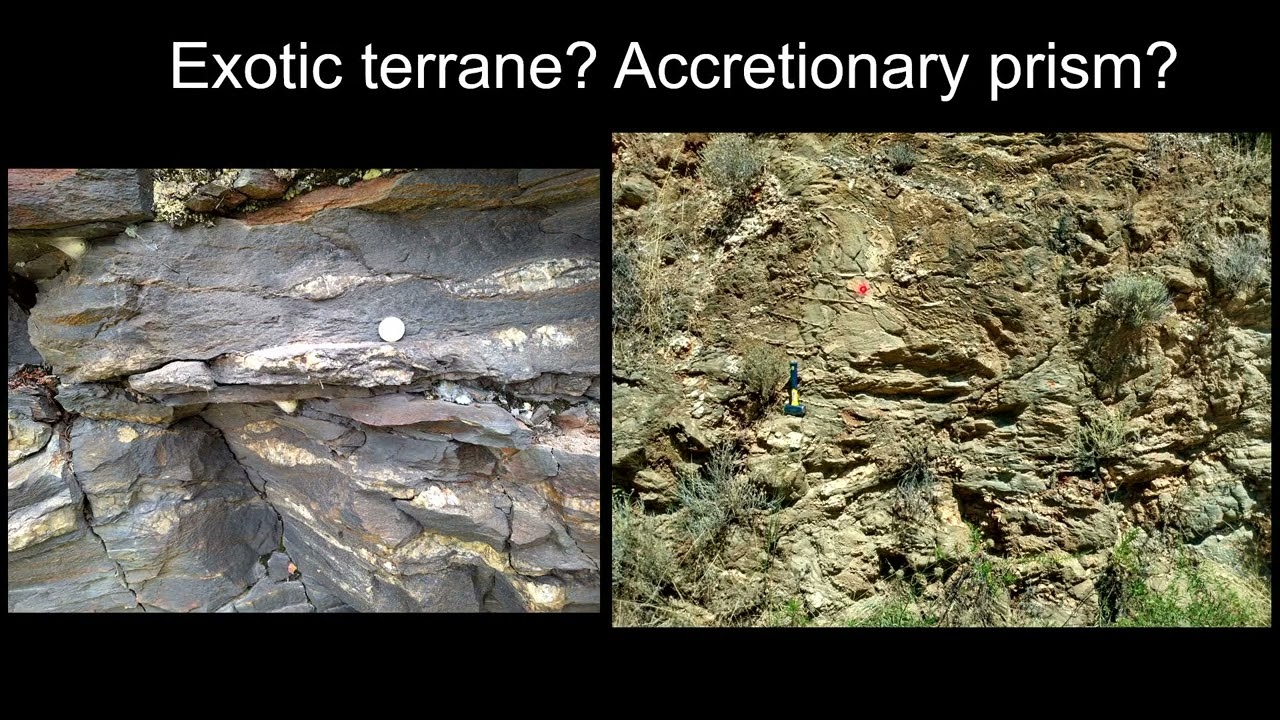
- Previous structural models (1990s) — The speaker mentions that previous models interpreted the Pontiac as an exotic terrane with thrusting, which is contradicted by the new geochronological data.
Contribution & Novelties
The study provides new geochronological data that significantly revise the age of the Lac Opasatica TTG complex and establish a link between the Pontiac Group and the Abitibi greenstone belt. It challenges the exotic terrane model and suggests a shared crustal history. The identification of Pacaud-age volcanic rocks in the Pontiac extends the known distribution of this assemblage. The study also highlights the importance of exhumation processes in the tectonic evolution.
Pour aller plus loin :
- Zircon geochronology — Overview of zircon dating methods.
- Abitibi greenstone belt — Geological context of the region.
- Pacaud assemblage — Information on the volcanic assemblage mentioned.
102 words
Radar Profile
The radar profile shows high scores in information quality and technical level, indicating a detailed and rigorous scientific presentation. The quantity of information is also high, but the fiabilité is slightly lower due to the inherent uncertainties in geochronological data. Overall, the presentation is well-balanced and scientifically robust.