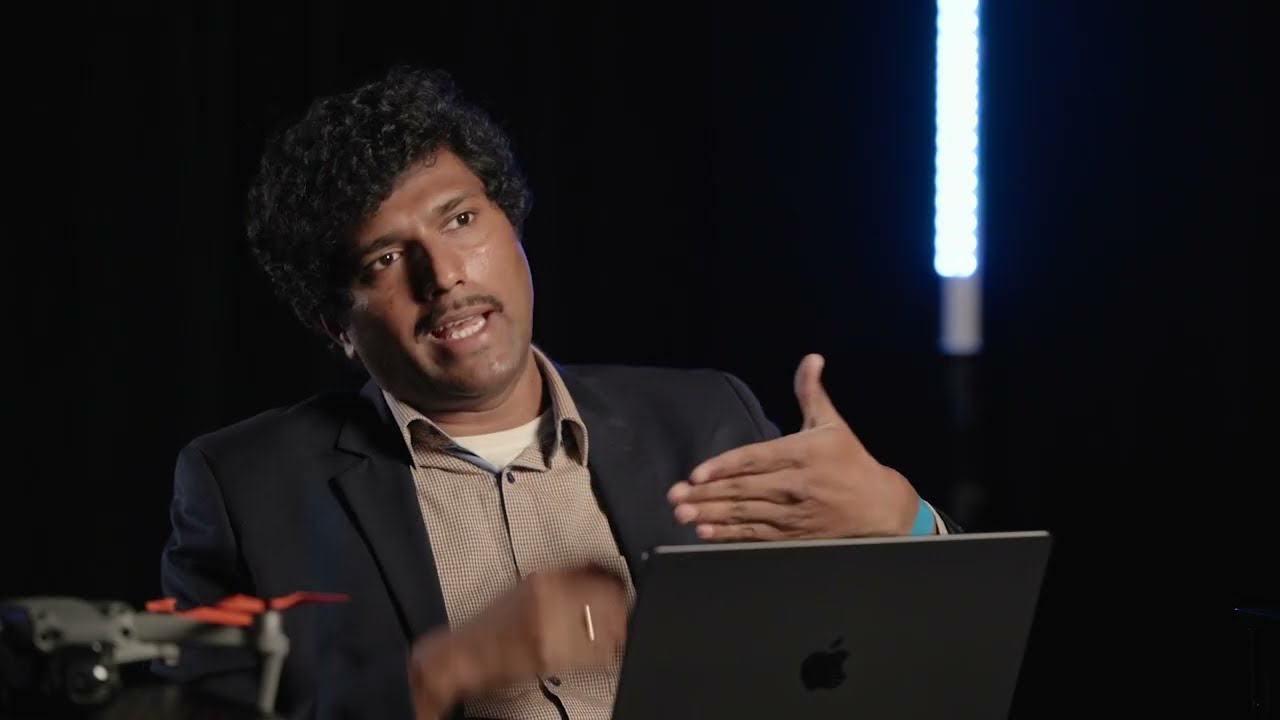
Fieldwork and Private Platforms — Interview w/ Kiran Garimella
Keywords
Summary
207 words
Critical Evaluation
Value of the Information & Strength of the Argument
The interview provides valuable insights into the methodological challenges and innovations of studying private platforms like WhatsApp. Garimella’s argumentation is grounded in his direct experience, and he openly discusses the limitations and biases of his approach. He emphasizes the importance of fieldwork to reach populations not represented in online panels, and he reflects on the ethical considerations of data donation. The value lies in the detailed description of the research process, which is often underreported in academic papers. The argumentation is solid, though it is based on a single case study and lacks comparative or quantitative evidence at this stage.
109 words
Title / Content Match
The title accurately reflects the content: an interview focused on fieldwork methods for studying private platforms like WhatsApp.
Quality & Reliability
8/10
The interview provides a detailed, first-hand account of a complex research methodology, with transparent discussion of challenges and limitations. The researcher demonstrates reflexivity and acknowledges the provisional nature of findings. However, the content is primarily anecdotal and lacks external verification or peer-reviewed references.
Key Moments
Markers derived by PSI from the transcript: the creator did not define chapters.
- Introduction and background: Kiran Garimella introduces himself and explains the origin of the research project.
- Description of the 2017-18 India data revolution and the role of WhatsApp as the primary internet access for many.
- Initial approach: scraping WhatsApp group links and joining thousands of groups using automated and manual methods.
- Technical challenges: managing 40 WhatsApp accounts, extracting encrypted data, and the labor-intensive process.
- Introduction of the dashboard for monitoring viral content and the importance of privacy preservation.
- Fieldwork component: door-to-door data donation, consent process, and the development of the WhatsApp Explorer tool.
- Practical issues in the field: bandwidth limitations, participant attrition, and protocol revisions.
- Scale of the data operation: 40-50 terabytes of data, real-time collection during elections, and the complexity of the operation.
- Plans for replication in Brazil for the 2026 elections, with considerations of diminishing returns.
- Analysis plans: descriptive studies, harmful content, political implications, and preliminary findings on the prevalence of misinformation.
Cited Sources
- Tech for Open Minds symposium — The interview was conducted for this symposium, and the link provides access to other interviews and related content.
Concurring Sources
- Tech for Open Minds symposium — The interview is part of this symposium, which likely includes related research on technology and society.
Contribution & Novelties
The interview provides a unique, behind-the-scenes look at the methodological challenges of studying private, encrypted platforms like WhatsApp. It highlights the innovative combination of digital scraping and on-the-ground fieldwork to collect representative data from hard-to-reach populations. The discussion of data donation as a privacy-preserving method is particularly novel. The researcher’s candid account of failures and adaptations offers valuable lessons for other researchers.
Pour aller plus loin :
- Data Donation — A concept central to the methodology described, with potential for broader application.
- Computational Social Science — The interdisciplinary field that this research exemplifies.
- WhatsApp — The platform under study, with details on its encryption and features.
106 words
Radar Profile
The radar profile shows high scores in quantity and quality of information, reflecting the detailed and insightful nature of the interview. The technical level is moderately high, indicating that the content is accessible to a general audience but still provides depth. The overall reliability is good, though limited by the lack of external verification.
💬 No comments were provided for analysis.