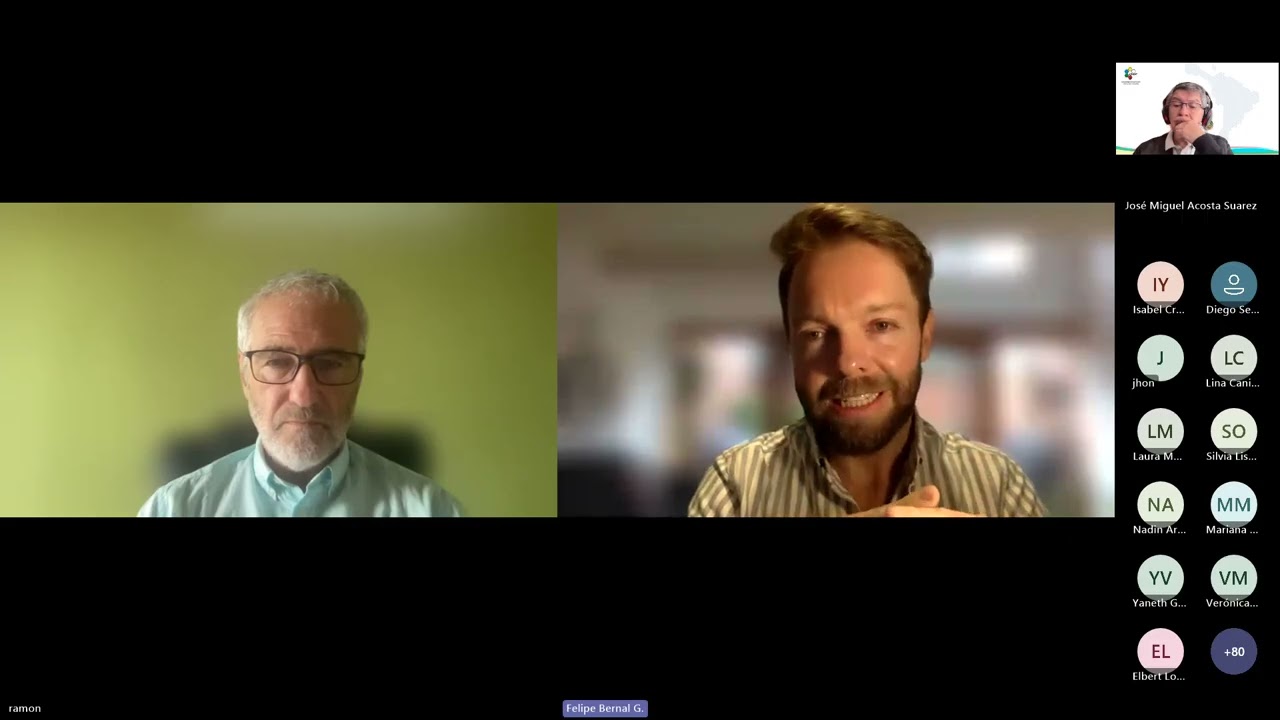
Ruta técnica para un sistema eléctrico confiable, limpio y de menor costo en Colombia
Keywords
Summary
231 words
Critical Evaluation
Value of the Information & Strength of the Argument
The value of the information is high, as it provides concrete evidence from Uruguay’s successful energy transition, including specific data on cost reduction (from 11 to 5-6 cents per kWh) and the achievement of 98-99% renewable electricity without batteries. The argumentation is solid, based on practical experience and a systemic understanding of electricity systems. The speakers effectively challenge the traditional paradigm of thermal-based reliability, offering a compelling alternative. However, the discussion is largely anecdotal and lacks formal citations or references to specific studies, which slightly weakens its scientific rigor.
Scientific Rigor, Source Quality, Title Accuracy
The scientific rigor is moderate: the speakers are credible experts, but they do not provide direct references to academic papers or official reports. The quality of sources is based on their professional experience and the mentioned study with XME (Universidad de los Andes), but no specific publication is cited. The title accurately reflects the content, which is a technical roadmap for Colombia’s electricity system. The webinar is well-structured and maintains a technical focus, avoiding ideological polarization.
180 words
Title / Content Match
The title accurately reflects the content, which focuses on a technical roadmap for a reliable, clean, and cost-effective electricity system in Colombia, drawing on Uruguay's experience.
Quality & Reliability
8/10
The webinar features two recognized experts in energy policy and transition, with concrete data from Uruguay's successful transformation. The discussion is technical and grounded in practical experience, though it lacks formal citations and peer-reviewed sources.
Key Moments
Markers derived by PSI from the transcript: the creator did not define chapters.
- Introduction of speakers and context of the webinar.
- Comparison of Colombia's current challenges with Uruguay's pre-transition situation.
- Explanation of Uruguay's energy transition: from 40% to 90% renewable, eliminating structural thermal use.
- Discussion on measuring reliability: system-level metrics vs. contracted capacity.
- Role of thermal plants as insurance, not base load, and the absence of batteries in Uruguay.
- Critique of Colombia's reliability charge and the need for market design reform.
- Call for Colombia to leverage hydro resources and adopt stochastic planning.
Cited Sources
- Study with XME (Universidad de los Andes) — Mentioned as a study conducted for Colombia, but no specific URL provided.
Concurring Sources
- IRENA - Renewable Power Generation Costs — Supports the claim that renewable energy costs have decreased significantly.
Dissenting Sources
- Colombia's reliance on thermal capacity for reliability — The current Colombian system relies on thermal capacity for reliability, which the webinar argues is outdated and costly.
Contribution & Novelties
The webinar provides a novel perspective for Colombia by presenting Uruguay’s successful model as a blueprint, emphasizing that reliability is a system property and that renewable sources can be the backbone without batteries. It challenges the traditional reliance on thermal capacity and proposes a paradigm shift in measuring and ensuring reliability.
Pour aller plus loin :
- Uruguay’s energy transition — Overview of Uruguay’s renewable energy achievements.
- Stochastic optimization in power systems — Concept relevant to the planning approach discussed.
- Grid-forming inverters — Technology enabling renewable plants to provide grid stability.
90 words
Radar Profile
The radar profile shows high scores in information quantity, quality, and reliability, reflecting the expert-driven content and concrete examples. The technical level is also high, indicating a sophisticated audience. The overall profile suggests a well-balanced and informative webinar.
💬 No comments were provided for analysis.