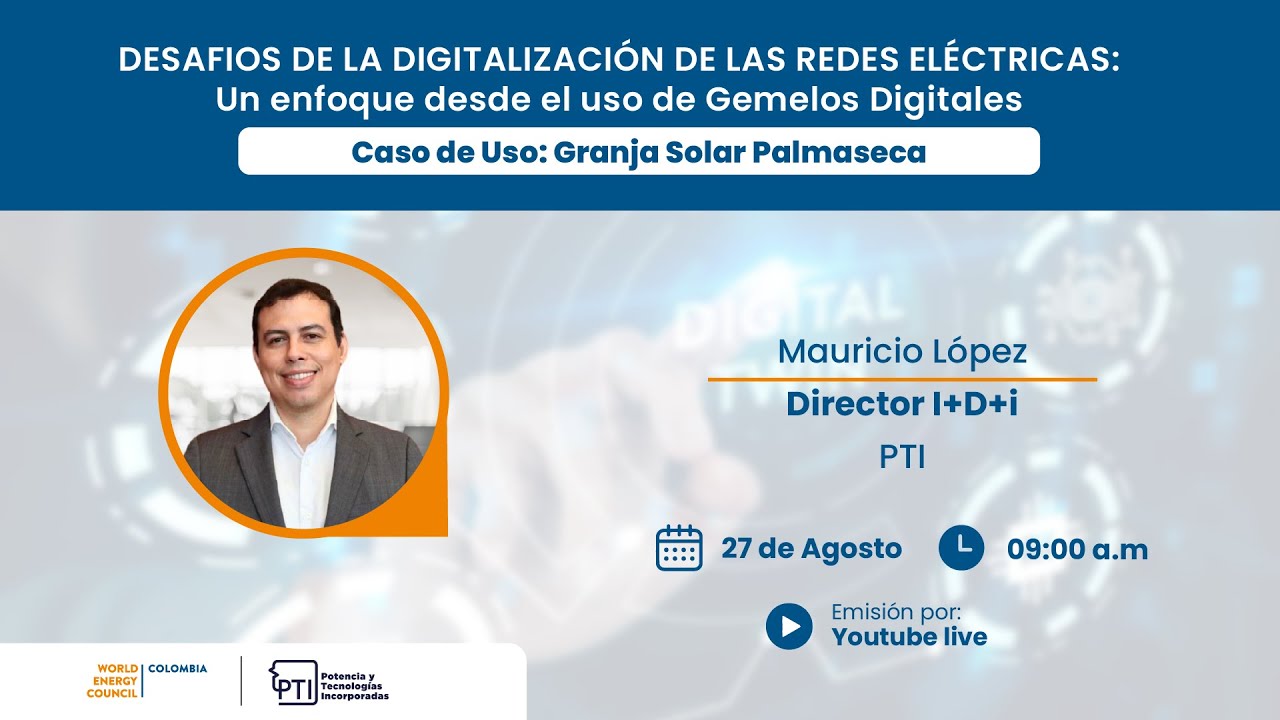
Un enfoque desde el uso de Gemelos Digitales: Caso de Uso: Granja Solar Palmaseca
Keywords
Summary
141 words
Critical Evaluation
Value of the Information & Strength of the Argument
The presentation provides valuable insights into the practical application of digital twins and SIL/HIL methodologies for renewable energy integration. The argumentation is coherent, building from general digitalization challenges to specific solutions and a concrete case study. The speaker effectively explains complex concepts like real-time simulation and the distinction between SIL and HIL, making them accessible. However, the argumentation relies heavily on the speaker’s expertise and the success of the case study, lacking quantitative evidence or comparative analysis. The value lies in the practical framework presented, which can be replicated by other projects.
Scientific Rigor, Source Quality, Title Accuracy
The scientific rigor is moderate. The speaker references IEEE standards 2030.7 and 2030.8, which are relevant and credible, but does not provide specific data or external sources. The title accurately reflects the content, focusing on digital twins and the Palmaseca case study. The presentation is more of an expert opinion and case study report than a peer-reviewed scientific contribution. No comments were provided for analysis.
172 words
Title / Content Match
The title accurately reflects the content: a presentation on digitalization challenges in electrical grids, focusing on digital twins and a specific case study of a solar farm.
Quality & Reliability
7/10
The speaker is an industry expert (Director of R&D&I at PTI) presenting a specific case study with a clear methodology (SIL/HIL) and referencing relevant IEEE standards. However, the presentation is largely qualitative, lacks quantitative data or peer-reviewed references, and is promotional in nature.
Key Moments
Markers derived by PSI from the transcript: the creator did not define chapters.
- Introduction and welcome
- Agenda overview and introduction to digitalization challenges
- Definition of smart grid and its components
- Challenges in renewable integration: interoperability, SCADA, plant controller, optimization
- Introduction to digital twins and real-time simulation
- Explanation of Software-in-the-Loop (SIL) methodology
- Explanation of Hardware-in-the-Loop (HIL) methodology
- Proposed SIL/HIL methodology and its benefits
- Case study: Palmaseca solar farm - implementation and results
- Lessons learned and replicable proposal for the sector
Cited Sources
- IEEE 2030.7-2017 - Standard for the Specification of Microgrid Controllers — Referenced as the standard defining functional requirements for microgrid controllers, applicable to plant controllers.
- IEEE 2030.8-2018 - Standard for the Testing of Microgrid Controllers — Referenced as the standard defining test conditions and requirements for characterizing and validating controllers.
Concurring Sources
- IEEE 2030.7-2017 - Standard for the Specification of Microgrid Controllers — Supports the methodology for controller specification.
- IEEE 2030.8-2018 - Standard for the Testing of Microgrid Controllers — Supports the testing methodology for controllers.
Contribution & Novelties
The presentation offers a practical methodology for validating renewable energy plant controllers using digital twins and SIL/HIL simulations, applied to a real case study. This approach allows for early detection of issues, reduced integration costs, and ensures regulatory compliance before plant commissioning. The novelty lies in the systematic combination of SIL and HIL stages, supported by IEEE standards, to de-risk the integration process.
Pour aller plus loin :
- Digital twin - Wikipedia — Provides a general overview of digital twin concepts and applications.
- Hardware-in-the-loop simulation - Wikipedia — Explains HIL simulation, its uses, and benefits.
- IEEE 2030.7-2017 Standard — The specific standard referenced for microgrid controller specifications.
- Software-in-the-loop - Wikipedia — Describes SIL simulation and its role in testing.
119 words
Radar Profile
The radar profile shows a balanced performance across all dimensions, with slightly higher scores in information quantity and technical level, indicating a technically rich presentation. The lower score in global reliability suggests a need for more rigorous sourcing and quantitative evidence.