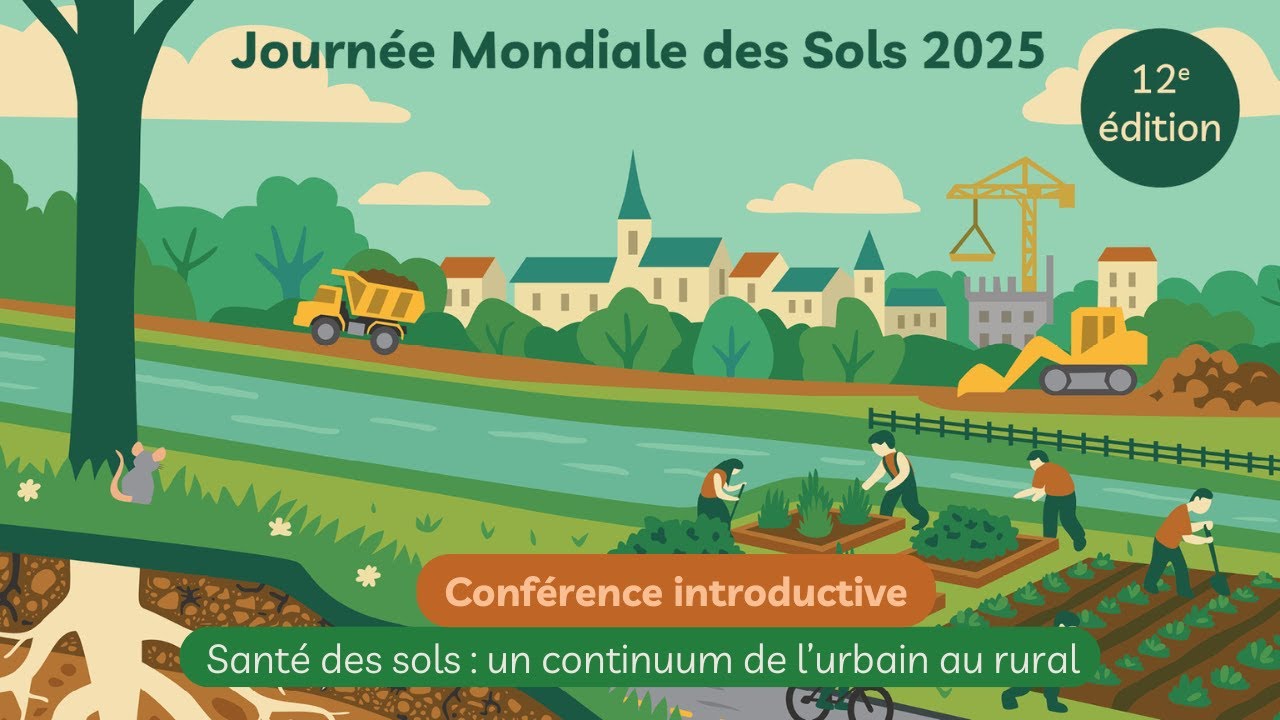
Conférence introductive de la JMS 2025 | Santé des Sols : un continuum de l'urbain au rural
Keywords
Summary
143 words
Critical Evaluation
Value of the Information & Strength of the Argument
The value of the information is high, as it brings together diverse perspectives on soil health, including scientific, social, and artistic viewpoints. The argumentation is solid, with each speaker providing evidence and examples to support their points. The conference effectively highlights the complexity of soil health and the need for integrated approaches. The use of metaphors to explore perceptions of soil is particularly insightful, offering a qualitative dimension often missing in soil science discussions. The initiatives presented demonstrate practical applications and citizen engagement, strengthening the argument for a holistic approach to soil management.
Scientific Rigor, Source Quality, Title Accuracy
The scientific rigor is generally high, with contributions from recognized researchers and institutions. However, the conference format limits the depth of source citation, and some claims are presented without explicit references. The quality of sources is good, as speakers are experts in their fields. The title accurately reflects the content, which is an introductory conference on soil health spanning urban to rural contexts. The event is well-structured, with clear chapters and a logical flow from perception to planning to initiatives.
188 words
Title / Content Match
The title accurately reflects the content, which is an introductory conference on soil health spanning urban to rural contexts.
Quality & Reliability
8/10
The conference is organized by the French Association for Soil Studies (AFES), a recognized scientific society. Speakers include researchers from CIRAD, INRAE, and other institutions, providing expert insights. The content is well-structured and covers multiple perspectives on soil health, including scientific, social, and artistic dimensions. However, as a conference recording, it lacks peer review and some claims are not fully referenced.
Chapters
- introduction
- présentation du programme des JMS
- programme de la conférence
- « Notre perception des sols » – Abigail FALLOT
- « C’est quoi un sol, c’est quoi un sol urbain et (re)construire un sol? » – Christophe DUCOMMUN
- « La santé des sols dans l’aménagement du territoire : de l’urbain au rural » – Anne LEFRANC
- 4 initiatives exemplaires qui font évoluer les perceptions et les comportements sur les sols
- L’implication du citoyen par son épargne – Lydie DOISY
- Le rôle des agricultures urbaines dans la santé des sols – Christophe SCHWARTZ
- Le rôle de l’art pour changer notre regard sur le sol – Charlotte RODON
- Les Sciences et Recherches participatives comme levier d’acquisition de connaissances impliquant les citoyens – Anne BLANCHART
- questions /débats
- Conclusion par Marc-André SELOSSE
- Conclusion par Alain BRAUMAN
Cited Sources
- Journée Mondiale des Sols 2025 - AFES — Official page for the World Soil Day 2025 event, providing program details and additional information.
Concurring Sources
- FAO - World Soil Day — The FAO's official page for World Soil Day, which sets the annual theme and promotes global awareness.
Contribution & Novelties
This conference provides a unique interdisciplinary perspective on soil health, bridging urban and rural contexts. It emphasizes the importance of qualitative approaches, such as metaphors, to complement quantitative soil science. The inclusion of art and participatory science as tools for changing perceptions and behaviors is innovative. The conference also highlights the need for collective action and citizen engagement in soil preservation.
Pour aller plus loin :
- Soil health — Overview of the concept of soil health and its indicators.
- 4 per 1000 Initiative — International initiative on soil carbon sequestration, mentioned by Abigail Fallot.
- Participatory science — Explanation of citizen science, relevant to Anne Blanchart’s presentation.
- Urban agriculture — Overview of urban agriculture and its benefits, relevant to Christophe Schwartz’s talk.
- Soil art — Concept of art inspired by soil, relevant to Charlotte Rodon’s presentation.
135 words
Radar Profile
The radar profile shows high scores in information quantity, quality, and reliability, with a slightly lower technical level, indicating that the content is accessible to a broad audience while maintaining scientific depth. The balance suggests a well-rounded conference suitable for both experts and the general public.