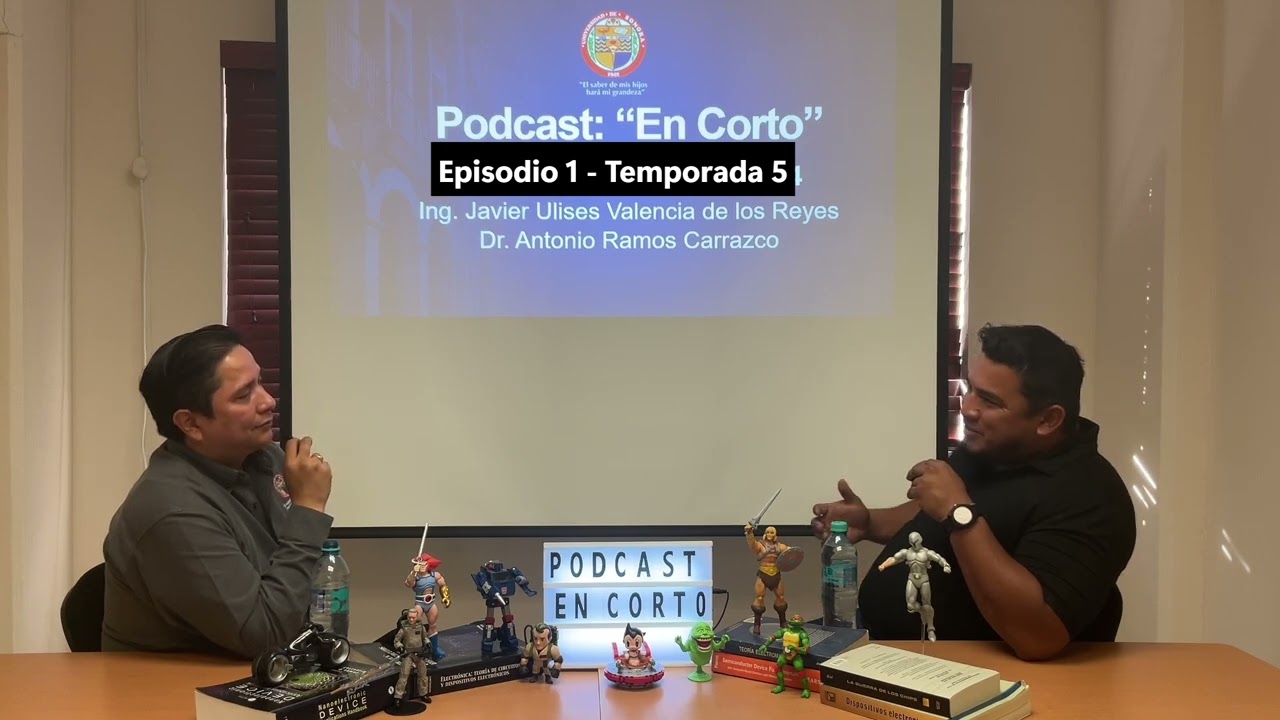
EPISODIO 1 - TEMPORADA 5: ING. JAVIER ULISES VALENCIA
Keywords
Summary
173 words
Critical Evaluation
Value of the Information & Strength of the Argument
The video provides valuable firsthand insights into the experience of a mature student in a new engineering program. The argumentation is based on personal experience rather than systematic analysis, but it offers authentic perspectives on the challenges of returning to education, the gap between academic training and industry needs, and the role of modern tools like AI in learning. The discussion is coherent and grounded in concrete examples, such as the use of the per-unit method in electrical engineering and the design of a solar cooler using Peltier cells.
Scientific Rigor, Source Quality, Title Accuracy
The video is an informal interview with no cited sources or references. The information is anecdotal and reflects personal opinions. The title accurately describes the content, which is an episode of a podcast featuring the guest. There is no scientific rigor in terms of data or citations, but the content is authentic and provides a realistic view of the educational and professional landscape. The adequacy between title and content is good.
175 words
Title / Content Match
The title accurately reflects the content: an episode featuring Ing. Javier Ulises Valencia, discussing his background and experiences in the semiconductor engineering program.
Quality & Reliability
6/10
The video is an informal interview with a student and a professor, providing personal experiences and opinions rather than rigorous scientific data. The information is anecdotal and lacks citations, but it offers authentic insights into the semiconductor engineering program and the challenges faced by mature students.
Key Moments
Markers derived by PSI from the transcript: the creator did not define chapters.
- Introduction of the guest, Ing. Javier Ulises Valencia, and his background.
- Javier talks about his first career in electrical engineering and his work at CFE.
- Discussion about his second degree in business administration and motivation for studying.
- Javier explains why he enrolled in the semiconductor engineering program.
- Challenges of returning to school after 20 years, including math and generational differences.
- Opinions on the use of ChatGPT and YouTube in education, and the risk of over-reliance.
- Advice for adult learners and the importance of perseverance.
- Critique of the curriculum: need for more practical field experience and industry visits.
- Discussion about the per-unit method used in electrical engineering and its application.
- Future plans, including working in Phoenix, and the importance of English proficiency.
Contribution & Novelties
The video offers a unique perspective on the semiconductor engineering program in Mexico from a mature student’s viewpoint. It highlights the challenges of returning to education and the gap between academic training and industry needs. The discussion on the use of AI tools like ChatGPT in education is timely and relevant.
Pour aller plus loin :
- Semiconductor industry in Mexico — Provides context on the global semiconductor landscape.
- Peltier effect — Relevant to the solar cooler project mentioned.
- Per-unit system — Explains the method used in electrical engineering.
88 words
Radar Profile
The radar profile shows moderate scores across all dimensions, indicating a balanced but not highly technical or rigorous content. The video is more about personal experience and opinions than scientific depth.
💬 No comments provided.