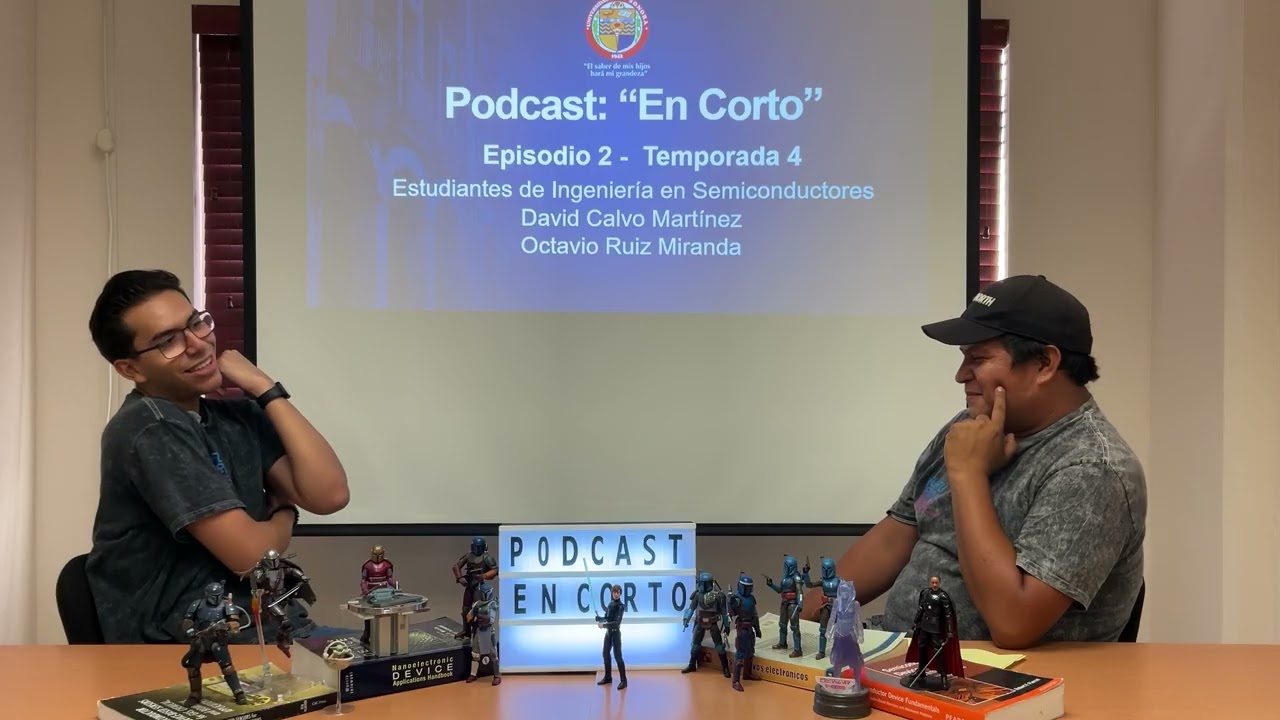
EPISODIO 2 -TEMPORADA 4 : ESTUDIANTES DE INGENIERÍA EN SEMICONDUCTORES
Keywords
Summary
158 words
Critical Evaluation
Value of the Information & Strength of the Argument
The value of the information lies in its authentic, first-hand perspective on a new engineering program, offering insights into the real challenges students face, such as curriculum misalignment, high dropout rates, and balancing work and study. The argumentation is anecdotal and based on personal experiences, which makes it relatable but not scientifically rigorous. The students provide specific examples, like the scheduling conflict between physics and differential equations, which illustrate systemic issues. However, the discussion lacks data or expert analysis, limiting its generalizability.
Scientific Rigor, Source Quality, Title Accuracy
The video is a casual conversation without formal sources or citations. The students mention specific courses and the Czochralski method, but these are not elaborated or verified. The title accurately reflects the content, as it is indeed about students in semiconductor engineering. The lack of rigorous sourcing and the subjective nature of the content reduce its scientific reliability. No comments were provided, so no analysis of public reception is possible.
167 words
Title / Content Match
The title accurately reflects the content: an episode featuring engineering students discussing their daily life and challenges.
Quality & Reliability
6/10
The video is a conversational podcast between two students, providing anecdotal and subjective insights into their academic experience. While authentic, it lacks rigorous scientific content or verifiable data. The information is primarily personal testimony, not peer-reviewed or systematically gathered.
Key Moments
Markers derived by PSI from the transcript: the creator did not define chapters.
- Introduction of the podcast and the two students, Octavio and David.
- Discussion about the first semester being relatively easy and the initial class size of 50 students.
- David shares his story of entering the program just two weeks before the entrance exam, with help from a teacher.
- They discuss the high dropout rate, with only 43 students left in the largest class by the fifth semester.
- Challenges of being the first generation: course scheduling conflicts, such as taking differential equations and modern physics simultaneously with semiconductor engineering.
- Discussion about administrative issues, including registration problems and lack of available classrooms.
- They talk about the limited access to psychological services, with long waiting times of about a month.
- Debate on whether the eight-semester program is sufficient, with opinions that it is dense but manageable.
- Discussion about the lack of service social credits and the uncertainty about graduation requirements.
- They reflect on the responsibility of being the first generation to open doors in the industry, mentioning international opportunities.
Contribution & Novelties
The video provides a unique insider view of a newly created semiconductor engineering program, highlighting the challenges of being a pioneer cohort. It offers anecdotal evidence of curriculum issues and student attrition, which could be valuable for educational planners. However, it lacks depth and scientific rigor.
Pour aller plus loin :
- Semiconductor engineering — Overview of the field and its applications.
- Czochralski method — A key process in semiconductor manufacturing mentioned in the video.
- Engineering education — General context on engineering curricula and challenges.
84 words
Radar Profile
The radar profile shows moderate scores across all dimensions, with slightly higher quality of information and lower technical level. This reflects the conversational and anecdotal nature of the content, which is informative but not deeply technical or rigorously sourced.