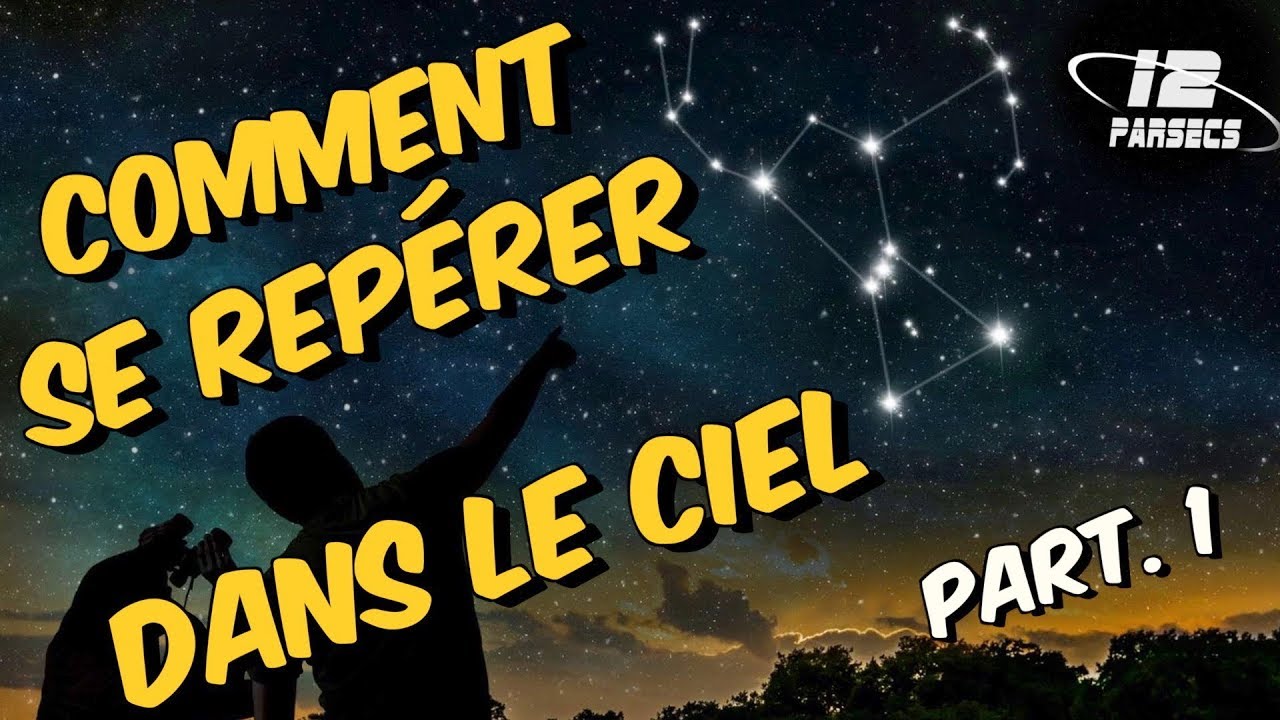
Comment se repérer dans le ciel - Partie 1
Keywords
Summary
190 words
Critical Evaluation
Value of the Information & Strength of the Argument
The video delivers valuable, practical information for amateur stargazers, providing clear and actionable methods for locating key celestial objects. The argumentation is solid, based on well-established astronomical facts, and the step-by-step approach builds confidence in the viewer. The use of mnemonic devices and visual aids enhances the educational value, making complex concepts accessible. The presenter’s enthusiasm and humor contribute to the overall persuasiveness, though some scientific details are simplified or approximate, which is acceptable for a general audience.
Scientific Rigor, Source Quality, Title Accuracy
The scientific rigor is generally good, with accurate descriptions of constellations and stars. The video does not cite specific sources, but the information aligns with standard astronomical knowledge. The title accurately reflects the content, which is a beginner’s guide to identifying constellations. The video’s informal tone and occasional humorous asides do not detract from its educational purpose, and the overall presentation is reliable for its intended audience.
160 words
Title / Content Match
The title accurately reflects the content: a beginner's guide to identifying key constellations and stars.
Quality & Reliability
7/10
The video provides accurate and well-established astronomical information, with clear explanations of constellations and stars. Minor imprecisions (e.g., approximate sizes, some anecdotal details) are present but do not undermine the overall reliability.
Key Moments
Markers derived by PSI from the transcript: the creator did not define chapters.
- Introduction to the video's goal: learning to identify five constellations and ten stars.
- Explanation of the Big Dipper (Ursa Major) and its use as a starting point.
- How to find Polaris (the North Star) using the pointer stars of the Big Dipper.
- Introduction to the Little Dipper (Ursa Minor) and the constellation Draco.
- Identification of Cassiopeia and its W shape, plus the Milky Way region.
- Detailed look at the constellation Orion, including its main stars and the Orion Nebula.
- Finding Sirius, the brightest star, and the constellation Canis Major.
- Summary and conclusion, with a preview of future episodes.
Cited Sources
- Stellarium — Mentioned as the software used to display constellations.
Concurring Sources
- International Astronomical Union — The IAU is the authority on naming celestial objects and defining constellations, aligning with the video's content.
Contribution & Novelties
The video provides a clear and engaging introduction to celestial navigation, using a step-by-step method that builds on prior knowledge. Its original contribution lies in its accessible presentation and the use of pop culture references to aid memory. The video effectively bridges the gap between simple observation and scientific understanding.
Pour aller plus loin :
- Constellation — Provides a comprehensive overview of constellations, their history, and modern definitions.
- Polaris — Detailed information about the North Star, its properties, and its role in navigation.
- Orion (constellation) — In-depth article on the constellation Orion, including its stars, nebulae, and mythology.
- Sirius — Information about the brightest star in the night sky, its characteristics, and cultural significance.
114 words
Radar Profile
The radar profile shows a balanced performance across all dimensions, with slightly higher scores in quality of information and reliability, reflecting the video's solid educational content. The lower score in technical level indicates that the video is accessible to beginners, which is appropriate for its target audience.
💬 Très positif. Sur les 30 commentaires analysés, l'enthousiasme est unanime : les spectateurs louent la clarté des explications, l'humour et l'aspect pratique de la vidéo, et expriment leur envie d'apprendre davantage.