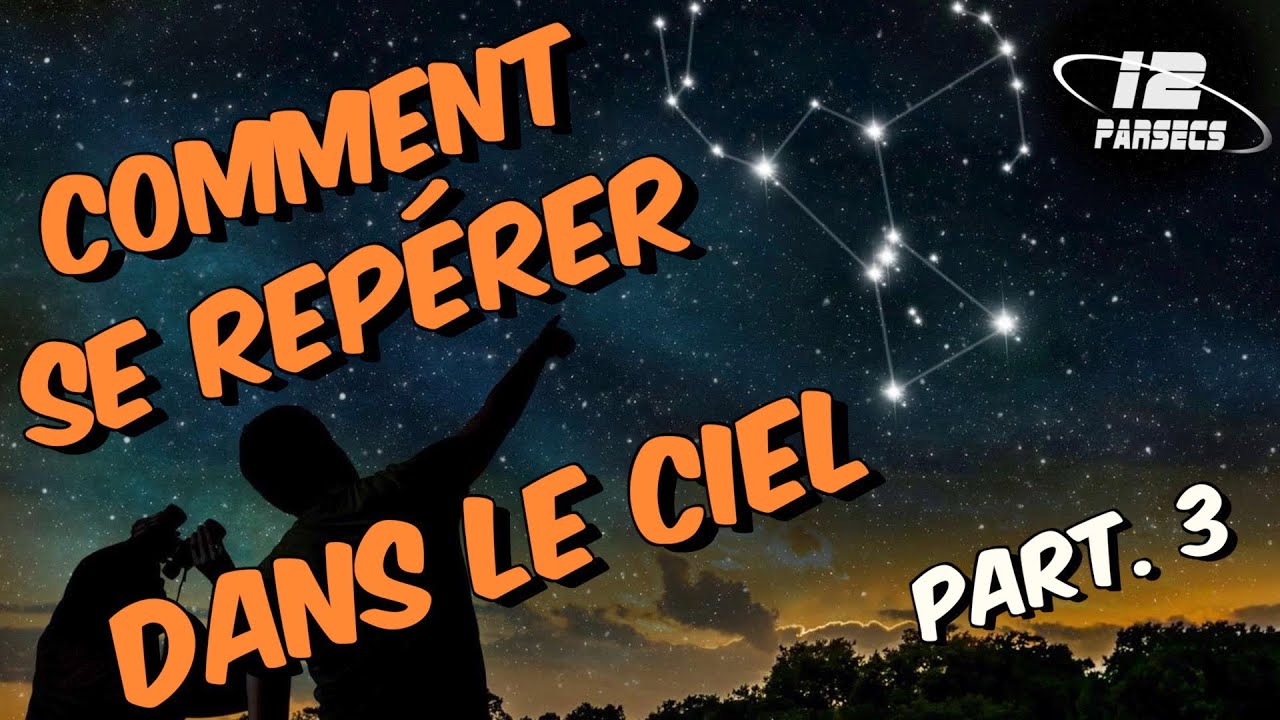
Comment se repérer dans le ciel - Partie 3
Keywords
Summary
168 words
Critical Evaluation
Value of the Information & Strength of the Argument
The video offers substantial educational value, presenting accurate astronomical facts in an engaging and accessible manner. The host effectively uses analogies and humor to explain complex concepts like interferometry and star clusters. The argumentation is solid, with clear step-by-step instructions for locating celestial objects, supported by visual aids and references to scientific articles. The inclusion of the Arecibo message and the future Andromeda collision adds depth and stimulates curiosity.
Scientific Rigor, Source Quality, Title Accuracy
The scientific content is rigorous, with correct distances, sizes, and characteristics of stars and deep-sky objects. The host cites several sources in the video description, including articles on interferometry, star clusters, and specific stars like Altair and Vega. The title accurately reflects the content, which is a practical guide to identifying summer constellations. The video also includes humorous film references, which do not detract from the scientific accuracy.
152 words
Title / Content Match
The title accurately reflects the content, which is a guide to locating summer constellations and stars in the night sky.
Quality & Reliability
8/10
The video provides accurate astronomical information, correctly identifying stars, constellations, and deep-sky objects, with distances and physical properties consistent with current knowledge. The creator uses a playful tone but maintains scientific rigor, and includes references to relevant articles and resources in the description.
Key Moments
Markers derived by PSI from the transcript: the creator did not define chapters.
- Introduction and overview of the episode's content.
- Tips for stargazing: avoiding light pollution, bringing warm clothes and a chair.
- Finding Arcturus and the constellation Boötes.
- Introduction to the constellation Hercules and the globular cluster M13.
- Explanation of star clusters: globular vs. open clusters.
- The Summer Triangle: Vega, Deneb, and Altair.
- Discussion of the constellation Scorpius and the 13th zodiac sign Ophiuchus.
- Finding the Great Square of Pegasus and the Andromeda Galaxy.
- Explanation of the future collision between the Milky Way and Andromeda.
Cited Sources
- Explication de l'interférométrie — Referenced when explaining the technique used to image the surface of Altair.
- Les deux types d'amas d'étoiles — Referenced when discussing globular and open star clusters.
- Pourquoi le Serpentaire est absent des horoscopes ? — Referenced when discussing the 13th zodiac sign Ophiuchus.
- Les premières images de la surface d'Altaïr — Referenced when mentioning the imaging of Altair's surface.
- Véga et son système planétaire en formation — Referenced when discussing Vega's circumstellar disk.
- Les japonais qui marchent — Used as a humorous analogy for the merging of galaxies.
- Goldeneye - Scène du telescope — Referenced in a film quiz about the Arecibo telescope.
- Hercule Série TV Générique — Referenced as a cultural reference to the Hercules constellation.
Concurring Sources
- Globular cluster — Confirms the description of globular clusters as dense, spherical collections of old stars.
- Arecibo message — Confirms the details of the 1974 message sent to M13.
- Andromeda Galaxy — Confirms the distance and characteristics of the Andromeda Galaxy as stated in the video.
Contribution & Novelties
The video provides a practical and engaging guide to identifying summer constellations, with a focus on the Summer Triangle and the Andromeda Galaxy. It stands out for its blend of scientific accuracy and humor, making astronomy accessible to a broad audience. The inclusion of the Arecibo message and the future galactic collision adds a thought-provoking dimension.
Pour aller plus loin :
- Globular cluster — Provides detailed information on globular clusters, complementing the video’s explanation.
- Arecibo message — Details the content and purpose of the radio message sent to M13.
- Andromeda–Milky Way collision — Explains the predicted merger of the two galaxies, as mentioned in the video.
106 words
Radar Profile
The radar profile shows high scores in information quantity and quality, with a moderate technical level, indicating a well-balanced educational video. The reliability score is high, reflecting the accurate scientific content and credible sources.
💬 Très positif. Sur les 30 commentaires analysés, les spectateurs expriment un enthousiasme marqué pour la pédagogie et l'humour de la chaîne, avec de nombreux remerciements et encouragements.