Carbon Management 10-Minute Take | Diana Gragg | Stanford Understand Energy
Keywords
Summary
130 words
Critical Evaluation
The video provides a solid, accessible introduction to carbon management, effectively clarifying key terms and concepts. Diana Gragg’s expertise is evident, and the content aligns with established scientific and policy discussions. The explanation of the energy intensity of CO2 separation based on concentration is particularly insightful, as it helps viewers understand why direct air capture is more challenging than capturing from industrial streams. The video also correctly emphasizes that carbon management is not a license to continue emitting fossil fuels, but rather a necessary complement to aggressive emissions reductions. However, the presentation is high-level and lacks specific data or citations, which limits its depth. For instance, while mentioning the IEA’s scenarios, it does not provide specific numbers or references. The video also does not address potential environmental impacts or trade-offs of large-scale carbon management, such as land use for biomass or energy requirements for DAC. The discussion of carbon pricing is brief and does not delve into the complexities of policy design. Overall, the video is a valuable educational resource for a general audience, but it would benefit from more detailed examples and references to support its claims.
188 words
Title / Content Match
The title accurately reflects the content: a concise 10-minute overview of carbon management.
Quality & Reliability
8/10
The video is presented by Diana Gragg, a Core Lecturer at Stanford University, and is part of the Stanford Understand Energy educational initiative. It provides a clear, well-structured overview of carbon management concepts, including CDR, carbon capture, utilization, and storage. The information is consistent with mainstream scientific consensus and references the International Energy Agency (IEA) scenarios. However, it is a high-level overview without detailed citations or data sources, and some claims (e.g., number of suppliers) are not sourced.
Key Moments
Markers derived by PSI from the transcript: the creator did not define chapters.
- Introduction to carbon management and its importance for climate goals.
- Explanation of why carbon management is needed for hard-to-decarbonize sectors.
- Definition of key terms: CDR, carbon capture, utilization, and storage.
- Discussion of energy intensity and CO2 concentration in separation processes.
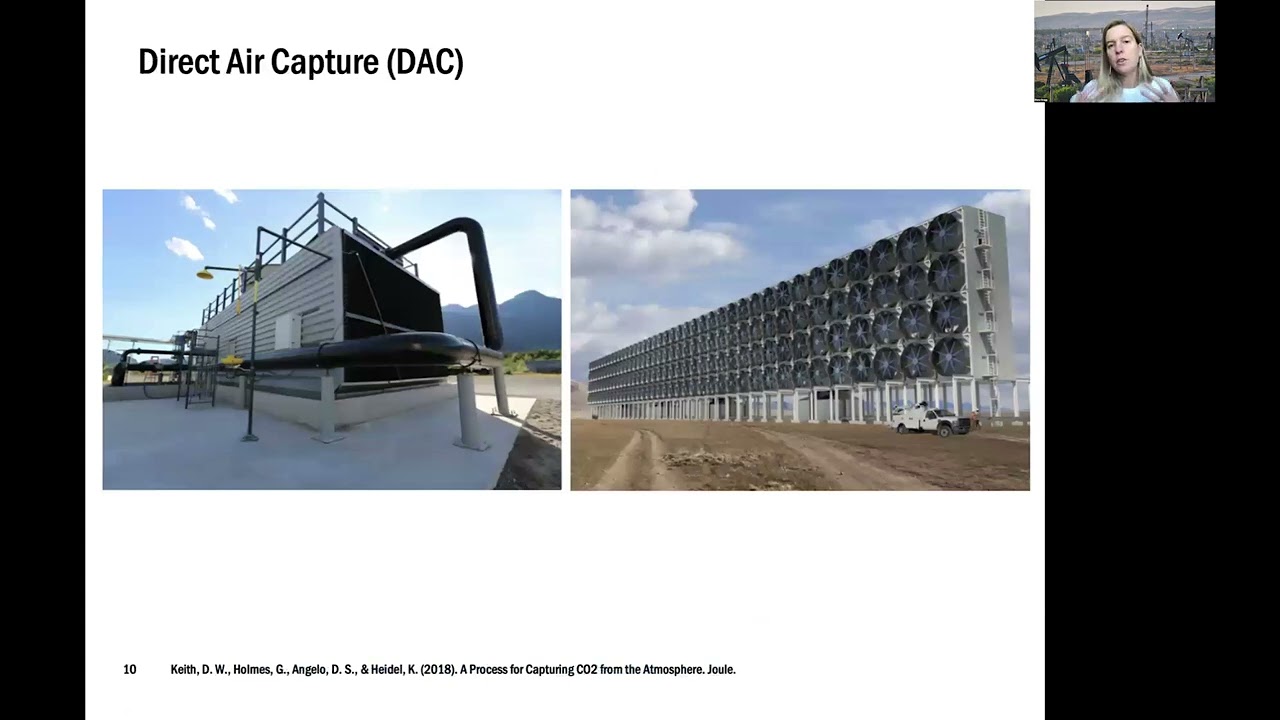
- Overview of natural and technological CDR methods, including direct air capture.
- Status of carbon capture and storage projects globally.
- Carbon utilization and geological storage options.
- The role of carbon pricing and advanced market commitments in scaling carbon management.
Cited Sources
- Diana Gragg - Stanford Profile — Speaker's academic profile.
- Stanford Understand Energy — Educational platform hosting the video.
- Carbon Management - Stanford Understand Energy Learning Hub — Additional resources on carbon management.
- Diana Gragg - YouTube Video — Related video by the same presenter.
Concurring Sources
- IPCC Special Report on Global Warming of 1.5°C — Highlights the need for carbon dioxide removal to limit warming.
- National Academies of Sciences, Engineering, and Medicine - Negative Emissions Technologies — Assesses the potential and limitations of negative emissions technologies.
Dissenting Sources
- Carbon Brief - Direct air capture: a critical review — Raises concerns about the high energy requirements and costs of DAC, suggesting it may be less viable than presented.
Contribution & Novelties
The video provides a clear and concise introduction to carbon management, clarifying terminology and emphasizing the importance of both emissions reduction and carbon removal. It highlights the distinction between CDR and carbon capture, and explains the energy intensity of separation processes. The presentation is part of Stanford’s educational initiative, aiming to build energy literacy.
Pour aller plus loin :
- Carbon dioxide removal - Wikipedia — Overview of CDR methods and challenges.
- Direct air capture - Wikipedia — Detailed information on DAC technology.
- Carbon capture and storage - Wikipedia — Comprehensive coverage of CCS.
- International Energy Agency - Carbon Management — IEA’s perspective on carbon management.
105 words
Radar Profile
The radar profile shows high scores in quality and reliability, reflecting the expertise of the presenter and alignment with scientific consensus. The quantity of information is moderate, as the video is a brief overview, and the technical level is accessible, making it suitable for a general audience.