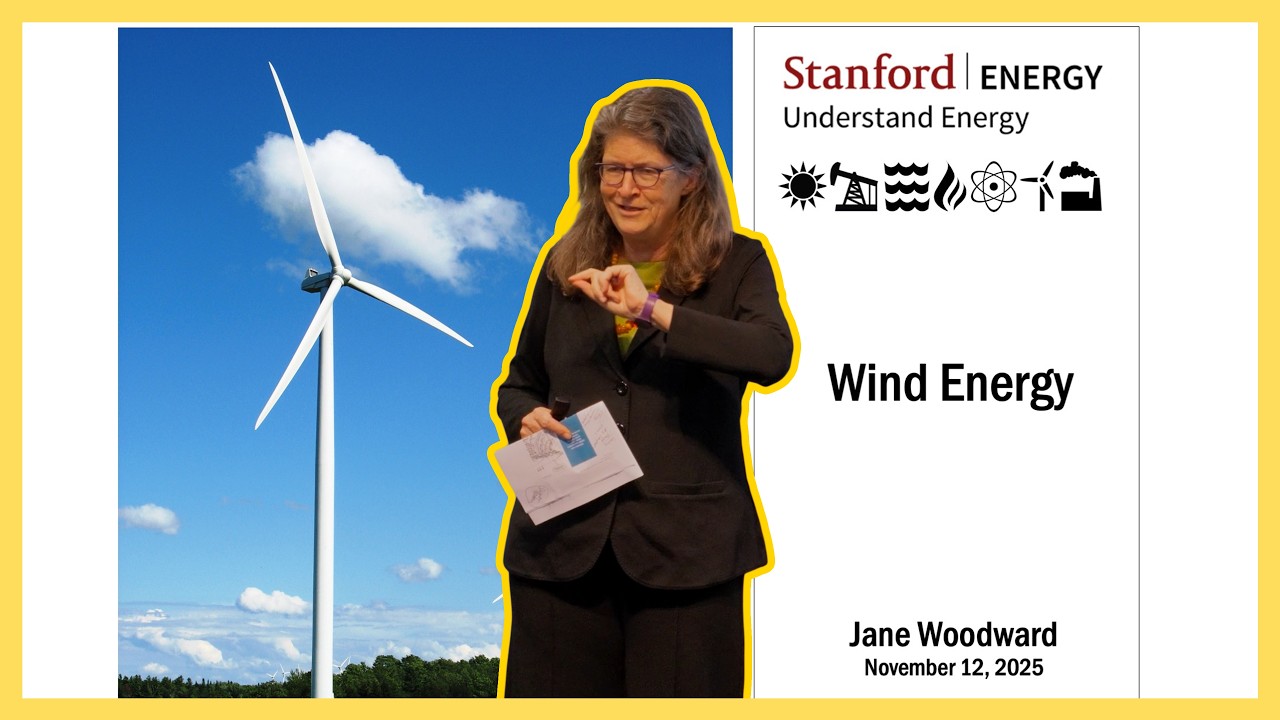
Wind Energy Lecture | Jane Woodward | Stanford Understand Energy
Keywords
Summary
229 words
Critical Evaluation
The lecture provides a solid, well-rounded introduction to wind energy, suitable for a university-level audience. Jane Woodward’s extensive industry experience lends credibility, and she effectively balances technical details with broader socio-economic and policy considerations. The content is accurate and reflects current trends, such as the rapid growth of solar and the challenges of offshore wind development. However, the lecture lacks rigorous scientific depth in some areas; for instance, quantitative data on LCOE, capacity factors, and environmental impacts are mentioned but not systematically presented. The argumentation is generally sound, but it occasionally relies on anecdotal evidence and personal observations (e.g., the comparison to freeway expansion) rather than peer-reviewed sources. The sources cited are limited to the Stanford Understand Energy website and personal profiles, which are authoritative but not exhaustive. The lecture does not engage with counterarguments in depth, such as the intermittency debate or the full lifecycle emissions of wind turbines. The title accurately reflects the content, and the structure is logical, following the chapter outline. Overall, the lecture is informative and engaging, but it would benefit from more rigorous data presentation and a broader range of sources to enhance its scientific robustness.
192 words
Title / Content Match
The title accurately reflects the content: a lecture on wind energy covering significance, technology, development, impacts, policies, economics, and future.
Quality & Reliability
8/10
Lecture by an experienced energy professional and adjunct professor, providing a comprehensive overview of wind energy. The content is well-structured, up-to-date, and based on industry knowledge, though it lacks detailed citations and is somewhat opinionated.
Chapters
Cited Sources
- Wind Energy - Stanford Understand Energy — Referenced as the Learning Hub page for wind energy content.
- Jane Woodward - Stanford Profile — Referenced for more information about the lecturer.
- Jane Woodward - YouTube Video — Referenced as a related video about Jane Woodward.
- Stanford Understand Energy Newsletter — Referenced for signing up for the newsletter.
Concurring Sources
- Wind Energy - Stanford Understand Energy — The lecture aligns with the content on the Stanford Understand Energy wind page, which provides additional resources and data.
Dissenting Sources
- No discordant sources identified — No sources contradicting the lecture's main points were found in the provided materials.
Contribution & Novelties
The lecture provides a comprehensive and accessible overview of wind energy, emphasizing the scale of modern turbines, the distinction between onshore and offshore wind, and the importance of social license to operate. It highlights the rapid growth of wind energy and its cost competitiveness, while also addressing environmental and social challenges. The lecture’s unique value lies in its integration of technical, economic, and policy perspectives, drawing on the lecturer’s industry experience.
Pour aller plus loin :
- Wind power - Wikipedia — Provides a broad overview of wind energy, including history, technology, and global statistics.
- Levelized cost of electricity - Wikipedia — Explains the concept of LCOE, which is central to the economic discussion in the lecture.
- Offshore wind power - Wikipedia — Details the development, challenges, and potential of offshore wind, complementing the lecture’s coverage.
- Environmental impact of wind power - Wikipedia — Discusses the environmental effects, including avian and bat mortality, which are key concerns mentioned in the lecture.
160 words
Radar Profile
The radar profile shows high scores in quantity and quality of information, and moderate technical level, indicating a comprehensive yet accessible lecture. The reliability score is also high, reflecting the lecturer's expertise and the use of authoritative sources.