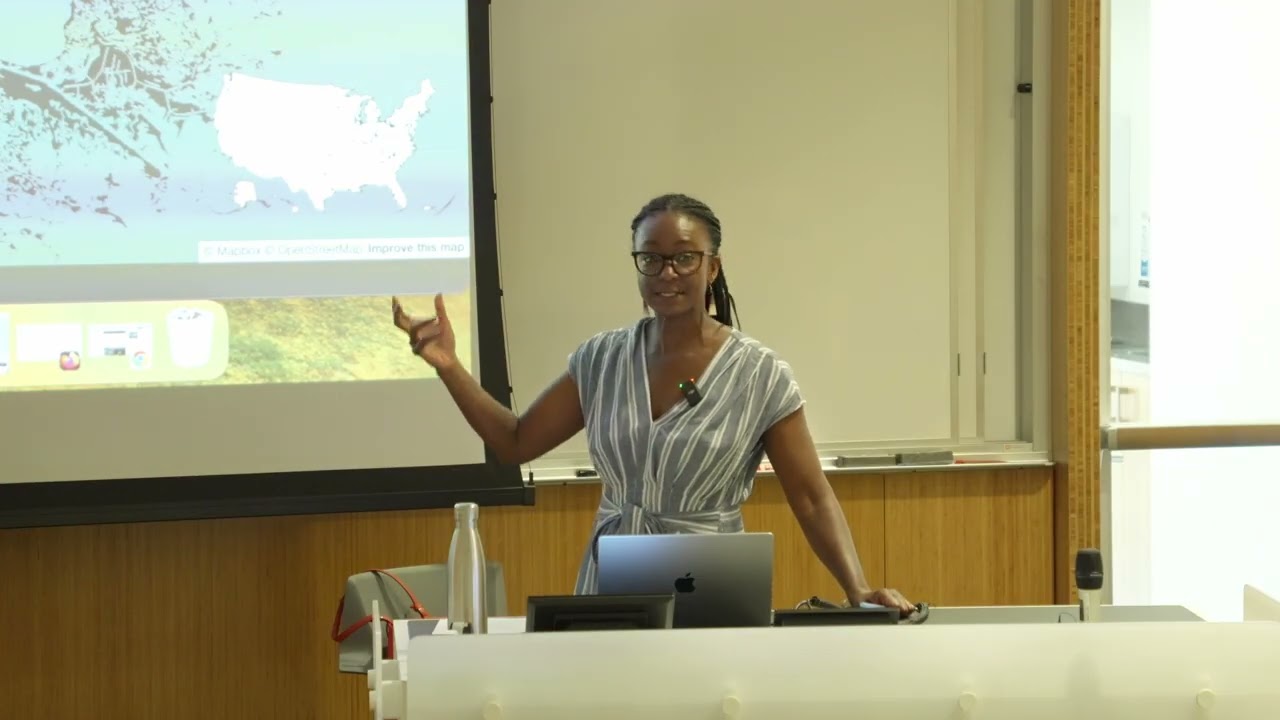
Energy for the Developing World Lecture | Dena Montague | Stanford Understand Energy
Keywords
Summary
136 words
Critical Evaluation
The lecture provides a valuable and accessible overview of energy access and justice issues in the developing world, particularly sub-Saharan Africa. Montague effectively uses frameworks like energy justice and the Human Development Index to structure her arguments, and she grounds her points in concrete examples such as Ghana and US tribal communities. The content is well-organized, with clear sections and a logical flow from problem definition to potential solutions. The speaker’s expertise in environmental justice adds credibility, and she appropriately highlights the importance of procedural and distributive justice in energy planning. However, the lecture is primarily an expert opinion piece rather than a rigorous scientific review; while it references concepts like energy poverty and the HDI, it does not provide specific citations for many claims, which limits its verifiability. The discussion of solutions, such as decentralized solar and clean cooking, is promising but could benefit from more detailed evidence on implementation and impact. The title accurately reflects the content, and the lecture is suitable for a general audience interested in energy and development. Overall, it is a thought-provoking and informative talk that raises important questions about equity and sustainability in the energy transition.
193 words
Title / Content Match
The title accurately reflects the content, which focuses on energy challenges and solutions in developing regions, with a strong emphasis on justice and access.
Quality & Reliability
8/10
The lecture is delivered by a Stanford lecturer with expertise in environmental justice and energy transitions, providing a well-structured overview of energy access and justice issues. It draws on established frameworks (energy justice, HDI) and specific case studies (Ghana, US). However, it is a lecture rather than a peer-reviewed study, and some claims lack specific citations within the talk.
Chapters
- Introduction
- Building a Sustainable Energy System
- Energy Justice
- The Benefits of Energy Use
- Energy Histories
- Fossil Fuel Free Energy Justice
- Energy Access Case Study: Ghana
- Solar PV Options for Electricity Access
- Energy Innovation from Below
- Decentralized Electricity Access
- Using Renewable Energy to Increase Agricultural Productivity
- Access to Clean Cooking Fuels
- Global Investment for Universal Electricity Access
Cited Sources
- Dena Montague - Stanford Profile — Speaker's academic profile and background.
- Understand Energy Newsletter — Resource for further energy education.
- Global Energy Access - Understand Energy Learning Hub — Related content on global energy access.
Concurring Sources
- Energy poverty - Wikipedia — Defines energy poverty and its prevalence, aligning with the lecture's discussion.
- International Energy Agency - Energy Access — Provides data and analysis on global energy access, supporting the lecture's claims.
Dissenting Sources
- No specific discordant sources found — The lecture's claims are generally consistent with mainstream literature on energy access and justice.
Contribution & Novelties
The lecture synthesizes existing knowledge on energy access and justice, emphasizing the need to move beyond mere access to ensure equitable and just energy systems. It highlights the concept of energy histories and the importance of local knowledge in energy planning. The case study of Ghana provides a concrete example of challenges and opportunities in sub-Saharan Africa.
Pour aller plus loin :
- Energy justice - Wikipedia — Overview of the energy justice framework.
- Human Development Index - Wikipedia — Explanation of the HDI and its components.
- Sustainable Development Goal 7 - United Nations — Official UN page on affordable and clean energy.
102 words
Radar Profile
The radar profile shows high scores in information quantity, quality, and reliability, with a moderate technical level. This indicates a well-balanced lecture that is informative and credible, though not highly technical, making it accessible to a broad audience.
💬 No comments were provided for analysis.