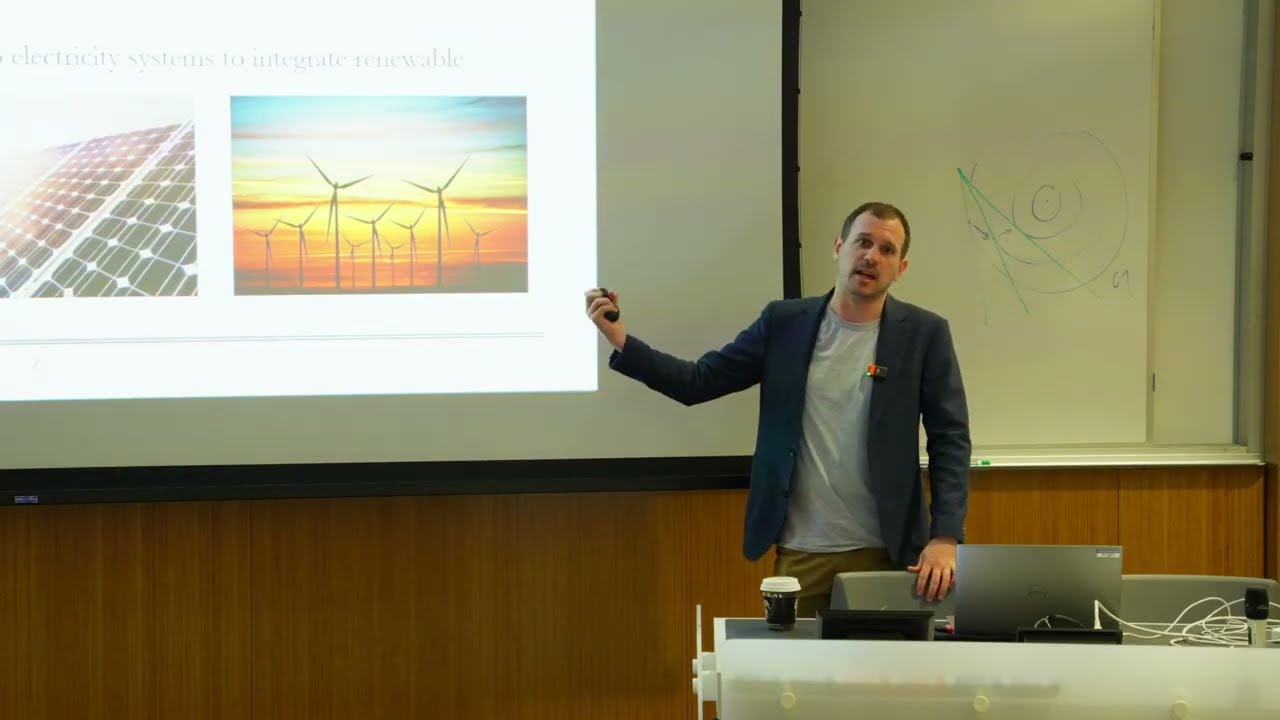
A Decarbonized Electric Power Sector Lecture | Zach Ming | Stanford Understand Energy
Keywords
Summary
174 words
Critical Evaluation
The lecture provides a solid, high-level overview of the challenges and strategies for decarbonizing the electric power sector. Zach Ming’s expertise is evident, and he effectively communicates complex concepts in an accessible manner. The content is well-structured, following a logical progression from the industry’s current state to future trends and specific mechanisms. The discussion of the four pillars of decarbonization is particularly valuable, as it contextualizes the electricity sector within the broader economy. The emphasis on the role of economics and state-level policy is a nuanced perspective that counters the common overemphasis on federal action. However, the lecture lacks specific data and citations to support some claims, such as the exact percentage of emissions from the electricity sector or the projected doubling of demand. While the speaker mentions his consulting work, he does not provide concrete examples or case studies to illustrate his points. The treatment of nuclear and carbon capture is brief, which may be appropriate given the focus on renewables, but it leaves some questions unanswered. The discussion of retail rate design and utility business models is insightful but could benefit from more detail on specific mechanisms and challenges. Overall, the lecture is informative and credible, but it would be strengthened by more empirical evidence and references to specific studies or reports. The adéquation between title and content is excellent, as the lecture directly addresses the topic. The presence of a brief sponsorship segment (not mentioned in the transcript) does not detract from the content’s quality.
248 words
Title / Content Match
The title accurately reflects the content: a lecture on decarbonizing the electric power sector, covering key aspects such as renewable integration, electrification, and utility business models.
Quality & Reliability
8/10
Lecture by an experienced energy consultant and Stanford lecturer, providing a comprehensive overview of electricity sector decarbonization. The content is well-structured, technically sound, and grounded in practical industry experience. However, it is primarily an expert opinion rather than a peer-reviewed study, and some claims lack specific citations.
Chapters
Cited Sources
- A Decarbonized Electric Power Sector page — Referenced as the Learning Hub page for additional content on the topic.
- Zach Ming's profile at E3 — Provided in the description to learn more about the presenter.
- Stanford Understand Energy newsletter — Mentioned as a way to stay updated on energy topics.
Concurring Sources
- Stanford Understand Energy Learning Hub — The lecture is part of the Stanford Understand Energy course, which provides educational content on energy topics.
Contribution & Novelties
The lecture provides a comprehensive and accessible overview of the key challenges and strategies for decarbonizing the electric power sector, emphasizing the importance of economics and state-level policy. It offers a practical perspective from an industry consultant, highlighting the need for a portfolio of solutions including renewables, storage, and grid flexibility. The discussion of retail rate design and utility business models adds depth to the understanding of the institutional changes required.
Pour aller plus loin :
- Renewable energy integration — Provides background on the challenges of integrating variable renewables.
- Carbon capture and storage — Explores the technology mentioned as one of the three decarbonization strategies.
- Electricity market design — Relevant to the discussion of retail rates and utility business models.
120 words
Radar Profile
The radar profile shows high scores in information quantity, quality, and reliability, with a slightly lower technical level, indicating a comprehensive and credible overview that is accessible to a broad audience.