Implications Part 1: Hydrocarbon Exits, Renewable Challenges, ...| Lovins| Extreme Energy Efficiency
Keywords
Summary
165 words
Critical Evaluation
The lecture provides a wealth of information and a compelling argument for the transformative potential of energy efficiency and renewables. Lovins draws on his extensive experience and cites numerous reports and forecasts, lending credibility to his claims. However, the presentation is largely opinion-based, and some statements are presented without direct evidence in the transcript. For instance, while he mentions specific numbers like the cost of saving a barrel of oil, he does not always provide the source. The argumentation is generally solid, but it could benefit from more explicit citations. The lecture is technically detailed, covering topics like methane pyrolysis and geological hydrogen, but remains accessible to a general audience. The sources cited are reputable, including Stanford and RMI, and the speaker’s authority is well-established. The title accurately reflects the content, and the lecture is well-structured with clear sections. Overall, this is a high-quality educational resource, though it is more of an expert opinion than a rigorous scientific review.
159 words
Title / Content Match
The title accurately reflects the content, which focuses on the implications of extreme energy efficiency for hydrocarbons, renewables, and other topics.
Quality & Reliability
8/10
The speaker is a renowned expert in energy efficiency with decades of experience, and the content is well-supported by references to major reports and forecasts. However, the presentation is largely opinion-based and forward-looking, with some claims not fully sourced in the transcript.
Chapters
- Introduction to Hydrocarbons
- Hydrocarbons: Price Volatility and Investment
- Gas-Fueled Auto Sales vs EV Sales
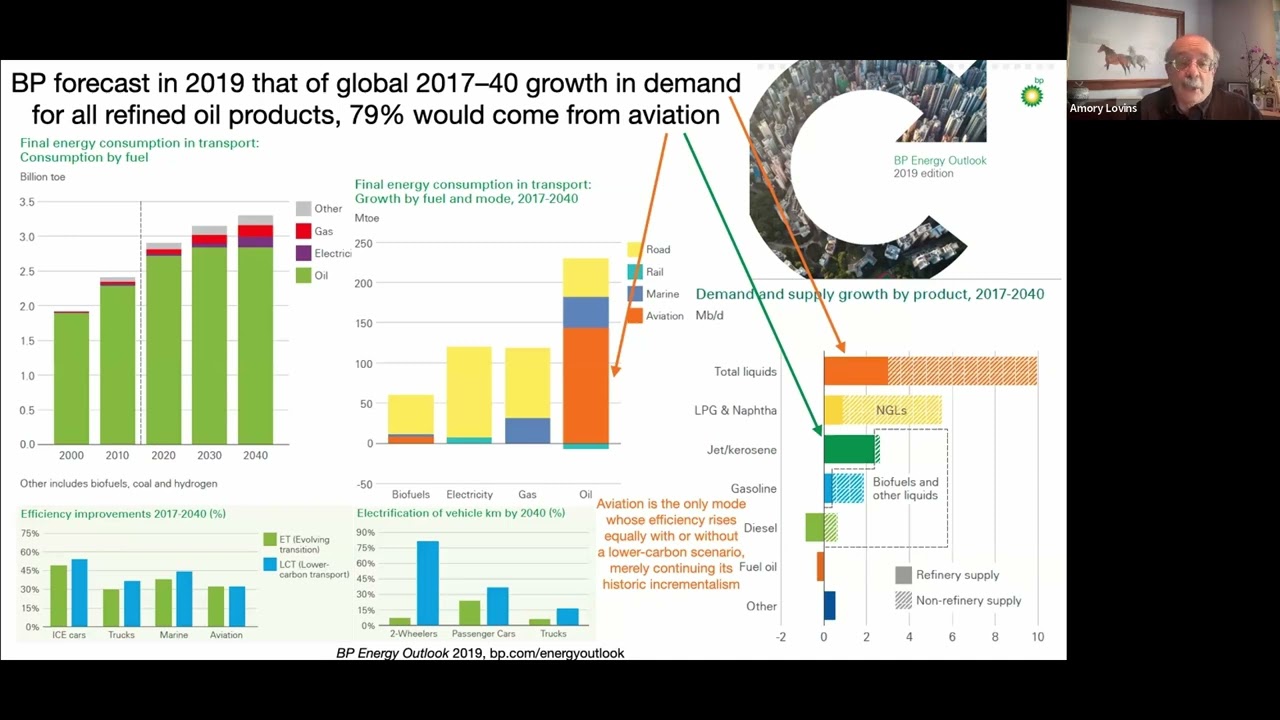
- BP & Shell Forecasts for Hydrocarbon Demand
- Non-Combustible Oil Uses (Plastics)
- Methane Emissions and Abatement
- Methane Pyrolysis
- Geological Hydrogen
- Investment in Renewables
- Renewables: Critical Minerals
- Renewables: Land Use
- Energy Resilience: Natural Disasters and Security Threats
- Designing Resilient Energy Systems
- Case Study: 2021 Texas Grid Failure
- Case Study: Australia
- Global Development: Energy Efficiency & Renewables
Cited Sources
- Integrative Design for Radical Energy Efficiency Learning Hub — Course materials and resources for the Extreme Energy Efficiency course.
- Energy Efficiency Implications page — Specific page on implications of energy efficiency.
- Amory Lovins profile at Stanford — Speaker's academic profile.
- Rocky Mountain Institute (RMI) — Organization co-founded by Lovins, relevant to his work.
Concurring Sources
- Bloomberg New Energy Finance — Referenced for EV sales forecasts and oil displacement.
- International Energy Agency (IEA) — Referenced for oil demand forecasts and petrochemicals.
- BP Energy Outlook — Referenced for hydrocarbon demand scenarios.
- Shell Scenarios — Referenced for hydrocarbon demand scenarios.
Dissenting Sources
- Chevron and ExxonMobil investment strategies — These companies continue to invest heavily in fossil fuels, contrary to the lecture's thesis of declining hydrocarbon demand.
Contribution & Novelties
This lecture provides a comprehensive overview of the implications of extreme energy efficiency, synthesizing insights from various reports and offering a unique perspective on the future of hydrocarbons and renewables. It emphasizes the importance of integrative design and whole systems thinking, which is a distinctive approach. The lecture also highlights the often-overlooked role of plastics in oil demand and the potential for system change.
Pour aller plus loin :
- Integrative design — Concept central to the lecture.
- Amory Lovins — Background on the speaker.
- Rocky Mountain Institute — Organization associated with the speaker.
- Peak oil — Relevant to the discussion on oil demand.
- Energy efficiency — Core topic.
108 words
Radar Profile
The radar profile shows high scores in quantity of information and fiabilité, reflecting the depth and credibility of the content. The technical level is moderate, making it accessible to a broad audience. The overall balance indicates a well-rounded and informative presentation.