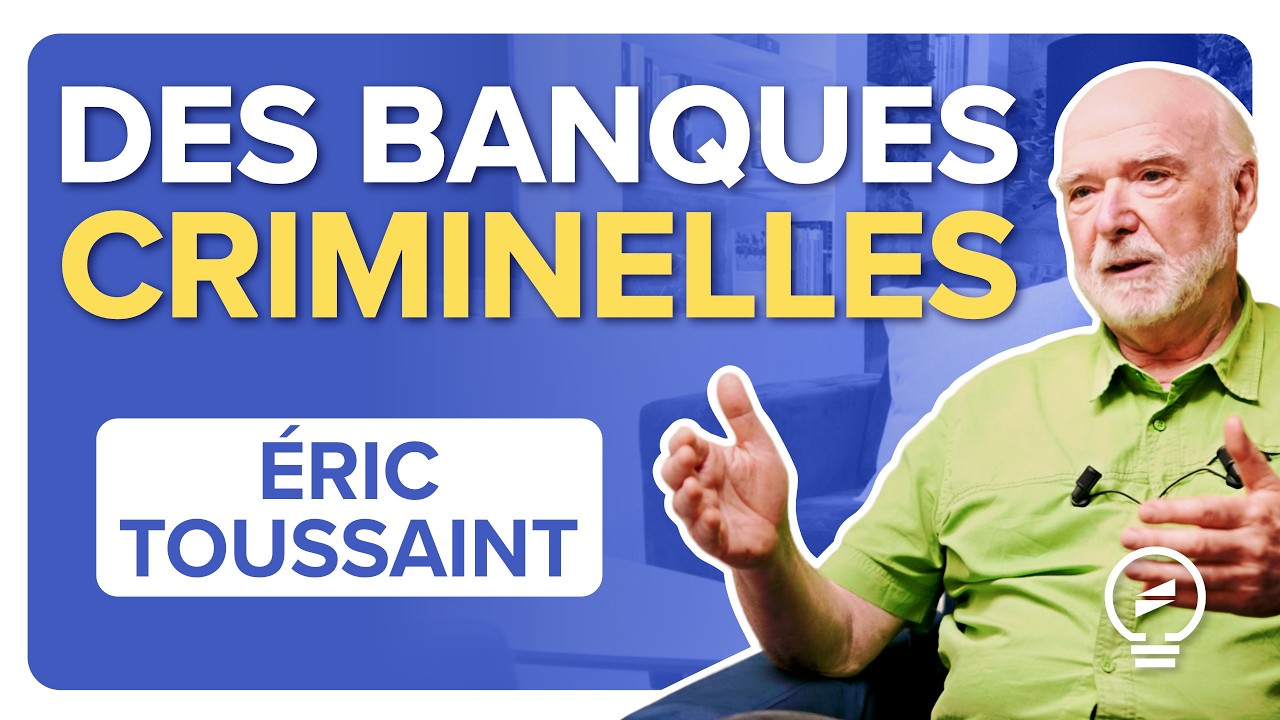
LES BANQUES MAFIEUSES SE GAVENT pendant que la CRISE FINANCIÈRE se rapproche - Éric Toussaint
Mafia-controlled banks are gorging themselves while the financial crisis looms - Eric Toussaint
Keywords
Summary
162 words
Critical Evaluation
Value of the Information & Strength of the Argument
The interview provides a wealth of detailed information on the inner workings of the banking system, from the structure of bank balance sheets to the mechanics of derivatives and shadow banking. Toussaint’s arguments are supported by concrete examples, such as the case of Ecuador’s debt audit and the role of CDS in the Greek crisis. He effectively demonstrates how banks externalize risks and privatize profits, and how the state acts as a safety net for reckless behavior. The argumentation is coherent and persuasive, though it is explicitly from a critical, anti-capitalist perspective, which may not be balanced by alternative viewpoints.
Scientific Rigor, Source Quality, Title Accuracy
The interview demonstrates a strong command of the subject matter, with references to historical events and specific cases. However, it lacks formal citations to academic sources or reports, relying instead on the speaker’s expertise and anecdotal evidence. The title accurately reflects the content, which is a critical analysis of banking practices and the impending crisis. The description provides a link to an Elucid analysis on the instability of the banking system, which serves as a supplementary source. The comments show a highly positive reception, with viewers praising the clarity and importance of the information.
209 words
Title / Content Match
The title accurately reflects the content: a critical analysis of banking practices and the approaching financial crisis, with a strong emphasis on the impunity of large banks.
Quality & Reliability
8/10
The interview features a recognized expert in sovereign debt and finance, with a long track record and publications. The arguments are well-structured and supported by concrete examples, but the perspective is openly activist and critical, which may introduce bias. The information is consistent with known facts about the 2008 crisis and banking practices.
Chapters
- Zapping
- Le rôle des banques dans la révolution néolibérale
- Le fléau des banques « universelles »
- Produits dérivés et spéculation débridée
- Cacher les opérations risquées : hors-bilan et shadow banking
- Interconnexion des banques américaines et européennes
- Le problème des fonds propres et ses conséquences
- Les effets dévastateurs de la spéculation
- Banques mafieuses et impunité
- Des banques centrales complices
- Finance et lutte des classes
- Question finale
Cited Sources
- Silicon Valley Bank, Crédit Suisse, etc. : tout le système bancaire est instable — Referenced in the video description as a resource to go further on the topic of banking instability.
Concurring Sources
- The Big Short (film) — Mentioned in a comment as a recommended viewing to understand the 2008 crisis, aligning with the video's themes.
Dissenting Sources
- No specific discordant sources were cited in the video or comments. — The video presents a critical perspective without engaging with opposing viewpoints, and no discordant sources were mentioned.
External References
Contribution & Novelties
The interview offers a comprehensive and accessible explanation of complex financial mechanisms, making it valuable for a general audience. It synthesizes decades of research and activism by Éric Toussaint, providing a coherent narrative of how banks have become ‘mafia-like’ entities. The discussion of solutions, such as public control of banks and debt audits, is a distinctive contribution.
Pour aller plus loin :
- CADTM - Committee for the Abolition of Illegitimate Debt — Official website of the organization Toussaint represents, with extensive resources on debt and finance.
- Shadow banking system - Wikipedia — Overview of the shadow banking sector and its role in the financial system.
- Credit default swap - Wikipedia — Explanation of CDS, a key instrument discussed in the interview.
121 words
Radar Profile
The radar profile shows high scores in quantity and quality of information, with a strong technical level, indicating a dense and informative content. The global reliability is also high, reflecting the expertise of the speaker, though the activist stance may slightly reduce objectivity.
💬 Très positif. Sur les 30 commentaires analysés, les spectateurs expriment une forte admiration pour l'expertise d'Éric Toussaint et la clarté des explications, avec des remerciements appuyés et des appels à diffuser largement le contenu.