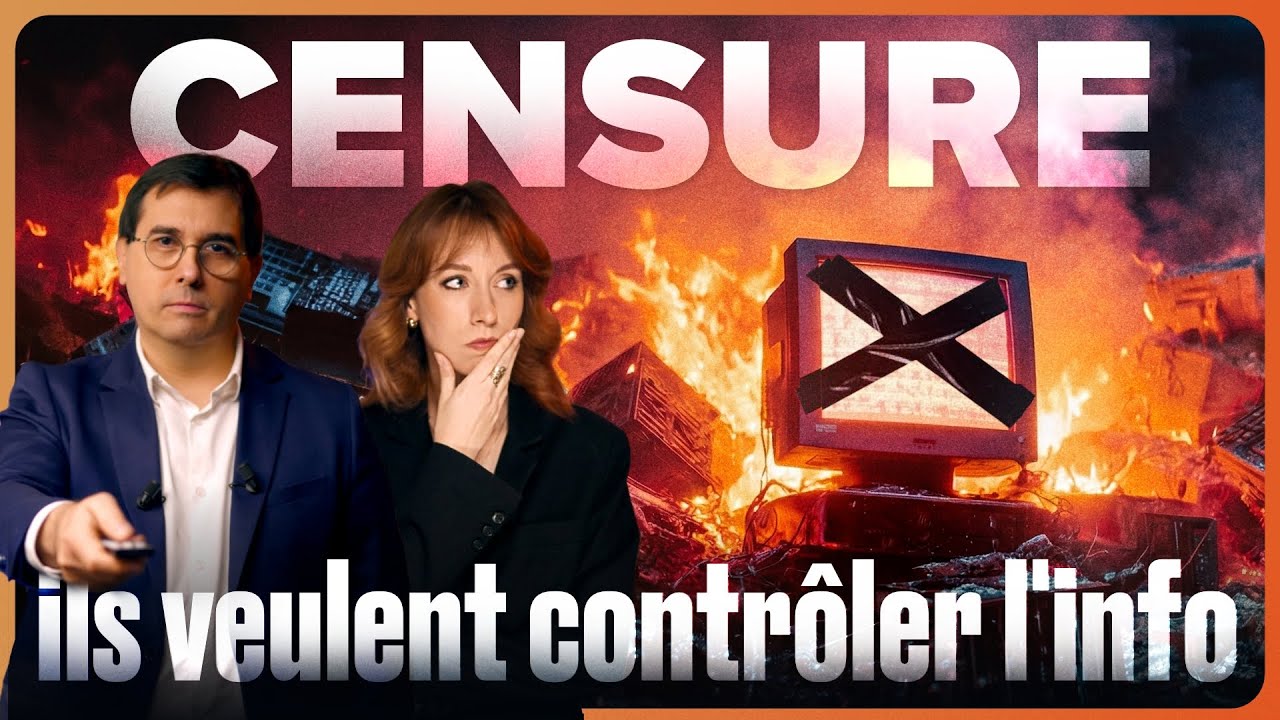
ON VA DISPARAITRE ! Macron est prêt à tout pour contrôler l’information (et on a BESOIN de VOUS !)
WE'RE GOING TO DISAPPEAR! Macron is ready to do anything to control information (and we NEED YOU!)
Keywords
Summary
156 words
Critical Evaluation
Value of the Information & Strength of the Argument
The video provides a valuable overview of the legal and economic challenges facing independent media, synthesizing information about specific laws and cases that are often discussed separately. The argumentation is coherent and builds a compelling narrative of a deliberate erosion of media freedom. However, it is presented from a clear partisan perspective, and the evidence is selected to support the thesis, with limited engagement with counterarguments or the potential benefits of regulation. The reliance on anecdotal cases and the lack of in-depth analysis of the legal texts weaken the scientific rigor, but the video effectively raises important concerns about democratic oversight and the concentration of power.
Scientific Rigor, Source Quality, Title Accuracy
The video cites specific laws, cases, and reports, but does not provide direct citations within the video, instead pointing to a link in the description for sources. The sources are not independently verified, and the video’s reliance on its own interpretation of the laws may be biased. The title accurately reflects the content, which is a call to action framed around the threat of disappearance. The video does not engage with opposing viewpoints, which limits its scientific objectivity. The public comments are overwhelmingly supportive, reflecting a community that shares the video’s concerns.
213 words
Title / Content Match
The title accurately reflects the content, which discusses the existential threat to independent media and calls for viewer support.
Quality & Reliability
6/10
The video presents a well-documented argument about legislative and economic pressures on independent media, citing specific laws and cases. However, it is an opinion piece with a clear activist stance, and the sources are not systematically cited in the video itself, relying on the description link for references.
Chapters
Cited Sources
- Sources de la vidéo — Link in the description to the sources used in the video.
- Offres d'abonnement ÉLUCID — Link to subscription offers to support the channel.
- Application mobile ÉLUCID (Apple) — Link to the iOS app for the ÉLUCID media.
- Application mobile ÉLUCID (Android) — Link to the Android app for the ÉLUCID media.
- Don à ÉLUCID — Link to make a donation to support ÉLUCID.
- Offrir un abonnement ÉLUCID — Link to offer a subscription to ÉLUCID as a gift.
Concurring Sources
- Reporters sans frontières (RSF) — The organization mentioned in the video as working on media labeling, which aligns with the video's concerns about such initiatives.
Dissenting Sources
- Digital Services Act (DSA) — The video criticizes the DSA for enabling censorship, but the EU presents it as a tool to protect users and hold platforms accountable, which is a contrasting perspective.
Contribution & Novelties
The video offers a synthesis of recent legislative and economic threats to independent media in France, contextualizing them within a broader historical narrative of media control. It provides a clear explanation of the DSA’s ’trusted flaggers’ mechanism and its potential for censorship, which is a relatively underexplored topic in public discourse. The video also highlights the economic pressures from payment platforms and search engines, which are often overlooked.
Pour aller plus loin :
- Digital Services Act — The EU regulation discussed in the video, which introduces obligations for platforms and the ’trusted flaggers’ mechanism.
- Loi contre les fausses informations (France) — The French law on fake news, which the video criticizes for its vague definition.
- Loi relative à la sécurité globale — The French law on global security, which included a controversial article on filming police.
- Loi confortant le respect des principes de la République — The French law on separatism, which the video mentions.
- Loi visant à prévenir les ingérences étrangères en France — The French law on foreign interference.
- Secret des affaires (droit français) — The French law on trade secrets, which the video argues is used to intimidate journalists.
- Reporters sans frontières — The organization mentioned in the video regarding media labeling initiatives.
- Décodex — The fact-checking tool by Le Monde, which the video references as a failed precedent.
222 words
Radar Profile
The radar profile shows high scores in quantity of information and quality of information, reflecting the video's comprehensive coverage of the topic. The lower score in technical level indicates that the content is accessible to a general audience, while the moderate reliability score reflects the opinionated nature of the presentation.
💬 Très positif. Sur les 30 commentaires analysés, la grande majorité exprime un soutien enthousiaste à ÉLUCID et à son travail, avec des appels à l'abonnement et des remerciements pour la qualité des contenus.