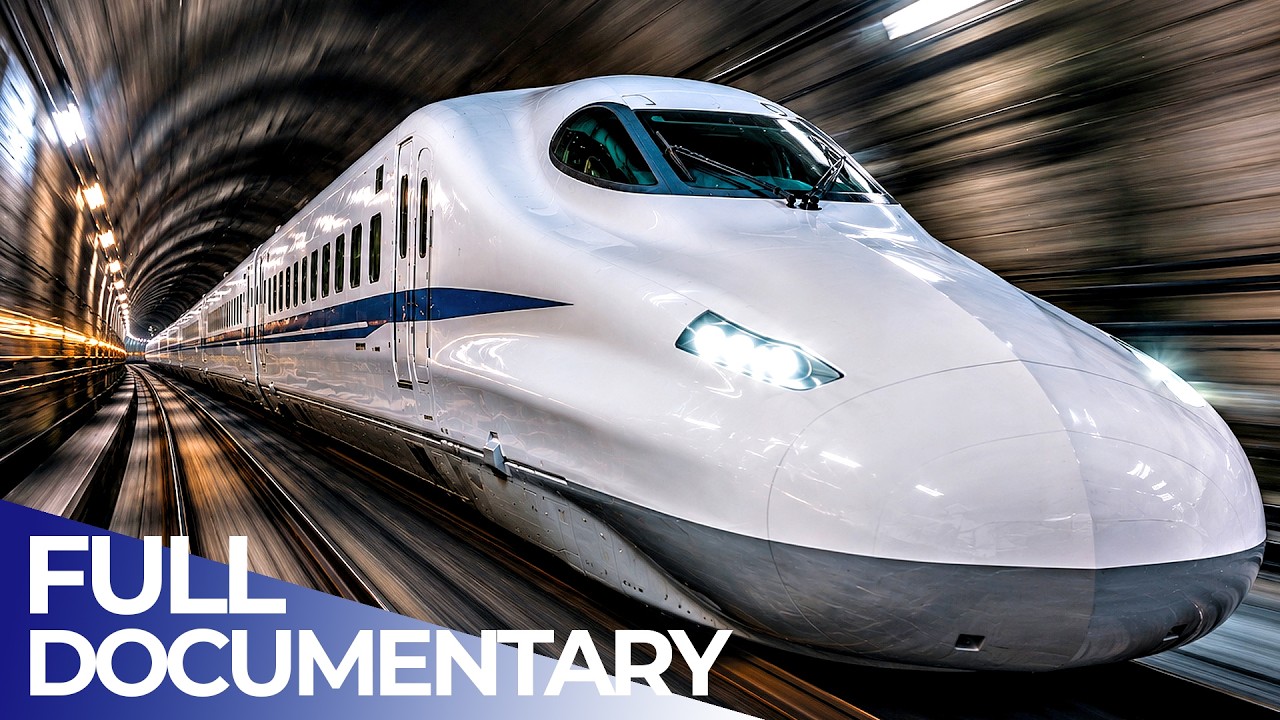
World’s Fastest Trains: Masters of Ultra-Speed | Complete Series | FD Engineering
Keywords
Summary
171 words
Critical Evaluation
The documentary provides a comprehensive and visually engaging overview of high-speed rail systems in three countries, highlighting their engineering marvels and operational challenges. The information is presented in an accessible manner, making it suitable for a general audience interested in transportation technology. The strength of the documentary lies in its on-the-ground coverage, including interviews with drivers, engineers, and maintenance staff, which adds a human element and practical insights into the daily operations of these trains. The footage of construction projects, such as tunnel boring and bridge inspections, effectively illustrates the complexity of building and maintaining high-speed rail infrastructure.
However, the documentary has several limitations from a scientific perspective. It lacks in-depth technical analysis, often glossing over the underlying physics and engineering principles in favor of broad statements. For instance, while it mentions the body incline system of the Shinkansen, it does not delve into the control algorithms or the specific mechanical components involved. Similarly, the discussion of braking systems is superficial, without explaining the regenerative braking mechanisms in detail. The documentary also does not cite specific sources or studies, which reduces its credibility as a scientific reference. While the information presented is generally accurate, it is not rigorously sourced, and some claims, such as the 85% reduction in human error from ‘pointing and calling,’ are presented without citation.
The documentary’s focus on multiple countries and trains means that each segment is relatively brief, limiting the depth of coverage. For example, the section on the Italo Evo touches on its design inspiration from sports cars but does not explore the aerodynamic modeling or materials science in detail. The safety features, such as earthquake detection systems, are mentioned but not explained in terms of their technical implementation.
Despite these shortcomings, the documentary succeeds in conveying the impressive scale and sophistication of high-speed rail systems. It effectively communicates the importance of safety, maintenance, and infrastructure in enabling high-speed travel. The inclusion of historical context, such as the 2011 earthquake in Japan and the 2013 accident in Spain, adds perspective on the challenges and risks involved. Overall, the documentary is a valuable introduction to high-speed rail engineering, but it falls short of providing a rigorous scientific analysis.
363 words
Title / Content Match
The title accurately reflects the content, which covers the fastest trains in Italy, Japan, and Spain, focusing on their speed, technology, and engineering.
Quality & Reliability
7/10
The documentary provides a broad overview of high-speed rail systems in Italy, Japan, and Spain, featuring interviews with engineers, drivers, and maintenance staff, as well as footage of construction and maintenance operations. While it is informative and visually engaging, it lacks in-depth technical analysis and relies on general explanations rather than rigorous scientific detail. The information is generally accurate and consistent with known facts about these train systems, but the documentary does not cite specific sources or provide references for its claims.
Chapters
Cited Sources
- World’s Largest Military Planes - Mammoths of Heavy Airlift — Related documentary from the same channel, mentioned in the description.
Concurring Sources
- Shinkansen — The documentary's description of the Shinkansen's speed, safety record, and technology aligns with general knowledge about the system.
- Frecciarossa 1000 — The documentary's portrayal of the Frecciarossa 1000's speed and features is consistent with public information.
- AVE Class 103 — The documentary's coverage of the AVE 103's capabilities and routes matches known facts.
Dissenting Sources
- No specific discordant sources found — The documentary does not contradict established knowledge, but it lacks citations for some claims, such as the 85% reduction in human error from 'pointing and calling'.
Contribution & Novelties
The documentary provides a comparative overview of high-speed rail systems in Italy, Japan, and Spain, highlighting their unique engineering solutions and operational practices. It offers insights into the maintenance and safety protocols that are crucial for high-speed operations, such as ultrasonic wheel inspection and earthquake early warning systems. The film also showcases the construction challenges and innovative techniques used to build high-speed rail infrastructure, including tunnel boring and bridge inspection drones.
Pour aller plus loin :
- Shinkansen — Overview of Japan’s bullet train system, its history, and technology.
- Frecciarossa 1000 — Details on Italy’s high-speed train, including specifications and performance.
- AVE Class 103 — Information on Spain’s high-speed train, its design, and operation.
- ERTMS — The European standard for train control and signaling, mentioned in the documentary.
- Maglev — Magnetic levitation train technology, which the documentary mentions as a future development.
141 words
Radar Profile
The radar profile shows a balanced performance across the four dimensions, with slightly higher scores in quantity of information and reliability, reflecting the documentary's comprehensive coverage and generally accurate content. The technical level is moderate, indicating that while it is informative, it does not delve deeply into advanced engineering concepts.