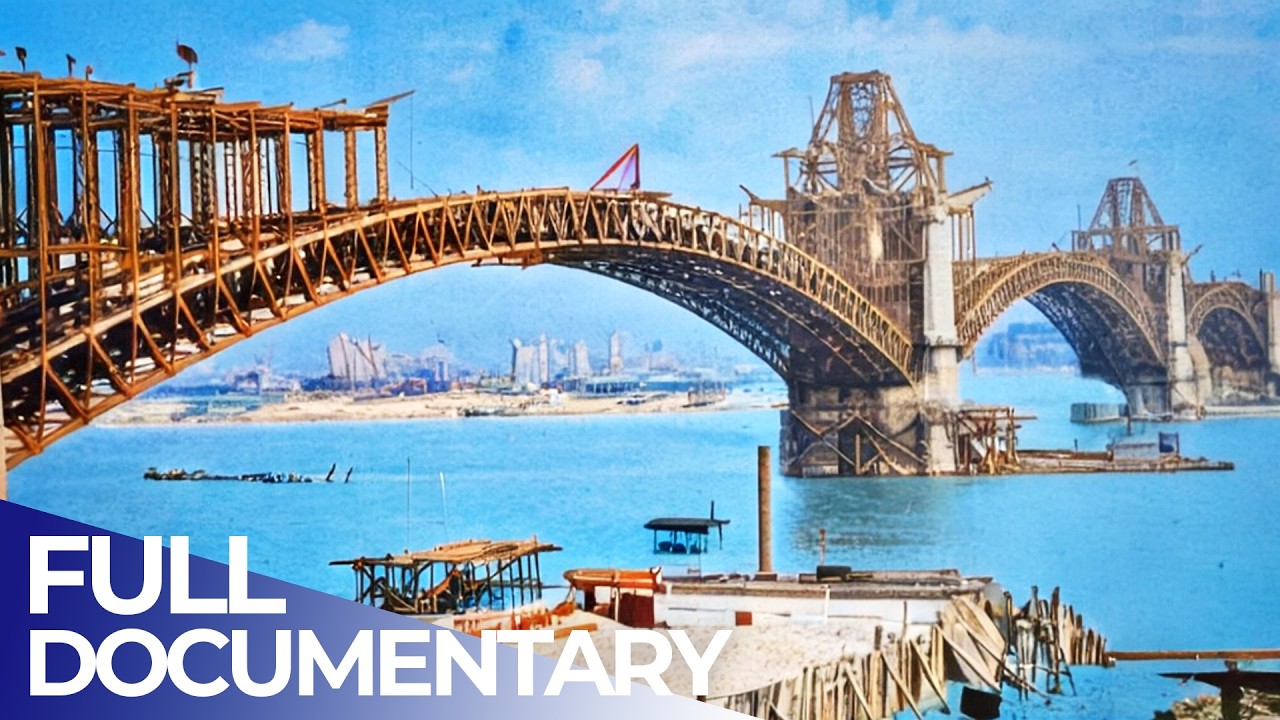
Iron Bridges: Built to Last for Centuries | Mega Bridges | FD Engineering
Keywords
Summary
148 words
Critical Evaluation
The documentary provides a comprehensive overview of the development of iron bridges during the Industrial Revolution, with a strong emphasis on historical context and engineering principles. The information is presented by a mix of engineers, historians, and architects, lending credibility to the content. The technical explanations, such as the difference between cast iron and wrought iron, are accurate and accessible. The film successfully illustrates the progression from early cast iron structures to more sophisticated suspension bridges, highlighting the roles of key figures like Telford and Brunel. However, the documentary lacks explicit citations to primary sources, and while it mentions specific bridges, it does not delve deeply into the mathematical or structural analysis behind them. The narrative occasionally romanticizes the engineering achievements, but it remains grounded in factual history. The inclusion of modern structures like the Falkirk Wheel provides a nice contrast, showing how historical principles influence contemporary design. The documentary’s strength lies in its visual presentation and expert commentary, making it a valuable educational resource for those interested in engineering history. The adéquation between title and content is strong, as the film indeed focuses on iron bridges built to last. The only minor weakness is the lack of discussion on the limitations and failures of early iron bridges, which could have provided a more balanced view. Overall, the documentary is informative and engaging, suitable for a general audience with an interest in engineering.
233 words
Title / Content Match
The title accurately reflects the content, which focuses on the history and engineering of iron bridges built to last.
Quality & Reliability
8/10
The documentary features expert commentary from engineers and historians, and presents historically accurate information about bridge engineering. It includes specific technical details and references to real structures. However, it lacks citations to primary sources and is produced for a general audience, which limits its depth.
Key Moments
Markers derived by PSI from the transcript: the creator did not define chapters.
- Introduction to the Iron Bridge at Coalbrookdale, the first cast iron bridge.
- Explanation of cast iron vs wrought iron properties.
- Thomas Telford's Pontcysyllte Aqueduct and its cast iron trough.
- The Falkirk Wheel and its engineering principles.
- Captain Samuel Brown and the Union Bridge.
- The Menai Suspension Bridge by Telford.
- The Széchenyi Chain Bridge in Budapest.
- The Clifton Suspension Bridge and Brunel's design.
- Brunel's broader contributions and legacy.
Cited Sources
- Bridges Before Steel - Pre-Industrial Marvels — Related documentary on the history of bridges before steel.
Concurring Sources
- Iron Bridge — Wikipedia article on the Iron Bridge at Coalbrookdale, confirming its historical significance.
- Pontcysyllte Aqueduct — Wikipedia article on the aqueduct, confirming its construction and materials.
Contribution & Novelties
The documentary provides a visual and narrative synthesis of the evolution of iron bridges, emphasizing the transition from cast iron to wrought iron and the key engineers involved. It offers a unique perspective by connecting historical structures to modern engineering principles, such as the Falkirk Wheel. The film’s contribution lies in its accessible presentation of complex engineering concepts, making them understandable to a broad audience.
Pour aller plus loin :
- Iron Bridge — Historical and technical details about the first cast iron bridge.
- Thomas Telford — Biography and contributions of the renowned civil engineer.
- Isambard Kingdom Brunel — Overview of Brunel’s engineering achievements.
- Suspension bridge — General principles and history of suspension bridges.
113 words
Radar Profile
The radar profile shows high scores in quantity and quality of information, with a strong technical level and reliability. This indicates a well-rounded documentary that is both informative and credible, with a slight emphasis on technical depth.