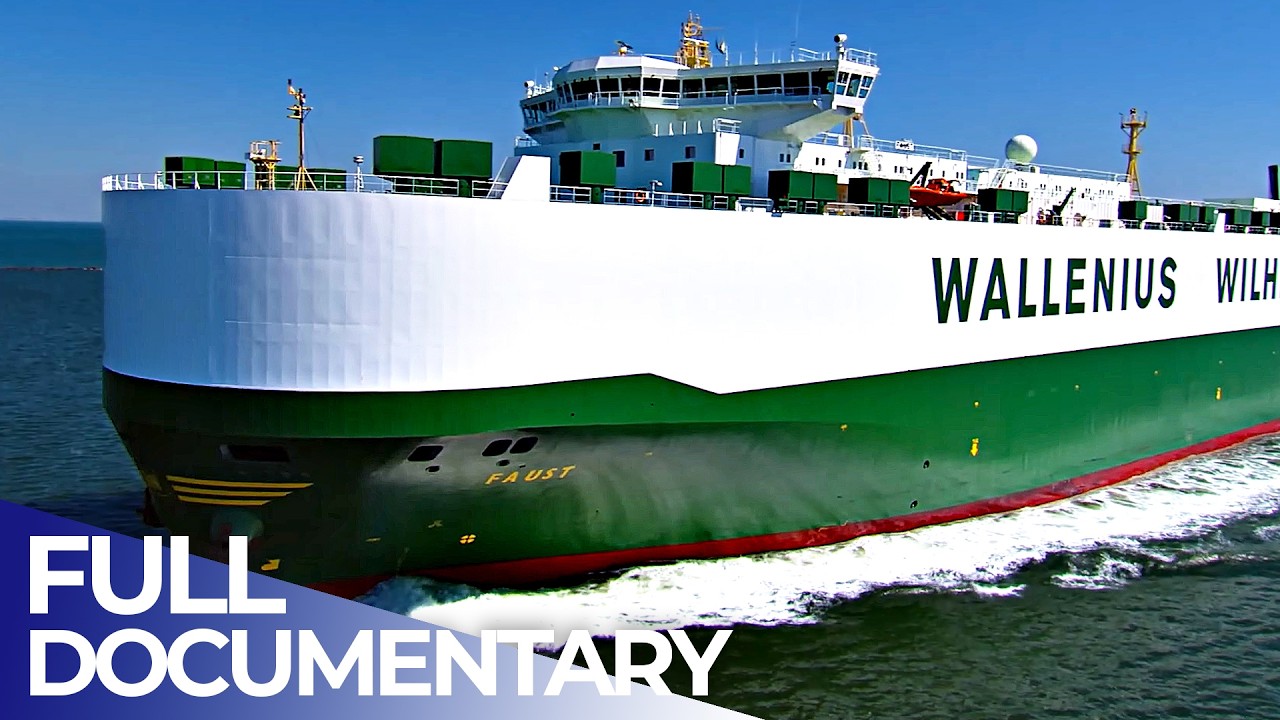
MV Faust: The Biggest Overseas Vehicle Carrier on the Planet | FD Engineering
Keywords
Summary
157 words
Critical Evaluation
The documentary provides a compelling and visually engaging look at the operations of a massive vehicle carrier, the MV Faust. It successfully conveys the scale and complexity of maritime logistics, from the precise loading of luxury cars to the navigation through treacherous winter storms. The strength of the film lies in its on-the-ground access: viewers see the actual loading process, the coordination between the chief officer and stevedores, and the decision-making on the bridge. The interviews with the captain and chief officer offer valuable insights into the practical challenges of operating such a vessel, including the importance of ballast management and route planning. The use of a custom software program to predict the ship’s rolling in storms is a notable highlight, demonstrating the integration of technology in modern shipping. However, the documentary has limitations. It tends to prioritize drama and spectacle over technical depth. While it mentions the ship’s dimensions and capacity, it does not delve into the specific engineering calculations or design features that make the Faust unique. The explanation of the ballast system is simplified, and the discussion of stability is cursory. The film also lacks critical analysis; it presents the ship and its operations in a largely positive light, without addressing potential environmental concerns or the economic pressures that drive such tight schedules. The sources cited are minimal, with only a link to another documentary in the description, and no references to academic or industry publications. The adéquation between title and content is good, as the film indeed focuses on the Faust as the largest vehicle carrier. Overall, the documentary is informative for a general audience but may leave engineering enthusiasts wanting more technical specifics. It is a well-produced piece of science communication, but its scientific rigor is moderate, and it does not offer new insights beyond what is commonly known about vehicle carriers.
307 words
Title / Content Match
The title accurately reflects the content, focusing on the MV Faust as the largest vehicle carrier and its engineering aspects.
Quality & Reliability
7/10
The documentary provides a detailed look at the operations of a large vehicle carrier, featuring interviews with crew and experts, and showing real procedures. However, it lacks in-depth technical data and independent verification, and the promotional tone may oversimplify some aspects.
Key Moments
Markers derived by PSI from the transcript: the creator did not define chapters.
- Introduction to the MV Faust, the largest vehicle carrier in the world.
- Arrival in Southampton and overview of the loading process.
- Explanation of the ship's dimensions and capacity.
- Detailed look at the stevedores' work and the precision required.
- Discussion of the ballast system and stability management.
- Decision to delay departure to load more cars, risking the tide.
- Security search for stowaways and the challenges involved.
- Departure from Southampton and navigation through shallow waters.
- Use of the custom weather routing software and discussion of redundancy.
- Approach of the storm and preparations for heavy weather.
Cited Sources
- Leviathan of the Sea - The Ship That Pushed Marine Engineering to Its Limit — Referenced in the video description as a related documentary on marine engineering.
Concurring Sources
- Leviathan of the Sea - The Ship That Pushed Marine Engineering to Its Limit — Related documentary on marine engineering, likely covering similar themes.
Contribution & Novelties
The documentary offers a rare behind-the-scenes look at the operations of a state-of-the-art vehicle carrier, highlighting the integration of advanced technology and human expertise. It provides insights into the practical challenges of loading and securing high-value cargo, as well as the use of custom software for route planning and stability prediction. While not groundbreaking, it serves as an accessible introduction to maritime logistics and engineering.
Pour aller plus loin :
- Roll-on/roll-off ship — Provides background on the type of vessel featured.
- Ballast water management — Explains the environmental and operational aspects of ballast systems.
- North Atlantic shipping routes — Context on the challenges of transatlantic crossings.
106 words
Radar Profile
The radar profile shows high scores in quantity of information and fiabilité, reflecting the documentary's rich visual content and credible interviews. However, the technical depth is moderate, and the overall quality is good but not exceptional, resulting in a balanced profile.