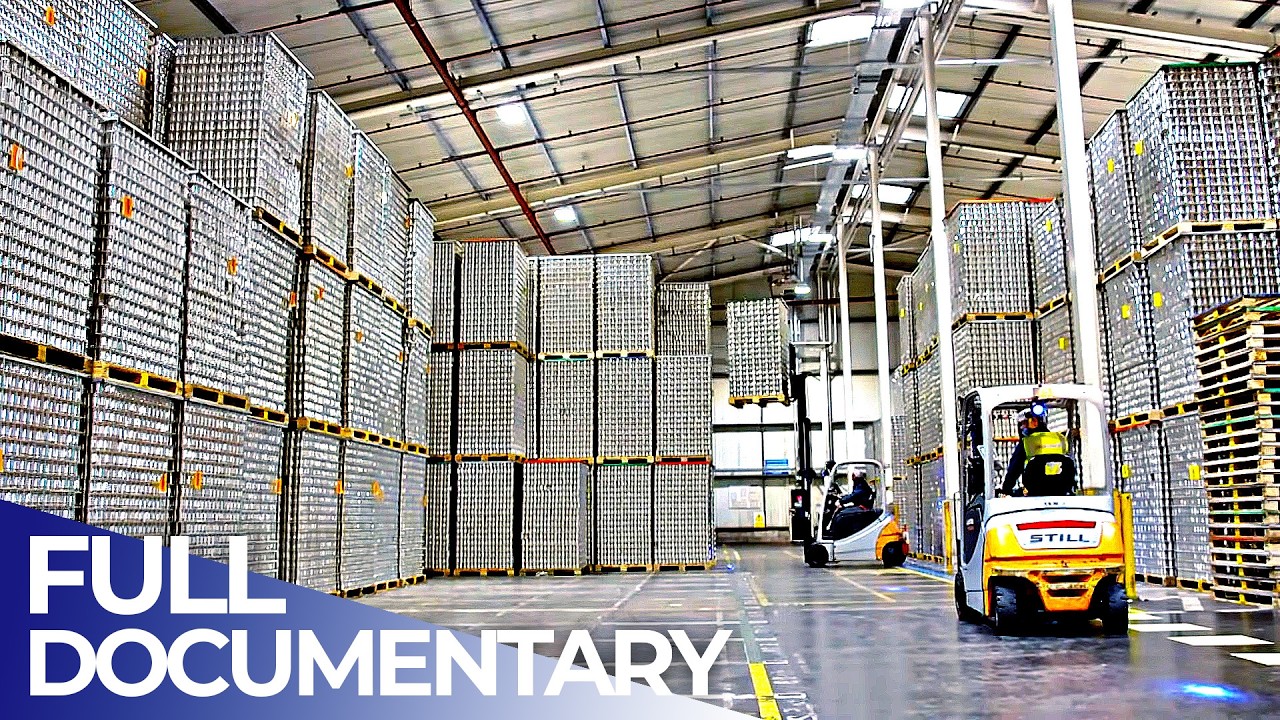
Mega Food Factories: The Secrets of Mass Production | Complete Series | FD Engineering
Keywords
Summary
138 words
Critical Evaluation
The documentary provides a fascinating and visually engaging look at the industrial processes behind everyday food products. Its strength lies in the detailed depiction of machinery and workflows, offering viewers an inside view of how mass production operates. The interviews with workers add a human element and provide practical insights into quality control and operational challenges. However, the scientific rigor is limited; the content is descriptive rather than analytical, with no references to engineering principles or data. The historical segments are interesting but not deeply sourced. The documentary does not address potential issues such as environmental impact, labor conditions, or nutritional concerns, which could be relevant to a comprehensive evaluation. The title accurately reflects the content, and the production quality is high. Overall, it serves as an informative piece for general audiences but lacks the depth and critical perspective expected of a scientific analysis.
144 words
Title / Content Match
The title accurately reflects the content, which covers the mass production secrets of several food factories.
Quality & Reliability
7/10
The documentary provides a detailed look at food processing plants, showing actual machinery and processes, with interviews of workers and historical context. While it is informative and appears accurate, it lacks citations to scientific sources and is produced for a general audience, limiting its depth and verifiability.
Chapters
Cited Sources
- Inside Budweiser: The Mega Brewing Factory — Mentioned in the description as a related video.
Concurring Sources
- Heinz - Wikipedia — Provides background on the company's history and products, consistent with the documentary's portrayal.
Contribution & Novelties
The documentary offers a comprehensive visual tour of several major food factories, showcasing the scale and automation of modern food production. It provides insights into quality control measures, such as laser scanning and hand inspections, and the historical evolution of canning. The novelty lies in the detailed footage of rarely seen processes, making it a valuable educational resource for those interested in food engineering.
Pour aller plus loin :
- Food processing — Provides an overview of food processing techniques and their history.
- Canning — Detailed explanation of the canning process and its significance.
- Automation in food industry — Discusses the role of automation in manufacturing, including food production.
108 words
Radar Profile
The radar profile shows high scores in quantity of information and technical level, indicating a content-rich documentary with moderate technical depth. Quality and reliability are slightly lower, reflecting the lack of scientific citations and analytical depth.