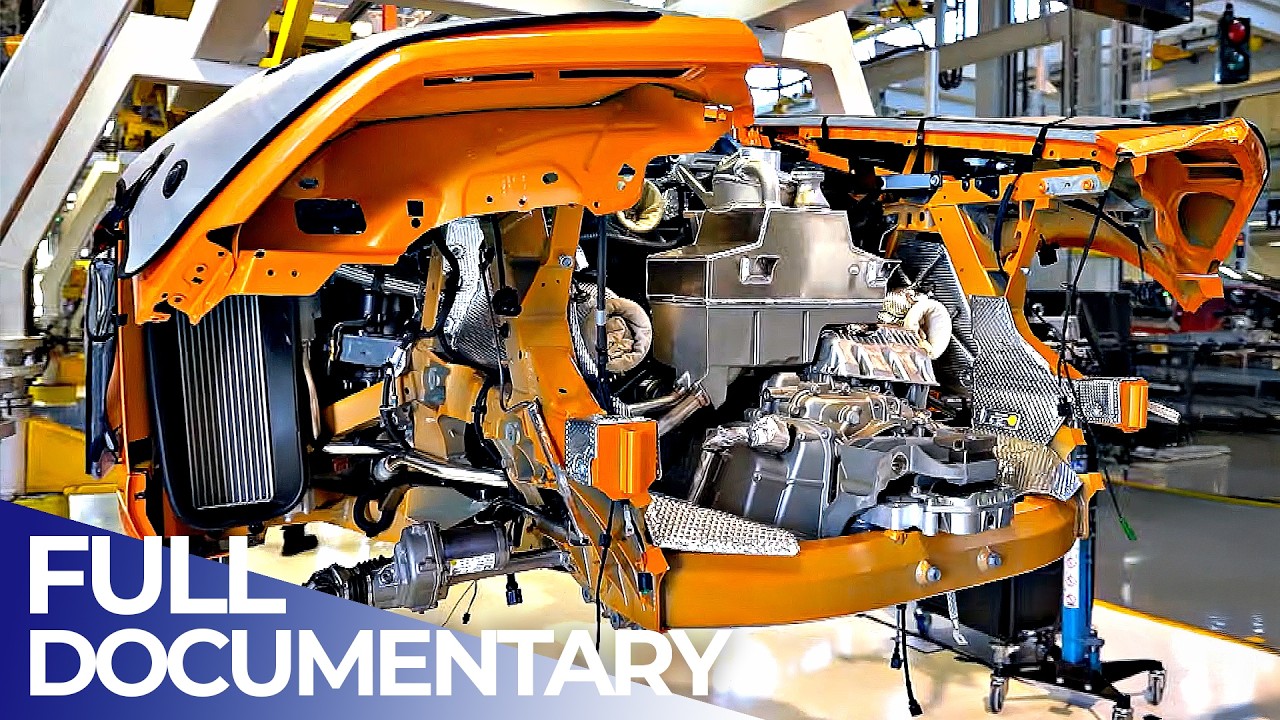
Building the Beast: Inside Lamborghini's Huracán Factory | FD Engineering
Keywords
Summary
172 words
Critical Evaluation
Value of the Information & Strength of the Argument
The documentary provides valuable, detailed information about the manufacturing process of a high-performance sports car, offering a rare look at the manual assembly line and the engineering decisions behind the Huracán Evo. The argumentation is supported by interviews with factory personnel and engineers, who explain technical concepts such as the Venturi effect, the importance of tire rolling circumference, and the challenges of integrating a powerful engine. The narrative is coherent, moving from production to motorsport, and effectively demonstrates how racing technology influences road cars and vice versa. However, the documentary lacks critical analysis or external validation of the claims, and some sections feel promotional, particularly when discussing brand heritage.
Scientific Rigor, Source Quality, Title Accuracy
The documentary is well-produced and visually detailed, but it does not cite external sources or scientific literature. The information is based on direct observation and interviews, which adds authenticity but limits verifiability. The title accurately describes the content, focusing on the factory and engineering aspects. The description provides a link to a related documentary on Porsche’s factory, which serves as a reference for comparison. The documentary’s rigor is moderate; it presents facts without deep critical examination, but the technical explanations are generally accurate and accessible. The lack of citations is a weakness for a scientific evaluation, but for a general audience, the content is informative and engaging.
231 words
Title / Content Match
The title accurately reflects the content, focusing on the Huracán factory and its engineering processes.
Quality & Reliability
7/10
The documentary provides detailed, first-hand insights into the manufacturing process and engineering principles, with interviews from factory personnel. However, it lacks explicit citations to external sources or scientific literature, and some claims (e.g., performance figures) are presented without verification.
Key Moments
Markers derived by PSI from the transcript: the creator did not define chapters.
- Introduction to the Lamborghini factory and the Huracán Evo's production overview.
- Detailed look at the chassis preparation and wiring harness installation.
- Assembly of the dashboard and interior components, highlighting customization options.
- Installation of the V10 engine, emphasizing the precision required.
- Introduction to the motorsport division and the production of GT3 and Super Trofeo race cars.
- Race segment at the Nürburgring, showcasing the Huracán GT3 Evo's performance.
- Back to the factory: installation of carbon-ceramic brakes and suspension components.
- Explanation of aerodynamic features, including the Venturi effect and air curtains.
- History of Lamborghini and design philosophy, referencing Marcello Gandini's influence.
- Final assembly steps and quality checks before the car leaves the factory.
Cited Sources
- Porsche Factory - Inside the Ultra-Modern Taycan Assembly Line — Referenced in the video description as a related documentary on another automotive factory.
Concurring Sources
- Lamborghini Huracán - Official Website — Official specifications and details about the Huracán model.
Contribution & Novelties
The documentary offers a unique, behind-the-scenes look at the hand-built production of a Lamborghini, highlighting the contrast with automated factories. It provides insights into the engineering challenges of assembling a high-performance vehicle, such as the precise engine installation and aerodynamic design. The emphasis on the shared production line for road and race cars is a notable aspect, illustrating the synergy between motorsport and production.
Pour aller plus loin :
- Lamborghini Huracán — Overview of the model and its specifications.
- Venturi effect — Explanation of the aerodynamic principle mentioned in the video.
- Carbon-ceramic brakes — Details on the material and its advantages.
- Marcello Gandini — Biography of the designer who shaped Lamborghini’s iconic style.
113 words
Radar Profile
The radar profile shows high scores in quantity of information and technical level, reflecting the detailed coverage of manufacturing processes. Quality and reliability are moderate, as the documentary relies on observational content without external citations. The overall balance indicates a informative but not deeply analytical piece.