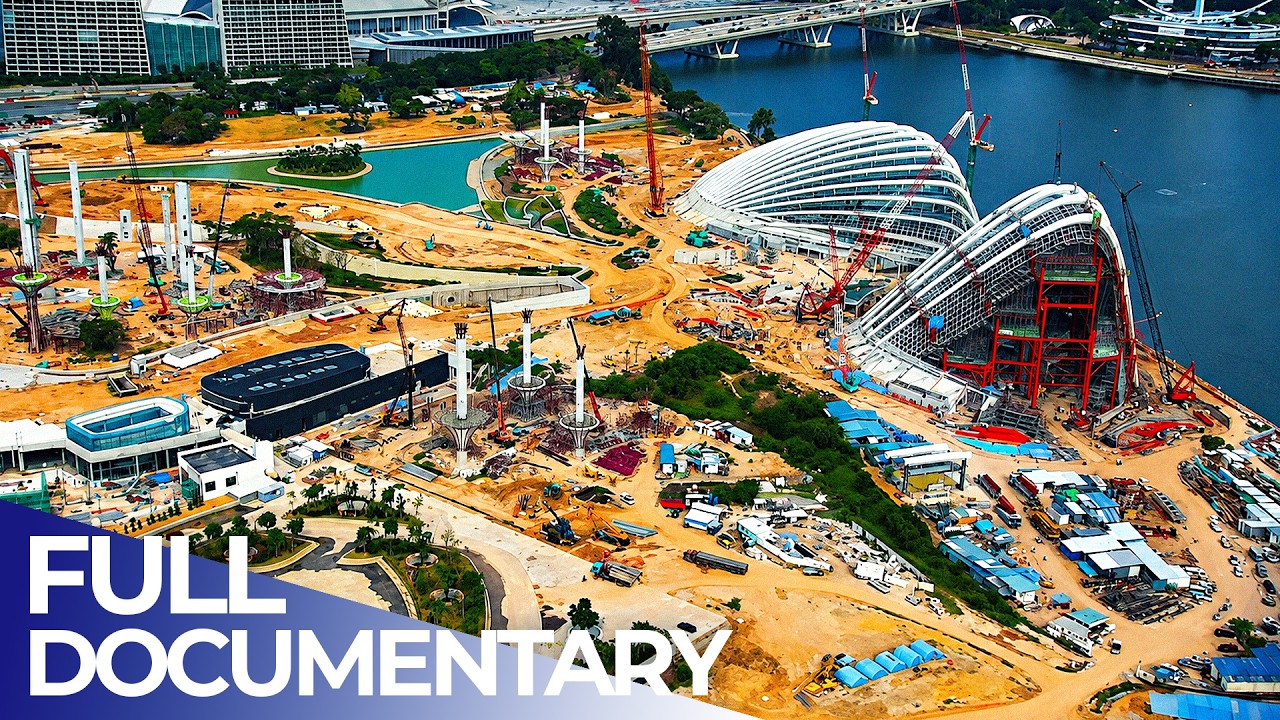
Creating a Rainforest: Construction of the World's Largest Columnless Glasshouse | FD Engineering
Keywords
Summary
164 words
Critical Evaluation
The documentary provides a comprehensive overview of the engineering feats behind Gardens by the Bay, successfully conveying the complexity and scale of the project. It excels in illustrating the problem-solving process, from geotechnical challenges to structural design and testing. The use of interviews with professionals adds credibility, and the visual demonstrations of tests and construction processes are informative. However, the documentary lacks in-depth technical details, such as specific calculations or materials data, which might be expected in a more rigorous engineering analysis. The sources cited are limited to a promotional video for another project, and no academic or official sources are referenced, reducing the scientific rigor. The narrative is engaging but occasionally dramatizes events, which may oversimplify the engineering realities. The title accurately reflects the content, and the documentary does not mislead. Overall, it is a valuable educational resource for a general audience interested in engineering, but it falls short of a detailed technical analysis. The public comments (not provided) would offer additional insights into viewer reception, but their absence limits this evaluation.
173 words
Title / Content Match
The title accurately reflects the content, focusing on the construction of the world's largest columnless glasshouse as part of Gardens by the Bay.
Quality & Reliability
7/10
The documentary provides a detailed account of the engineering challenges and solutions for Gardens by the Bay, featuring interviews with professionals and showing testing procedures. However, it lacks in-depth technical data and citations to primary sources, and some information may be simplified for a general audience.
Key Moments
Markers derived by PSI from the transcript: the creator did not define chapters.
- Introduction to Singapore's density and the need for green spaces.
- Overview of Gardens by the Bay project and its scale.
- Discussion of marine clay and foundation challenges.
- Design and testing of the conservatory facade.
- Construction of steel arches and grid shells.
- Use of crash decks to manage construction congestion.
- Installation of supertrees and vertical gardens.
- Challenges of sourcing plants from around the world.
- Final stages of construction and testing.
- Completion and significance of Gardens by the Bay.
Cited Sources
- China's Mega Cities - Engineering the World's Largest Urban Transformation — Promotional video for another documentary on urban engineering, mentioned in the description.
Concurring Sources
- Gardens by the Bay official website — Official project information, confirming the scale and features of the gardens.
Contribution & Novelties
The documentary provides an accessible overview of the engineering innovations behind Gardens by the Bay, particularly the columnless glasshouse design and the use of cast-in-situ piling on challenging soil. It highlights the integration of architecture and engineering to create sustainable urban green spaces.
Pour aller plus loin :
- Gardens by the Bay official website — Official information about the project, including design and sustainability features.
- Eden Project — A similar large-scale greenhouse project in the UK, referenced in the documentary.
- Bioclimatic architecture — Concept related to designing buildings that respond to local climate, relevant to the conservatories’ climate control.
- Cast-in-place concrete — Technique used for the foundation piles, explained in the documentary.
112 words
Radar Profile
The radar profile shows high scores in quantity of information and quality, with moderate technical depth and reliability. This suggests a well-rounded documentary that provides substantial content but may not delve deeply into technical specifics, making it suitable for a general audience interested in engineering.