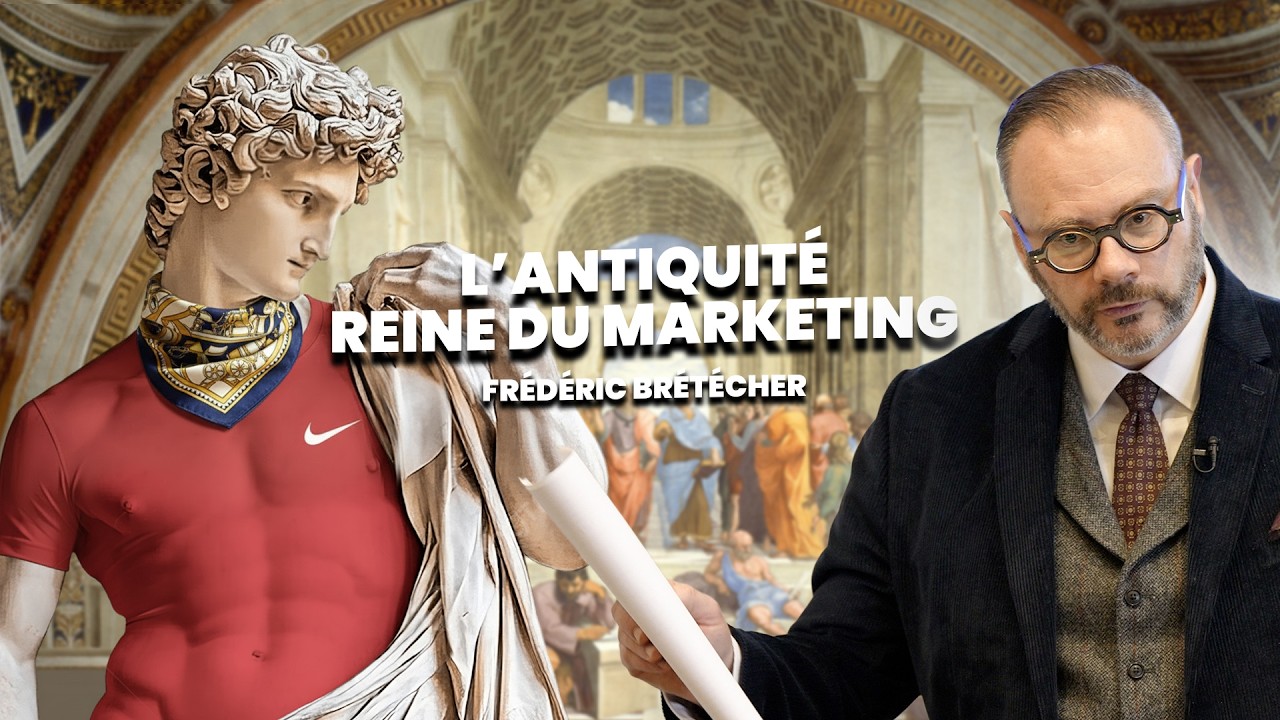
Un cours de culture G & Marketing à Audencia
Keywords
Summary
139 words
Critical Evaluation
Value of the Information & Strength of the Argument
The lecture provides valuable insights into the use of antiquity in marketing, supported by concrete examples and references to scholars like Paul Veyne and Georges Dumézil. The argumentation is coherent and persuasive, though it relies on interpretive analysis rather than empirical data. The speaker effectively demonstrates how mythological references are pervasive in branding and advertising, and he connects these to broader cultural and psychological structures.
Scientific Rigor, Source Quality, Title Accuracy
The lecture demonstrates scientific rigor by referencing established scholars (Paul Veyne, Georges Dumézil) and providing specific examples from advertising. However, the sources are not systematically cited with precise references, and the content is primarily based on the speaker’s expertise and interpretation. The title accurately reflects the content, and the lecture is well-structured. No comments were provided for analysis.
138 words
Title / Content Match
The title accurately reflects the content: a culture générale and marketing course given at Audencia, focusing on the influence of antiquity on marketing.
Quality & Reliability
8/10
The lecture is delivered by an experienced professor, referencing established scholars (Paul Veyne, Georges Dumézil) and providing concrete examples from advertising. The content is well-structured and coherent, though it remains an opinion-based lecture rather than a peer-reviewed study.
Chapters
Cited Sources
- Projet Méta — Mentioned in the description as a program for high school students.
- Major Prépa Discord — Community link provided in the description.
- Major Prépa LinkedIn — Social media link provided in the description.
- Major Prépa Planning — Link to planning resources for prépa students.
Concurring Sources
- Paul Veyne - Did the Greeks Believe in Their Myths? — Relevant to the discussion of myth and truth.
- Georges Dumézil - Trifunctional hypothesis — Directly referenced in the lecture.
Contribution & Novelties
The lecture offers a fresh perspective on the intersection of antiquity and marketing, synthesizing mythological analysis with practical examples from contemporary advertising. It provides a framework for understanding how brands use ancient narratives to create desire and meaning.
Pour aller plus loin :
- Paul Veyne — French historian whose work on myth and storytelling is central to the lecture.
- Georges Dumézil — Comparative mythologist known for the trifunctional hypothesis.
- Hesiod’s Theogony — Ancient Greek poem that exemplifies mythic storytelling.
79 words
Radar Profile
The radar profile shows high scores in quantity and quality of information, with a slightly lower technical level, indicating a lecture that is informative and reliable but not highly technical. The overall balance suggests a well-rounded presentation suitable for a general audience.