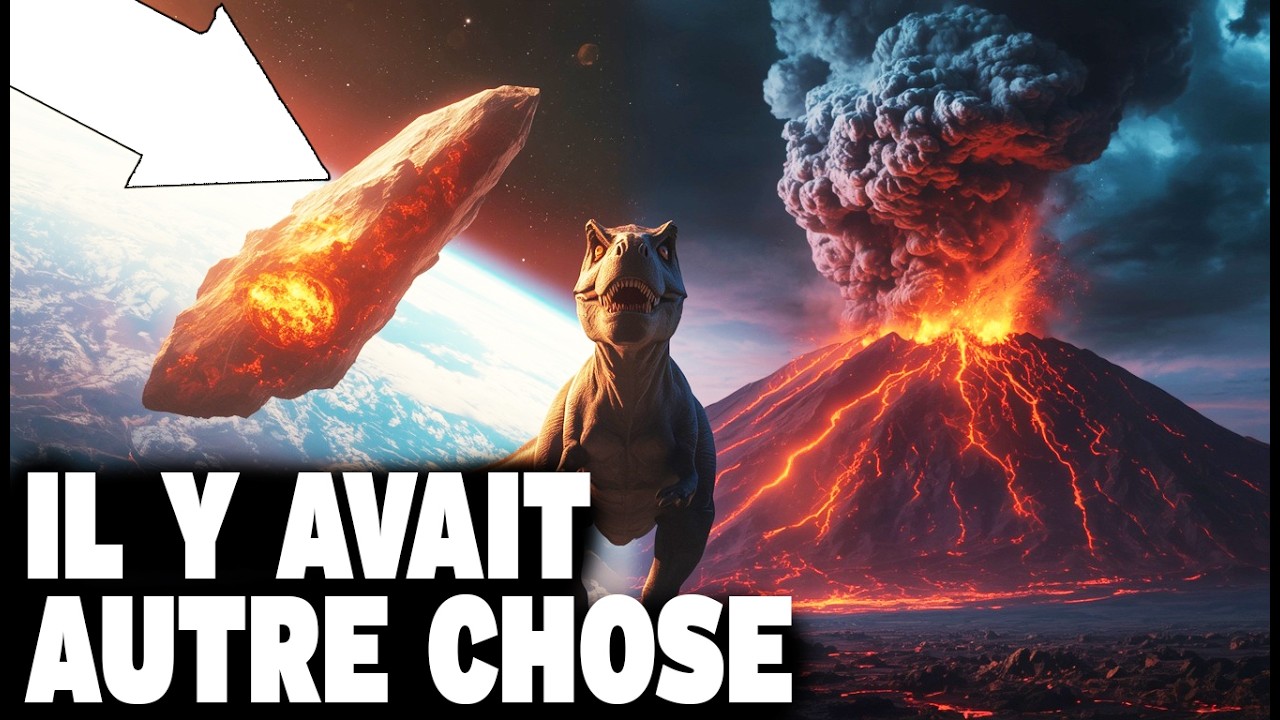
La Météorite n'a pas tué les dinosaures seule — voici ce qu'on a découvert - Histoire de la Terre
Keywords
Summary
168 words
Critical Evaluation
Value of the Information & Strength of the Argument
The video provides valuable information by synthesizing recent research and presenting the current scientific consensus as a nuanced picture. It argues convincingly that the impact was the trigger but not the sole cause, supported by evidence of pre-impact stress from volcanism and other factors. The argumentation is solid, presenting both sides of the debate and acknowledging uncertainties. It avoids oversimplification and emphasizes the complexity of the extinction event.
Scientific Rigor, Source Quality, Title Accuracy
The video demonstrates scientific rigor by referencing specific studies and researchers, such as the Alvarez team, Gerta Keller, Paul Renne, and others. It accurately represents the scientific literature, including the debate on dinosaur decline. However, it does not provide direct citations or links in the description, which limits verifiability. The title is accurate and not misleading. The content is well-researched and aligns with current scientific understanding.
149 words
Title / Content Match
The title accurately reflects the content, which emphasizes that the meteorite impact was not the sole cause of dinosaur extinction, highlighting the role of Deccan volcanism and other factors.
Quality & Reliability
8/10
The video presents a well-structured overview of the current scientific debate on the K-Pg extinction, citing multiple peer-reviewed studies and researchers. It accurately distinguishes between established facts and ongoing debates, and avoids overstatement. However, it lacks direct citations to specific papers in the description, and the narrative is somewhat dramatized for a general audience.
Key Moments
Markers derived by PSI from the transcript: the creator did not define chapters.
- Introduction: The meteorite impact story is incomplete.
- Alvarez hypothesis and iridium layer discovery.
- Discovery of Chicxulub crater and consensus.
- Evidence of pre-impact stress in marine fossils.
- Deccan Traps volcanism and its climate effects.
- Coupling of impact and volcanism: seismic trigger.
- Debate on dinosaur decline before impact.
- Marine regression and habitat loss.
- IODP Expedition 364 and recovery of life.
- Conclusion: complexity of extinction and methodological lesson.
Cited Sources
- Alvarez et al. 1980, Science — Discovery of iridium anomaly at K-Pg boundary.
- Renne et al. 2015, Science — High-precision dating of Deccan Traps and impact.
- Sakamoto et al. 2016, PNAS — Bayesian analysis suggesting dinosaur decline.
- Condamine et al. 2022, Nature Communications — Contradictory study showing dinosaur diversification.
- Bralower et al. 2020, Nature — Rapid recovery of life in Chicxulub crater.
- Morgan et al. 2020, Nature Geoscience — Impact angle simulations.
- Kaskes et al. 2021, PNAS — Precise dating of impact spherules from Tanis.
- Henehan et al. 2019, PNAS — Ocean acidification evidence.
- Vander Cisen et al. 2021, Nature Geoscience — Analysis of Deccan Traps post-impact activity.
Concurring Sources
- Alvarez et al. 1980, Science — Iridium anomaly evidence for impact.
- Renne et al. 2015, Science — Timing of Deccan volcanism and impact.
- Bralower et al. 2020, Nature — Rapid recovery of life in crater.
Dissenting Sources
- Condamine et al. 2022, Nature Communications — This study suggests dinosaurs were diversifying before the impact, contradicting the decline hypothesis.
Contribution & Novelties
The video provides an accessible synthesis of recent research on the K-Pg extinction, emphasizing the multi-causal nature of the event. It highlights the role of Deccan volcanism and the coupling with the impact, and presents the ongoing debate on dinosaur decline. It also includes recent findings from IODP drilling and precise dating. The video’s contribution is to communicate the complexity of the extinction to a general audience, correcting the simplistic narrative.
Pour aller plus loin :
- K-Pg extinction event — Overview of the extinction event.
- Chicxulub crater — Details on the impact structure.
- Deccan Traps — Information on the volcanic province.
- Alvarez hypothesis — The original impact theory.
- Gerta Keller — Researcher advocating Deccan Traps role.
116 words
Radar Profile
The radar profile shows high scores in information quantity, quality, and reliability, with a slightly lower technical level, indicating a well-researched but accessible presentation. The balance suggests a strong educational value with minor limitations in depth.