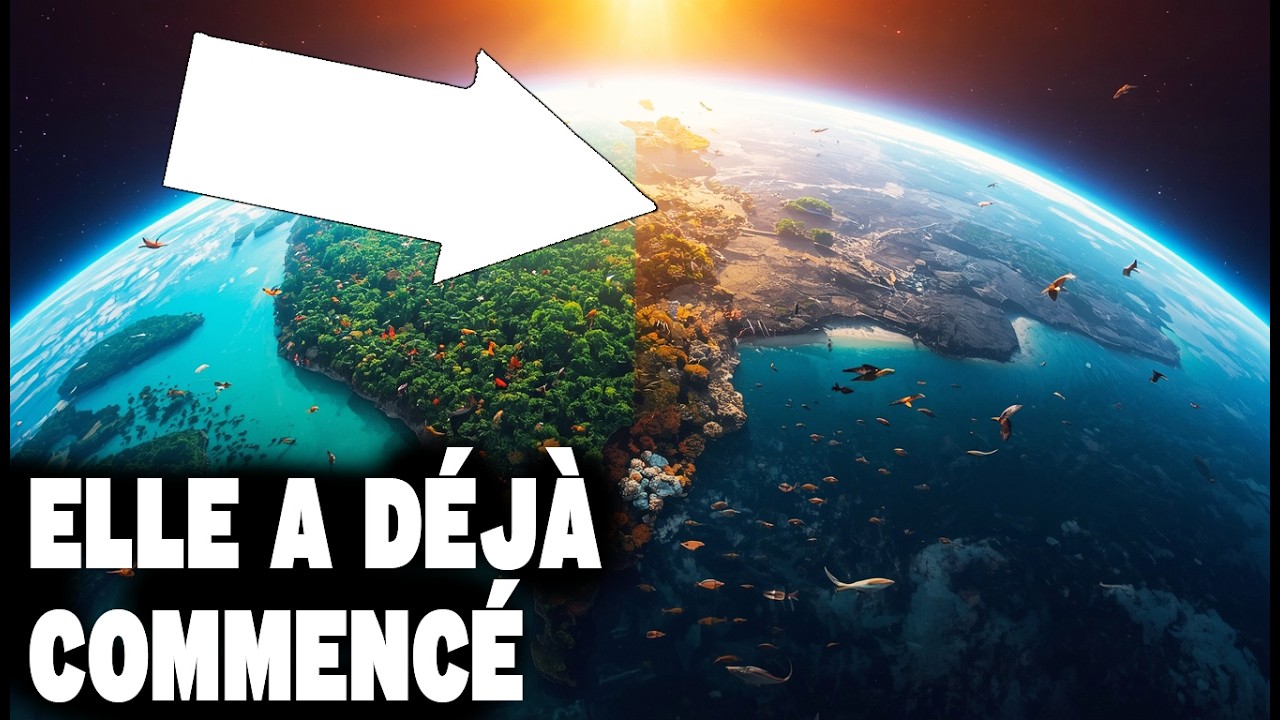
La Sixième extinction dont personne ne parle — elle a déjà commencé - Documentaire Histoire
The Sixth Extinction No One Is Talking About — It Has Already Begun - History Documentary
Keywords
Summary
168 words
Critical Evaluation
Value of the Information & Strength of the Argument
The video provides substantial value by synthesizing a wide range of scientific data and studies into a coherent narrative. It effectively argues that the current biodiversity crisis constitutes a sixth mass extinction, using quantitative evidence and comparisons to historical events. The argumentation is generally solid, presenting both the severity of the crisis and examples of successful conservation, which adds nuance. However, some sections, particularly the historical recap of Earth’s life, feel tangential and could distract from the core message. The video also occasionally makes broad claims without fully detailing the underlying methodology, but overall, it maintains a scientific tone and avoids excessive catastrophism.
Scientific Rigor, Source Quality, Title Accuracy
The video demonstrates strong scientific rigor by citing numerous peer-reviewed studies and institutional reports, such as the PNAS 2017 study by Ceballos et al., the Science 2019 study on bird declines, and the IPBES 2019 Global Assessment. It also references the Living Planet Index and the IUCN Red List. The title accurately reflects the content, focusing on the ongoing sixth extinction. The video does not include any advertising segments. The sources are used appropriately to support claims, and the video distinguishes between established facts and areas of scientific debate, such as the exact rate of extinction.
214 words
Title / Content Match
The title accurately reflects the content: the video focuses on the ongoing sixth mass extinction, its causes, and consequences, with a historical perspective.
Quality & Reliability
8/10
The video presents a well-structured overview of the sixth mass extinction, citing numerous peer-reviewed studies and reports (e.g., PNAS 2017, Science 2019, IPBES 2019). It distinguishes between established facts and debated points, and includes concrete examples of conservation successes. However, some claims are presented without precise citations, and the documentary format includes a historical recap that is less directly relevant.
Key Moments
Markers derived by PSI from the transcript: the creator did not define chapters.
- Introduction: The sixth mass extinction is underway, caused by human activity.
- Definition of background extinction rate and mass extinction criteria.
- Overview of the five previous mass extinctions.
- Current biodiversity decline data: Living Planet Index, amphibian declines, insect biomass loss.
- Drivers of biodiversity loss: HIPPO framework, climate change as a multiplier.
- Functional extinction and examples like the vaquita and Yangtze sturgeon.
- Conservation success stories: peregrine falcon, American bison, California condor.
- Kunming-Montreal Global Biodiversity Framework and the 30x30 target.
- Conclusion: The extinction is caused by human choices and can be addressed intentionally.
- Historical recap of Earth's life and the Cambrian explosion.
Cited Sources
- Ceballos et al. (2017) - Biological annihilation via the ongoing sixth mass extinction — Cited as the reference for current extinction rates and population declines.
- Rosenberg et al. (2019) - Decline of the North American avifauna — Cited for the loss of 2.9 billion birds in North America since 1970.
- Hallmann et al. (2017) - More than 75 percent decline over 27 years in total flying insect biomass in protected areas — Cited for the 75% decline in flying insect biomass in German protected areas.
- Sánchez-Bayo & Wyckhuys (2019) - Worldwide decline of the entomofauna: A review of its drivers — Cited for the meta-analysis on insect declines.
- IPBES (2019) - Global Assessment Report on Biodiversity and Ecosystem Services — Cited for estimates of land and ocean alteration.
- WWF Living Planet Report 2022 — Cited for the 69% decline in vertebrate populations since 1970.
- Lovejoy & Nobre (2018) - Amazon Tipping Point — Cited for the Amazon tipping point at 20-25% deforestation.
- Gatti et al. (2021) - Amazonia as a carbon source linked to deforestation and climate change — Cited for the Amazon emitting more CO2 than it absorbs.
Concurring Sources
- Ceballos et al. (2015) - Accelerated modern human-induced species losses — Supports the claim of extinction rates 100-1000 times background.
- Barnosky et al. (2011) - Has the Earth’s sixth mass extinction already arrived? — Supports the argument that current extinction rates are comparable to past mass extinctions.
Dissenting Sources
- Briggs (2017) - The Sixth Mass Extinction: fact, fiction or speculation? — Some scientists argue that current extinction rates do not yet meet the criteria for a mass extinction, as the percentage of species lost is still below the 75% threshold.
Contribution & Novelties
The video provides a comprehensive and accessible synthesis of the scientific evidence for the ongoing sixth mass extinction, effectively communicating complex data to a general audience. It adds value by framing the crisis as a result of human choices, which implies that intentional solutions are possible. The inclusion of conservation success stories offers a balanced perspective, showing that interventions can work.
Pour aller plus loin :
- IPBES Global Assessment — The most comprehensive international assessment of biodiversity, providing the scientific basis for policy action.
- Living Planet Index — A database tracking global vertebrate population trends, used in the WWF reports.
- IUCN Red List — The global standard for assessing extinction risk of species.
- Kunming-Montreal Global Biodiversity Framework — The international agreement setting targets for biodiversity conservation, including the 30x30 goal.
130 words
Radar Profile
The radar profile shows high scores in quantity of information and technical level, reflecting the video's comprehensive coverage and use of scientific data. The quality of information and global reliability are also strong, though slightly lower due to occasional lack of precise citations for some claims. Overall, the video is a robust scientific documentary.
💬 No comments were provided for analysis.