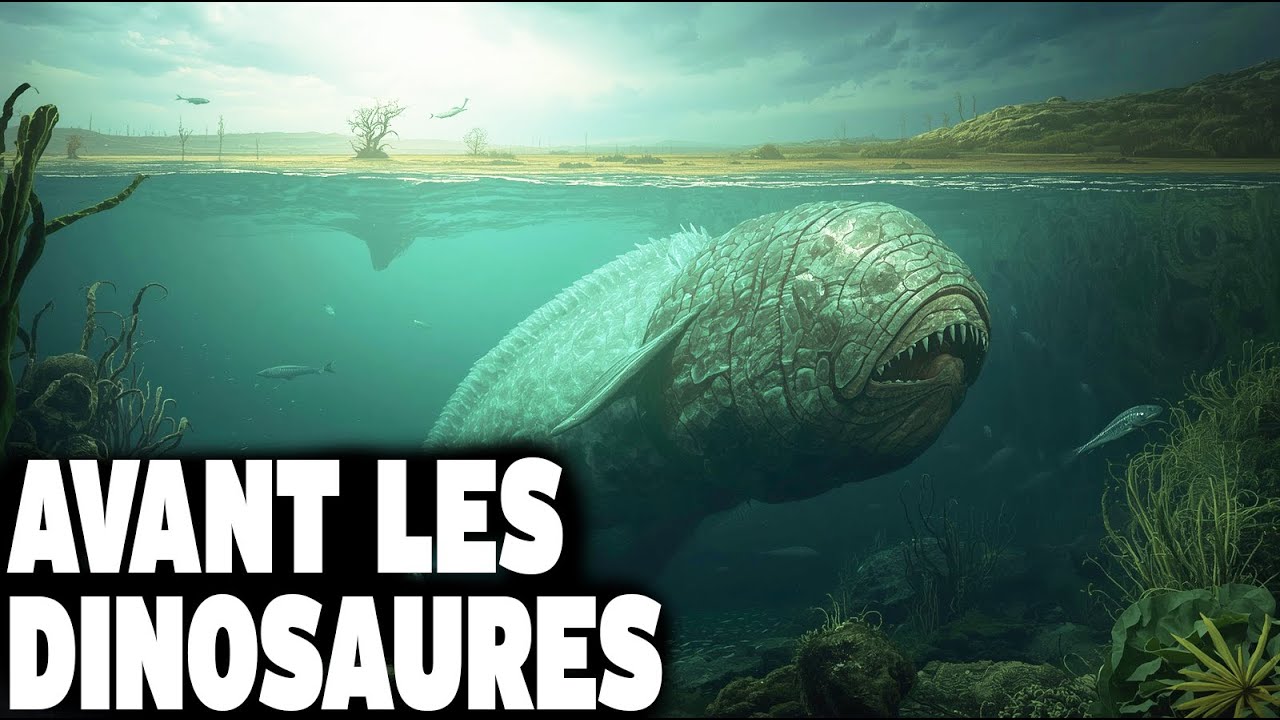
L’ère des poissons géants : pourquoi le Dévonien était une planète dangereuse -Documentaire Histoire
Keywords
Summary
133 words
Critical Evaluation
Value of the Information & Strength of the Argument
The documentary provides a comprehensive and engaging overview of the Devonian period, synthesizing current scientific knowledge. It effectively argues that the Devonian was a time of significant biological innovation and environmental upheaval. The argumentation is solid, supported by references to recent studies and fossil evidence. However, it sometimes lacks critical analysis and presents information in a narrative style that may oversimplify complex scientific debates.
Scientific Rigor, Source Quality, Title Accuracy
The documentary demonstrates scientific rigor by referencing recent research and specific fossil sites. It mentions studies from 2023-2025 and names institutions, but it does not provide direct citations or links to sources. The title accurately reflects the content, though the ‘dangerous planet’ aspect is somewhat sensationalized. The content is well-structured and aligns with the title’s promise of exploring the Devonian’s dangers and giants.
142 words
Title / Content Match
The title accurately reflects the content, focusing on the Devonian period and the dominance of giant fish, though the 'dangerous planet' aspect is somewhat overstated.
Quality & Reliability
8/10
The documentary presents a scientifically accurate overview of the Devonian period, citing recent studies (2023-2025) and specific fossil discoveries. It maintains a high level of factual reliability, though it lacks detailed citations and some statements are generalized.
Key Moments
Markers derived by PSI from the transcript: the creator did not define chapters.
- Introduction to the Devonian period and its geological context.
- Overview of early Devonian marine life, including jawless fish and placoderms.
- Discussion of the evolution of jawed fish and the rise of apex predators like Dunkleosteus.
- Exploration of Devonian reefs and their ecological significance.
- Transition to terrestrial life: early plants and the first forests.
- Environmental changes: anoxic events and nutrient cycling.
- The emergence of tetrapods and the conquest of land.
- Summary of the Devonian's impact on Earth's history.
Cited Sources
- Ngamgawi Wirngari (new coelacanth species) — Mentioned as a 2023 discovery in Australia, highlighting coelacanth diversity in the Devonian.
- Hangman Sandstone (oldest known forest) — Referenced as a 390-million-year-old fossil forest in England, containing Calamophyton trees.
Concurring Sources
- Devonian Period — General information consistent with the documentary's content.
- Dunkleosteus — Details on the apex predator mentioned in the video.
Dissenting Sources
- None — No discordant sources identified.
Contribution & Novelties
The documentary provides a comprehensive and accessible synthesis of the Devonian period, integrating recent paleontological and paleoclimatological research. It offers a vivid narrative that connects geological, biological, and environmental changes, making it valuable for a general audience. The inclusion of recent discoveries, such as the oldest forest and new coelacanth species, adds novelty.
Pour aller plus loin :
- Devonian Period — Overview of the Devonian period.
- Dunkleosteus — Details on the giant placoderm.
- Coelacanth — Information on the living fossil fish.
- Evolution of tetrapods — The transition from fish to land vertebrates.
92 words
Radar Profile
The radar profile shows high scores in quantity of information and reliability, with slightly lower scores in technical level and quality of information. This indicates a well-researched documentary that is accessible to a general audience but may lack depth for specialists.
💬 Sur les 0 commentaires analysés, aucune tendance n'est disponible.