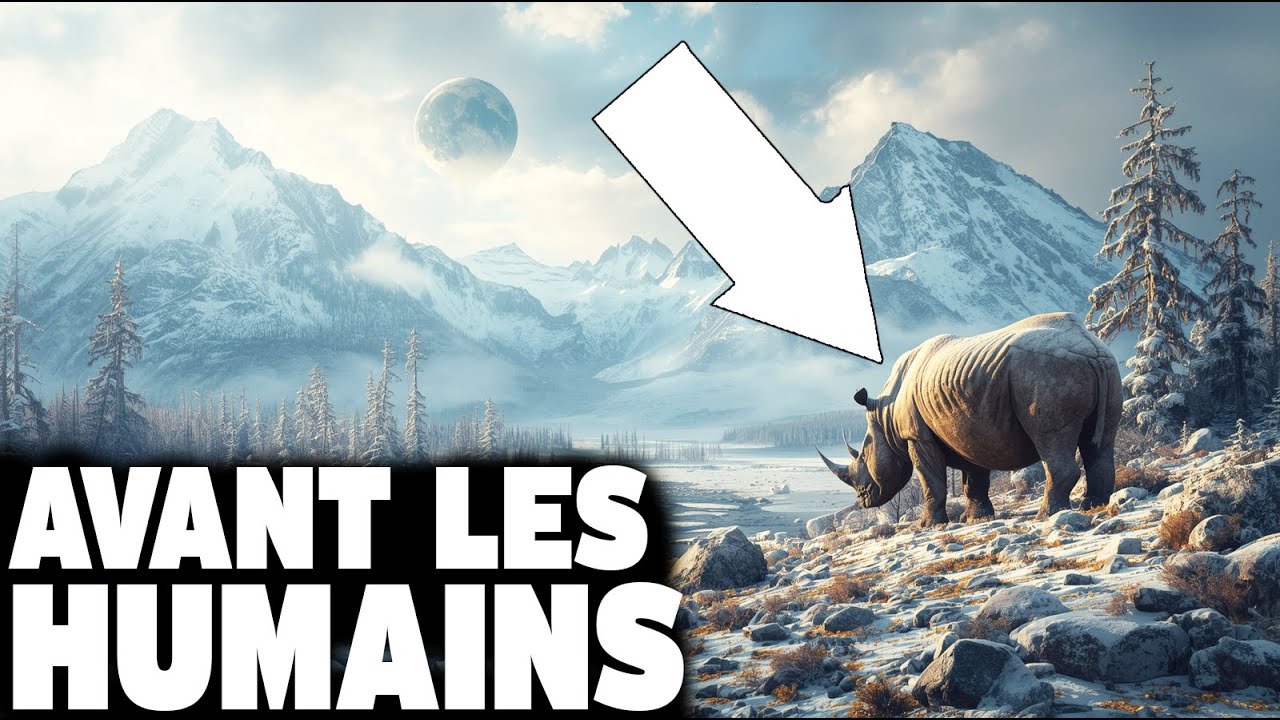
Voici à quoi ressemblait la Terre à l’âge des mégafaunes ! Documentaire Histoire de la Terre
Keywords
Summary
118 words
Critical Evaluation
Value of the Information & Strength of the Argument
The documentary provides a comprehensive overview of megafauna, offering valuable information about their diversity, adaptations, and ecological significance. The argumentation is generally solid, presenting a narrative of evolutionary change and extinction. However, it sometimes oversimplifies complex scientific debates, such as the causes of megafauna extinction, and lacks specific evidence or citations to support its claims. The presentation is engaging but could benefit from more rigorous scientific backing.
Scientific Rigor, Source Quality, Title Accuracy
The documentary demonstrates a reasonable level of scientific rigor, covering well-established concepts in paleontology. However, it does not cite specific sources or studies, which limits its credibility. The title accurately reflects the content, and the documentary maintains focus on the age of megafauna. The lack of explicit references and some potential inaccuracies in pronunciation and facts slightly detract from its scientific quality.
144 words
Title / Content Match
The title accurately reflects the content, which focuses on the Earth during the age of megafauna, covering various epochs and giant animals.
Quality & Reliability
7/10
The documentary provides a broad overview of megafauna evolution, but lacks specific citations and contains some inaccuracies (e.g., mispronunciations, potential factual errors). It relies on general scientific consensus but does not reference specific studies.
Key Moments
Markers derived by PSI from the transcript: the creator did not define chapters.
- Introduction to the age of megafauna and the Paleocene epoch.
- Discussion of Titanoboa and other giant reptiles of the Paleocene.
- Overview of the Eocene epoch and the PETM warming event.
- Exploration of Eocene megafauna like Uintatherium and Brontotherium.
- Transition to the Oligocene and the rise of Paraceratherium.
- Discussion of Oligocene predators like amphicyonids and creodonts.
- Introduction to the Miocene and the expansion of grasslands.
- Description of Miocene proboscideans like Gomphotherium and Deinotherium.
- Emergence of saber-toothed cats and other predators.
- Discussion of Pleistocene megafauna and their extinction.
Contribution & Novelties
The documentary offers a comprehensive and visually engaging overview of megafauna evolution, synthesizing information across multiple epochs. It provides a broad narrative that is accessible to a general audience, highlighting the ecological importance of these giant animals and the factors leading to their extinction. While it does not present new scientific findings, it serves as a valuable educational resource.
Pour aller plus loin :
- Pleistocene megafauna — Overview of the megafauna of the Pleistocene and their extinction.
- Mammoth — Detailed information on mammoths, their biology, and extinction.
- Saber-toothed cat — Information on various saber-toothed cat species and their adaptations.
- Paraceratherium — Details on the largest land mammal ever known.
- PETM — Explanation of the Paleocene-Eocene Thermal Maximum and its effects.
120 words
Radar Profile
The radar profile shows high scores in quantity of information and global reliability, indicating a content-rich documentary with generally reliable information. The technical level is moderate, suggesting it is accessible to a broad audience. The quality of information is good but not exceptional, with room for improvement in citing sources.