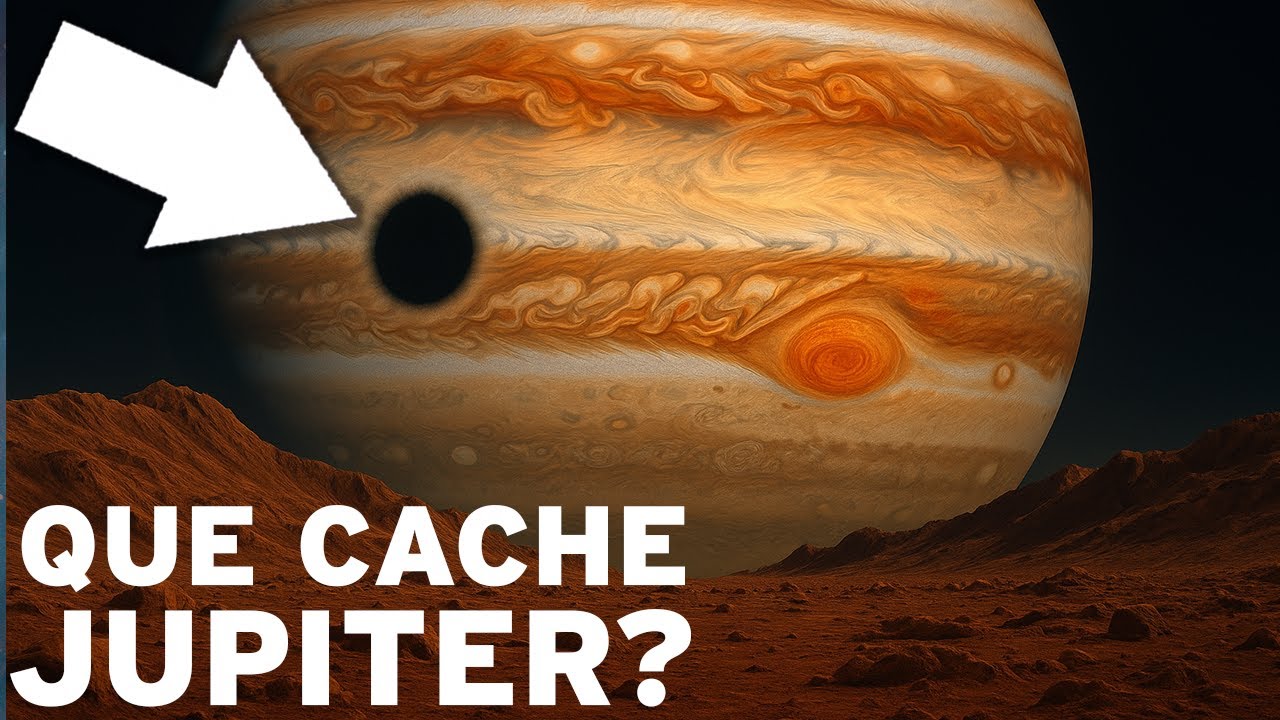
Voyage vers Jupiter : La VÉRITABLE Histoire des Découvertes ! DOCUMENTAIRE ESPACE
Keywords
Summary
158 words
Critical Evaluation
Value of the Information & Strength of the Argument
The documentary provides a comprehensive and engaging narrative of Jupiter exploration, effectively synthesizing historical and scientific information. It presents a clear chronological progression, from ancient observations to modern missions, and highlights key discoveries with appropriate context. The argumentation is generally solid, though it sometimes oversimplifies complex scientific concepts for a general audience. The inclusion of specific details, such as the strength of Jupiter’s magnetic field and the volcanic activity on Io, adds value. However, the documentary lacks critical analysis and does not address controversies or alternative interpretations in the scientific community.
Scientific Rigor, Source Quality, Title Accuracy
The documentary demonstrates a reasonable level of scientific rigor, with accurate historical facts and scientific explanations. However, it does not cite specific sources within the video, and the description provides no references. The title accurately reflects the content, which is a historical overview of Jupiter discoveries. The documentary’s reliance on general knowledge and lack of citations reduces its credibility for a scientific audience. The production quality is high, with good visuals and narration, but the absence of expert interviews or primary sources is a notable weakness.
192 words
Title / Content Match
The title accurately reflects the content, which is a historical documentary about Jupiter discoveries.
Quality & Reliability
7/10
The documentary provides a broad historical overview of Jupiter observations and exploration, with generally accurate information but lacking in-depth citations and containing some minor inaccuracies (e.g., dates, names).
Key Moments
Markers derived by PSI from the transcript: the creator did not define chapters.
- Introduction to Jupiter's significance and ancient observations.
- Galileo's discovery of the four largest moons in 1610.
- Rømer's calculation of the speed of light using Jupiter's moons.
- Development of spectroscopy and early photography of Jupiter.
- Radio astronomy and the discovery of Jupiter's radio emissions.
- Pioneer 10 flyby and discovery of Jupiter's intense magnetic field.
- Voyager missions and discovery of volcanic activity on Io.
- Evidence for subsurface ocean on Europa.
- Juno mission and its revelations about Jupiter's atmosphere.
Cited Sources
- NASA Juno Mission — Mentioned as the source of recent detailed observations of Jupiter.
- Pioneer 10 Mission — Referenced as the first spacecraft to fly by Jupiter.
- Voyager Mission — Mentioned for its discoveries of Io's volcanoes and Europa's ocean.
Concurring Sources
- NASA Solar System Exploration: Jupiter — Provides general information about Jupiter that aligns with the documentary's content.
- Encyclopedia Britannica: Jupiter — Offers a comprehensive overview of Jupiter's characteristics and history of observation.
Dissenting Sources
- No discordant sources found — The documentary presents a mainstream scientific consensus; no major contradictions were identified.
Contribution & Novelties
The documentary offers a comprehensive historical narrative that connects ancient observations to modern space exploration, providing a valuable educational resource. It emphasizes the progression of scientific knowledge and the technological challenges overcome. While it does not present new scientific findings, it synthesizes existing knowledge in an accessible format.
Pour aller plus loin :
- Galilean moons — Overview of the four largest moons of Jupiter discovered by Galileo.
- Great Red Spot — Detailed information about Jupiter’s iconic storm.
- Juno (spacecraft) — NASA’s mission to Jupiter, providing recent data.
87 words
Radar Profile
The radar profile shows high scores in quantity of information and technical level, indicating a content-rich documentary with moderate depth. The quality and reliability scores are slightly lower, reflecting the lack of citations and minor inaccuracies. Overall, the documentary is informative but not highly rigorous.
💬 Sur les 0 commentaires analysés, aucune tendance n'a pu être dégagée.