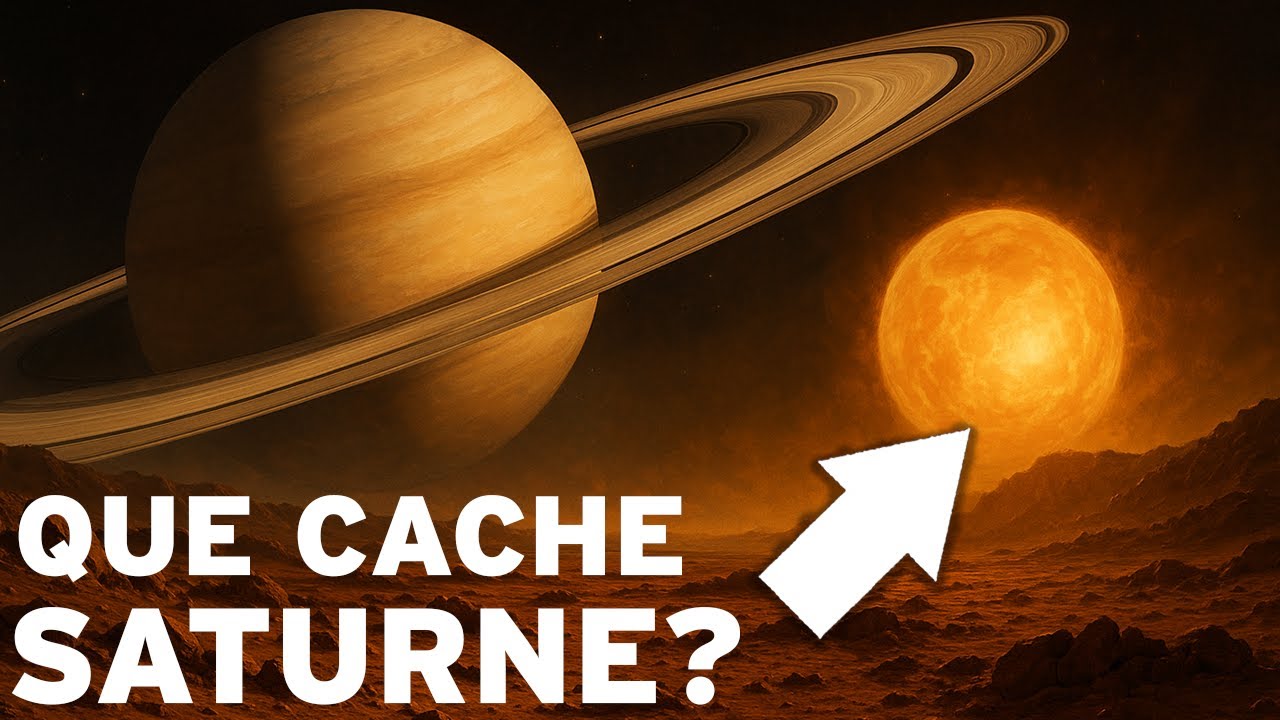
Voyage vers Saturne : La VÉRITABLE Histoire des Découvertes ! DOCUMENTAIRE ESPACE
Keywords
Summary
95 words
Critical Evaluation
Value of the Information & Strength of the Argument
The documentary provides a comprehensive and engaging narrative of Saturn exploration, highlighting major milestones and discoveries. It effectively uses historical context to explain scientific progress. The argumentation is solid, presenting facts in a logical sequence. However, it occasionally oversimplifies complex topics and lacks critical analysis of conflicting theories.
Scientific Rigor, Source Quality, Title Accuracy
The documentary is scientifically accurate in its broad strokes, but it contains minor inaccuracies (e.g., dates, mission details). It does not cite specific sources within the video, but the description provides a general overview. The title accurately reflects the content. The documentary’s strength lies in its narrative flow and accessibility, though it could benefit from more rigorous source citation.
122 words
Title / Content Match
The title accurately reflects the content, which is a historical documentary about Saturn discoveries.
Quality & Reliability
7/10
The documentary provides a broad historical overview of Saturn exploration, from ancient observations to modern missions. It is generally accurate but contains some minor errors and simplifications (e.g., dates, names). The content is well-structured and engaging, but lacks detailed citations and in-depth scientific analysis.
Key Moments
Markers derived by PSI from the transcript: the creator did not define chapters.
- Introduction to Saturn's significance and ancient observations.
- Galileo's first observations and the mystery of the rings.
- Huygens and Cassini's discoveries of Titan and ring divisions.
- Maxwell's theoretical work on ring composition.
- Pioneer 11's flyby and discovery of the F ring and magnetic field.
- Voyager 1 and 2 observations of storms, hexagon, and new moons.
- Infrared and radio occultation studies of Saturn's atmosphere.
- Discussion of Saturn's moons Titan and Enceladus as potential habitats.
Cited Sources
- NASA - Pioneer 11 — Mentioned in the context of Pioneer 11's flyby of Saturn.
- NASA - Voyager Mission — Mentioned in the context of Voyager 1 and 2 flybys.
- NASA - Cassini Mission — Mentioned in the context of ongoing studies of Saturn's rings.
Concurring Sources
- NASA - Saturn Fact Sheet — Provides factual data on Saturn that aligns with the documentary's claims.
Dissenting Sources
- Some sources suggest the hexagon is a stable wave pattern — The documentary mentions the hexagon but does not delve into the ongoing scientific debate about its formation.
Contribution & Novelties
The documentary offers a compelling historical narrative that connects ancient observations with modern space exploration, highlighting the progression of scientific knowledge about Saturn. It emphasizes the role of key missions like Pioneer 11 and Voyager in revealing Saturn’s complex system. The film also touches on the potential for life on moons like Enceladus, sparking curiosity.
Pour aller plus loin :
- Cassini-Huygens mission — Provides detailed information on the Cassini mission that orbited Saturn.
- Enceladus — Overview of Enceladus and its subsurface ocean.
- Titan (moon) — Overview of Titan’s atmosphere and lakes.
91 words
Radar Profile
The radar profile shows high scores in quantity of information and technical level, indicating a content-rich documentary. However, the lower score in reliability suggests some inaccuracies. The overall balance is good for a general audience.