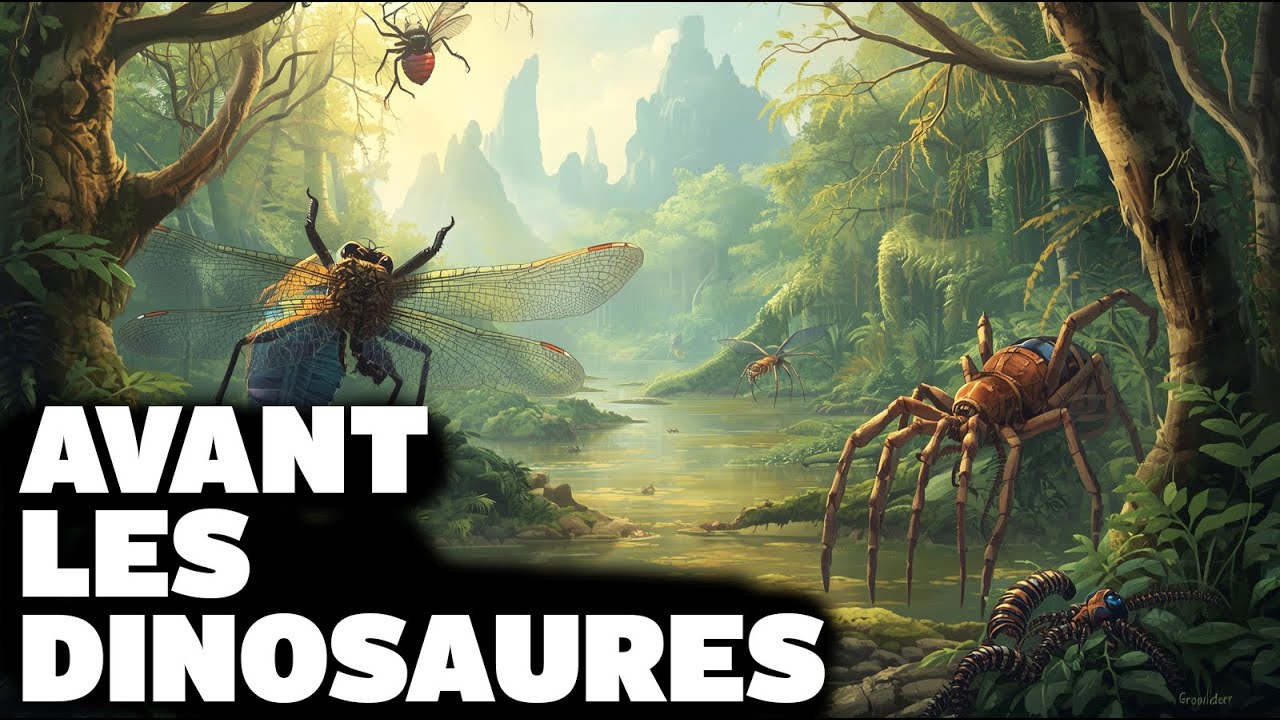
La planète aux insectes géants a VRAIMENT existé : plongée dans le Carbonifère - Documentaire
Keywords
Summary
129 words
Critical Evaluation
Value of the Information & Strength of the Argument
The documentary provides a comprehensive and up-to-date synthesis of current scientific knowledge about the Carboniferous, incorporating recent research from 2023-2025. It presents a coherent narrative linking atmospheric oxygen levels, plant evolution, and arthropod gigantism, supported by specific fossil evidence. The argumentation is logical and well-structured, though it occasionally simplifies complex scientific debates for a general audience.
Scientific Rigor, Source Quality, Title Accuracy
The documentary demonstrates scientific rigor by referencing recent studies and specific fossil discoveries, such as the 2025 footprints in Australia and the 2024-2025 Arthropleura fossils in France. However, it does not provide direct citations or links to primary sources within the video, which limits verifiability. The title accurately reflects the content, focusing on giant insects, but the documentary covers a broader scope. The content aligns well with the title, though it could have delved deeper into the mechanisms of gigantism.
151 words
Title / Content Match
The title accurately reflects the content, focusing on the existence of giant insects during the Carboniferous, though the documentary covers a broader scope of the period's geology and biology.
Quality & Reliability
8/10
The documentary presents a well-structured overview of the Carboniferous period, referencing recent scientific studies (2023-2025) and specific fossil discoveries. It maintains a scientific tone and avoids sensationalism, though it lacks direct citations to primary sources in the video itself.
Key Moments
Markers derived by PSI from the transcript: the creator did not define chapters.
- Introduction to the Carboniferous period and its significance.
- Overview of the geological time scale and subdivisions of the Carboniferous.
- Discussion of atmospheric oxygen levels and their role in insect gigantism.
- Exploration of coal forest ecosystems and their flora.
- Introduction of giant arthropods like Meganeura and Arthropleura.
- Recent fossil discoveries and their implications for amniote evolution.
- The role of fire in shaping Carboniferous ecosystems.
- Climatic changes and the collapse of coal forests.
- Transition to the Permian period and the end of giant insects.
Cited Sources
- No explicit sources cited in video description — The description does not list specific scientific sources.
Concurring Sources
- Wikipedia: Carboniferous — Provides general information consistent with the documentary's content.
- Wikipedia: Meganeura — Confirms the existence and size of the giant dragonfly.
Dissenting Sources
- No discordant sources found — The documentary aligns with current scientific consensus.
Contribution & Novelties
The documentary synthesizes recent paleontological discoveries, such as the 2025 footprints in Australia and the 2024-2025 Arthropleura fossils, providing an updated view of the Carboniferous. It offers a comprehensive overview that connects atmospheric oxygen, plant evolution, and arthropod gigantism, making it valuable for science communication.
Pour aller plus loin :
- Carboniferous — General overview of the period.
- Meganeura — Details on the giant dragonfly.
- Arthropleura — Information on the giant millipede.
- Coal forest — Explanation of these ecosystems.
- Oxygen and insect size — Scientific study on the link.
88 words
Radar Profile
The radar profile shows high scores in information quantity and quality, with a slightly lower technical level, indicating a well-balanced documentary that is both informative and accessible. The reliability score is strong, reflecting the use of recent scientific findings.
💬 No comments provided.