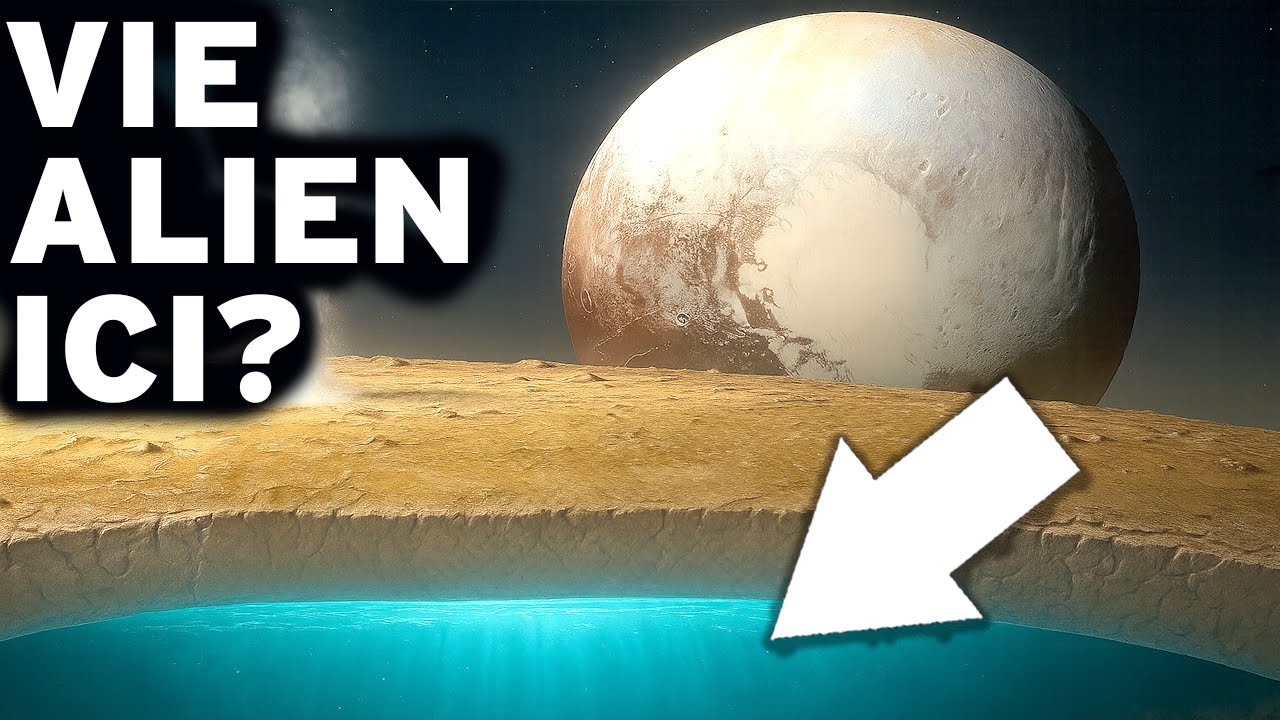
Glace, Montagnes, et Brume : Le Paysage Surréaliste de Pluton ! DOCUMENTAIRE ESPACE
Keywords
Summary
167 words
Critical Evaluation
Value of the Information & Strength of the Argument
The documentary provides a comprehensive overview of Pluto, synthesizing historical context and modern discoveries. Its value lies in making complex scientific concepts accessible to a general audience, such as astronomical units, spectroscopy, and geological processes. The argumentation is generally solid, presenting a coherent narrative from discovery to exploration. However, it occasionally oversimplifies scientific debates, such as the reasons for Pluto’s reclassification, and does not delve into the nuances of the evidence. The use of vivid descriptions and analogies helps engage viewers, but the lack of direct citations to scientific papers weakens its authority.
Scientific Rigor, Source Quality, Title Accuracy
The documentary demonstrates a reasonable level of scientific rigor, with accurate information about Pluto’s characteristics and the New Horizons mission. However, it does not explicitly cite sources, and some terms are mispronounced or misspelled (e.g., ‘Creeper’ for Kuiper). The title accurately reflects the content, focusing on Pluto’s icy landscape and atmosphere. The documentary’s strength is its engaging storytelling, but it could benefit from more precise scientific details and references. The absence of citations to primary literature is a notable weakness for a science documentary.
192 words
Title / Content Match
The title accurately reflects the content, focusing on Pluto's icy mountains and hazy atmosphere, though it emphasizes the surreal landscape more than the documentary's historical narrative.
Quality & Reliability
7/10
The documentary provides a broad overview of Pluto, its discovery, and the New Horizons mission, with generally accurate scientific information. However, it lacks citations to primary sources and contains some imprecise statements (e.g., 'Creeper' for Kuiper, 'Chieper' for Kuiper). The narrative is engaging but not deeply rigorous.
Key Moments
Markers derived by PSI from the transcript: the creator did not define chapters.
- Introduction to the solar system and Pluto's location in the Kuiper Belt.
- Explanation of astronomical distances and the challenges of reaching Pluto.
- Historical search for Planet X and the role of Percival Lowell.
- Clyde Tombaugh's discovery of Pluto in 1930.
- Early observations and Gerard Kuiper's detection of methane ice.
- Photometric studies revealing Pluto's rotation and surface variations.
- Discovery of Pluto's moons and the binary system with Charon.
- New Horizons mission and its approach to Pluto.
- Flyby revelations: Tombaugh Regio, Sputnik Planitia, and water-ice mountains.
- Atmosphere and haze layers, and the possibility of a subsurface ocean.
Cited Sources
- NASA New Horizons Mission — Mentioned as the mission that flew by Pluto in 2015.
Concurring Sources
- NASA New Horizons Mission — Provides official information on the mission and its discoveries, consistent with the documentary's content.
Contribution & Novelties
The documentary synthesizes historical and recent findings about Pluto, offering a comprehensive overview for a general audience. Its main contribution is the narrative integration of the discovery story with the New Horizons results, highlighting Pluto’s geological activity and complexity. It emphasizes the surreal landscape and the potential for a subsurface ocean, which are key points of interest.
Pour aller plus loin :
- New Horizons mission page — Official NASA resource for mission details and findings.
- Pluto on Wikipedia — Comprehensive overview of Pluto’s characteristics and history.
- Sputnik Planitia on Wikipedia — Details on the nitrogen ice glacier and its convective patterns.
101 words
Radar Profile
The radar profile shows high scores in quantity of information and technical level, indicating a content-rich documentary with some technical depth. Quality and reliability are slightly lower, reflecting the lack of explicit citations and minor inaccuracies. Overall, the documentary is informative but not deeply rigorous.
💬 Sur les 0 commentaires analysés, aucune tendance n'est disponible.