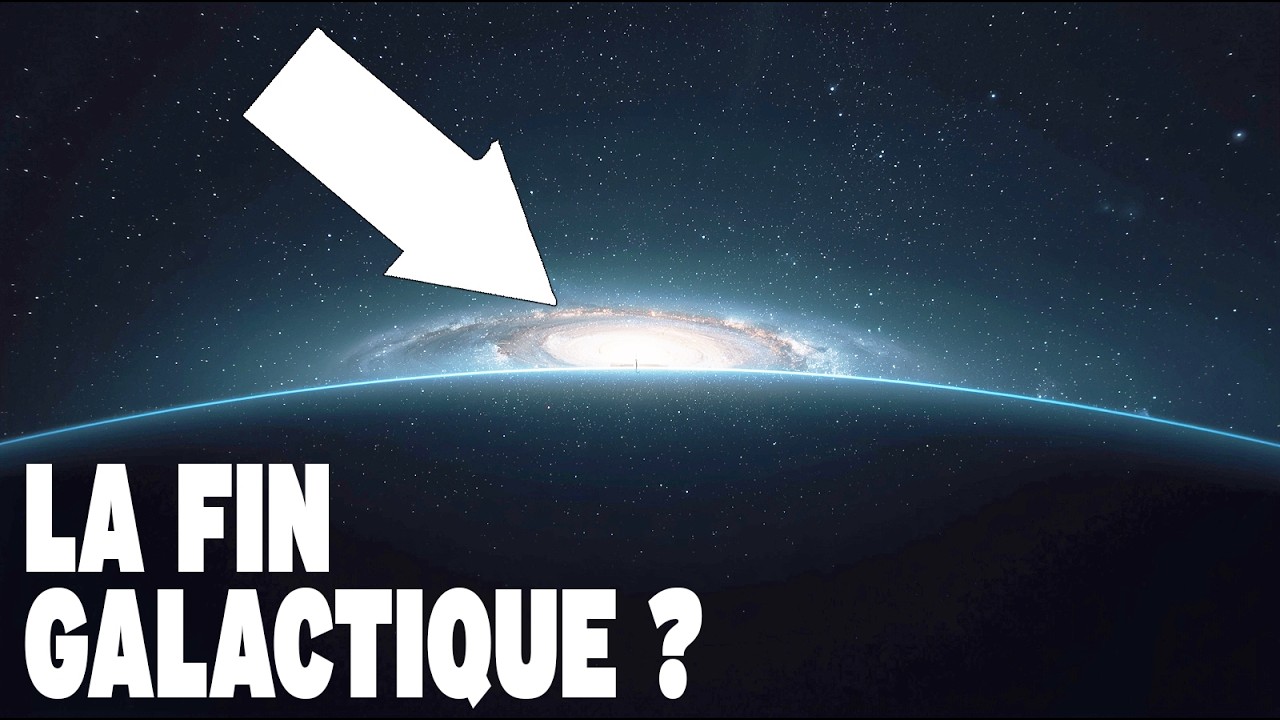
Aux portes de la Voie lactée : les secrets de la frontière galactique - DOCUMENTAIRE ESPACE
Keywords
Summary
182 words
Critical Evaluation
Value of the Information & Strength of the Argument
The documentary provides a valuable synthesis of current knowledge about the Milky Way’s boundaries, effectively explaining complex concepts like the virial radius and stellar streams. It uses analogies and clear explanations to make the material accessible. The argumentation is solid, building from the visible disk to the dark matter halo, and incorporates recent findings from the Gaia mission. However, it does not present original research or critical analysis, but rather a well-structured overview.
Scientific Rigor, Source Quality, Title Accuracy
The documentary demonstrates scientific rigor by referencing the Gaia mission and established astronomical concepts. However, it does not cite specific studies or provide direct sources, which limits the verifiability of the information. The title accurately reflects the content, and the documentary maintains a high level of accuracy throughout. The lack of explicit citations is a minor weakness, but the overall scientific quality is high.
152 words
Title / Content Match
The title accurately reflects the content, which explores the boundaries of the Milky Way, including the stellar disk, halo, and dark matter halo.
Quality & Reliability
8/10
The documentary presents a comprehensive overview of the galactic boundary, referencing key missions like Gaia and established concepts such as the virial radius and stellar streams. It is scientifically accurate but lacks explicit citations to specific studies, relying on general knowledge.
Key Moments
Markers derived by PSI from the transcript: the creator did not define chapters.
- Introduction to the concept of the galactic boundary and the question of where the Milky Way ends.
- Discussion of the stellar disk, its diameter, and the warps and ripples detected by Gaia.
- Exploration of the stellar halo, including ancient stars and globular clusters, and the discovery of distant RR Lyrae stars.
- Explanation of stellar streams as remnants of past galactic mergers, traced by Gaia data.
- Introduction to the dark matter halo and the concept of the virial radius, extending the galaxy's influence beyond a million light-years.
- Discussion of the Magellanic Clouds, their gravitational influence, and the potential supermassive black hole in the Large Magellanic Cloud.
- Description of the intergalactic medium, including the Magellanic Stream and hot gas.
- Placement of the Milky Way within the Local Group and the influence of Andromeda.
- Conclusion summarizing the dynamic nature of the galactic frontier and future prospects.
Cited Sources
- Gaia mission — Mentioned as the European Space Agency's mission that has revolutionized mapping of the Milky Way.
Concurring Sources
- Gaia mission — The documentary's claims about Gaia's precision and its role in mapping the galaxy align with official ESA information.
Contribution & Novelties
The documentary offers a comprehensive and accessible overview of the Milky Way’s boundaries, integrating recent discoveries from the Gaia mission and highlighting the role of dark matter. It effectively communicates the complexity of defining a galaxy’s edge, from the stellar disk to the dark matter halo.
Pour aller plus loin :
- Gaia mission — Official ESA page for the Gaia mission, providing detailed information on its objectives and results.
- Stellar stream — Wikipedia article explaining stellar streams and their significance in galactic archaeology.
- Virial radius — Wikipedia article defining the virial radius and its use in cosmology.
- Large Magellanic Cloud — Wikipedia article on the LMC, including its properties and recent findings.
112 words
Radar Profile
The radar profile shows high scores in information quantity, quality, and reliability, with a moderate technical level. This indicates a well-balanced documentary that is both informative and accessible, suitable for a general audience interested in astronomy.
💬 Sur les 0 commentaires analysés, aucune tendance n'a pu être dégagée.