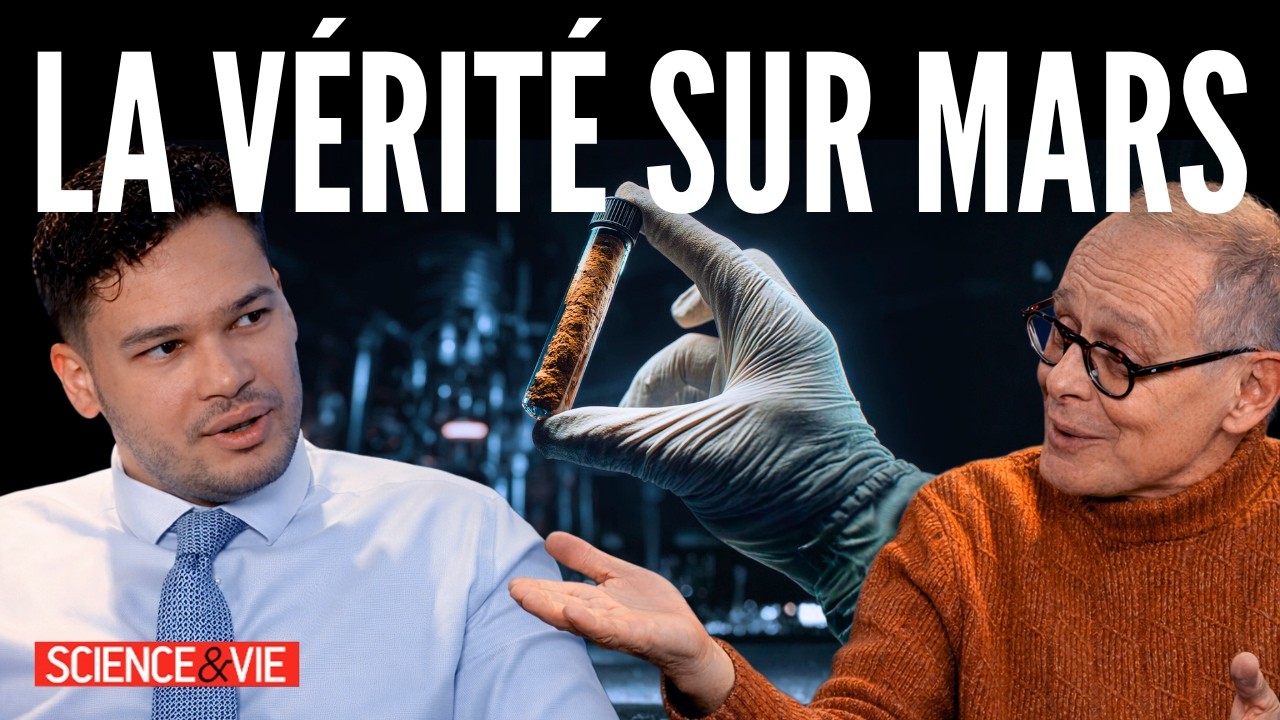
10 milligrammes pour l'histoire (Pourquoi ce caillou vaut des milliards)
Keywords
Summary
150 words
Critical Evaluation
Value of the Information & Strength of the Argument
The interview provides valuable insights into the practical aspects of planetary science, including how data is collected, the design of instruments, and the collaborative nature of space missions. The argumentation is solid, grounded in the speaker’s extensive experience and specific examples from real missions. The discussion of the scientific method and the importance of data is particularly compelling. The speaker’s enthusiasm and ability to explain complex concepts in an accessible way enhance the value of the content.
Scientific Rigor, Source Quality, Title Accuracy
The scientific rigor is high, as the speaker is a recognized expert and the information aligns with established knowledge in planetary science. However, the format is an informal interview, so specific sources are not cited. The title accurately reflects the content’s focus on the value of samples and the story of a Martian meteorite. The description provides chapter markers and credits, but no external references beyond the production company’s website.
162 words
Title / Content Match
The title is catchy and highlights the intriguing story of a Martian meteorite and the value of samples, which is a central theme of the interview. It accurately reflects the content's focus on planetary exploration and sample analysis.
Quality & Reliability
8/10
The content is an expert interview with a senior planetary scientist, Sylvestre Maurice, who provides detailed and accurate information about space exploration, missions, and scientific processes. The information is consistent with established knowledge in planetary science, and the speaker's credibility is high. However, the format is conversational and lacks formal citations, which slightly reduces the score.
Chapters
- Intro
- Comment on étudie Saturne sans s'y poser ?
- J'ai raté la plus grande découverte sur l'eau spatiale
- Pourquoi l'espace ne rapporte pas d'argent
- La Chine est en train de gagner la course spatiale ?
- Le secret des météorites martiennes sur Terre
- L'histoire incroyable du caillou de Thomas Pesquet
- Pourquoi on ne survit que 2h sur Vénus
Cited Sources
- Propulse Media — Production company for the video
Concurring Sources
- NASA Mars Exploration — Official NASA page on Mars missions, consistent with the discussion of Perseverance and sample collection.
Contribution & Novelties
The interview offers a unique perspective on the daily work of a planetary scientist, including the challenges of building instruments and the importance of data. It provides personal anecdotes that illustrate the scientific process and the excitement of discovery. The discussion of China’s space program and the Chang’e 6 mission adds a contemporary and geopolitical dimension.
Pour aller plus loin :
- Planetary science — Overview of the field.
- Mars sample-return mission — Context for sample return efforts.
- Chang’e 6 — Details on the mission mentioned.
- Enceladus — The moon where water geysers were discovered.
94 words
Radar Profile
The profile shows high scores in information quality and technical level, reflecting the expert's deep knowledge and the detailed content. The quantity of information is also substantial, but the overall score is slightly lower due to the informal format and lack of formal citations.
💬 Très positif. Sur les 30 commentaires analysés, les spectateurs expriment un enthousiasme unanime pour la passion et la clarté de l'invité, saluant la qualité de l'interview et la transmission des connaissances.