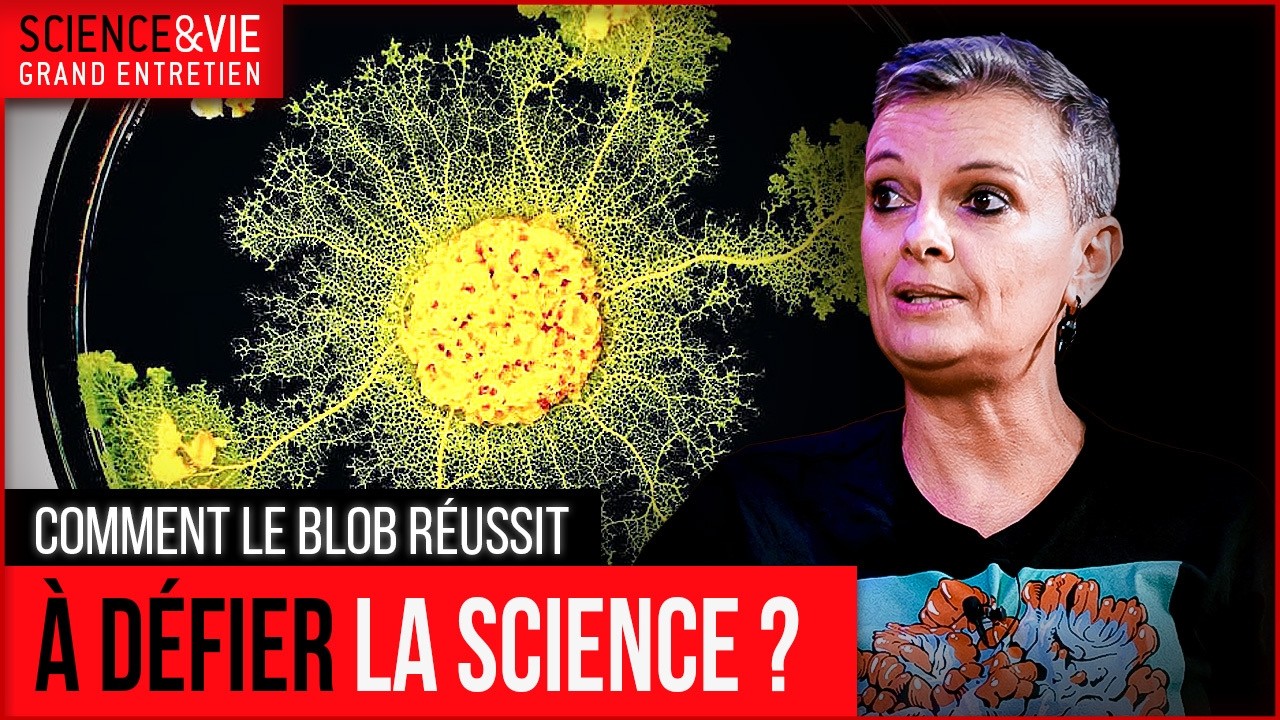
L'Intelligence du Blob et le Pouvoir Manipulateur des Champignons
Keywords
Summary
180 words
Critical Evaluation
Value of the Information & Strength of the Argument
The video provides substantial scientific value by presenting original research findings from a leading expert. Dussutour explains complex concepts clearly, using analogies and detailed descriptions of experimental setups. Her argumentation is solid, grounded in peer-reviewed studies and ongoing research. She carefully distinguishes between hypotheses and evidence, such as when explaining the mechanisms of blob learning or the self-medication behavior in ants. The discussion of the citizen science experiment highlights methodological rigor, including the use of machine learning to analyze a massive dataset. The interview also offers insights into the broader implications of the research, such as applications in traffic management and understanding climate change impacts.
Scientific Rigor, Source Quality, Title Accuracy
The scientific rigor is high, as the guest is a recognized researcher who references her own publications and ongoing studies. The quality of sources is good, though the video does not provide direct citations or links to specific papers; it relies on the expert’s testimony. The title accurately reflects the content, covering the three main topics. The video includes a brief sponsorship segment, but it does not detract from the scientific content. The production is professional, with clear audio and visuals.
201 words
Title / Content Match
The title accurately reflects the content, which covers blob intelligence, ant traffic organization, and fungal manipulation.
Quality & Reliability
8/10
Interview with a CNRS research director, Audrey Dussutour, who presents her own peer-reviewed research and ongoing studies. The content is scientifically grounded, with clear explanations of experimental methods and results. Some claims are presented as exclusive previews of unpublished data, which slightly reduces verifiability.
Key Moments
Markers derived by PSI from the transcript: the creator did not define chapters.
- Introduction to the blob: what it is, its characteristics, and its abilities.
- Discussion of the citizen science experiment on blob and climate change, including methodology and preliminary results.
- Transition to ant research: how ants avoid traffic jams and the fundamental diagram.
- Introduction to fungi: their classification, evolution, and relationship to animals.
- Discussion of zombie fungi and the manipulation of insect hosts, referencing 'The Last of Us'.
- Impact of fungi on human health: poisons and medicines, including antibiotics and immunosuppressants.
Cited Sources
- Propulse Media — Production company of the video.
Concurring Sources
- Dussutour, A. et al. (2019) Ant traffic rules — Referenced in the video as a publication on ant traffic flow.
- Dussutour, A. et al. (2023) Blob learning and memory — Referenced as the study on blob habituation.
Contribution & Novelties
The video offers a unique perspective by presenting recent, unpublished findings from ongoing research, such as the memory effects of heat waves on different blob species. It also provides a comprehensive overview of the guest’s work, connecting topics like collective intelligence and parasitism. The discussion of ant self-medication and the role of pillars in traffic flow adds novel insights.
Pour aller plus loin :
- Physarum polycephalum — Wikipedia article on the blob, providing background on its biology and behavior.
- Collective animal behavior — Overview of collective behavior in animals, including ants.
- Self-medication in animals — Wikipedia article on self-medication, relevant to the ant behavior discussed.
- Fungal infection and host manipulation — Information on fungi that infect insects, including manipulation mechanisms.
120 words
Radar Profile
The radar profile shows high scores in information quantity and technical level, reflecting the dense scientific content. The quality and reliability scores are also high, indicating a trustworthy source. The overall balance suggests a well-rounded, expert-led discussion.