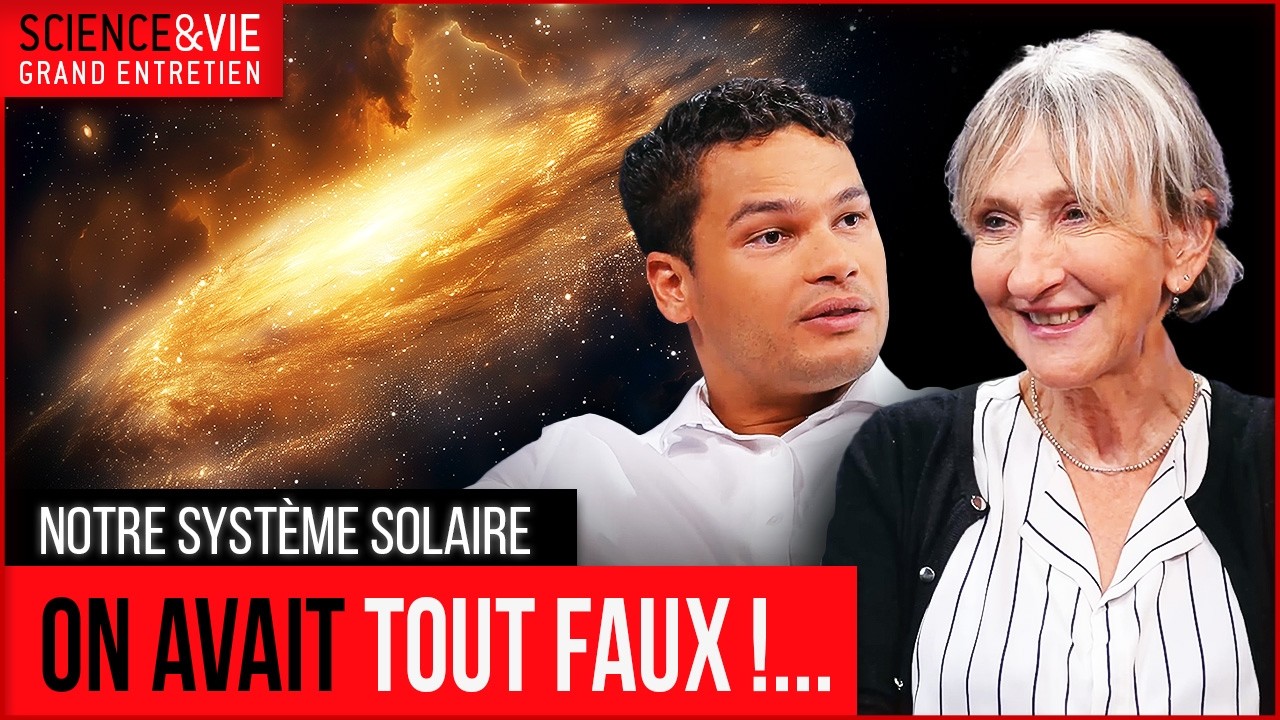
Une planète en diamant ? La vérité sur les exoplanètes
Keywords
Summary
175 words
Critical Evaluation
Value of the Information & Strength of the Argument
The video provides substantial value by offering an expert’s perspective on exoplanet research, covering both foundational concepts and recent discoveries. The argumentation is solid, as Deleuil explains complex topics with clear reasoning and real-world examples. She effectively demonstrates how scientific knowledge evolves, using the 51 Pegasi b discovery to illustrate how new data can overturn established theories. The discussion on detection methods is particularly strong, as she explains the physical principles behind each technique and their inherent biases. The interview also highlights the importance of space missions like CoRoT and PLATO, providing context for how technological advancements drive scientific progress. The inclusion of asteroseismology and the role of AI adds depth, showing the interdisciplinary nature of modern astrophysics. Overall, the information is well-structured and presented in an accessible yet scientifically accurate manner.
Scientific Rigor, Source Quality, Title Accuracy
The scientific rigor is high, given Deleuil’s credentials as a professor and researcher at a recognized laboratory. She speaks from direct experience, particularly with the CoRoT mission, lending authority to her statements. However, the interview format lacks explicit citations to specific papers or studies, which would enhance verifiability. The title accurately reflects the content’s focus on exoplanets, with the diamond planet anecdote serving as an engaging hook, though the video covers a broader range of topics. The description provides links to the production company and social media, but no direct scientific sources. The chapter structure is well-organized, allowing viewers to navigate to specific topics. Overall, the content is reliable for a general audience, but viewers seeking detailed references would need to consult additional resources.
271 words
Title / Content Match
The title is catchy and reflects the content's focus on exoplanets, including the diamond planet anecdote, but the video covers a broader range of topics.
Quality & Reliability
8/10
High credibility due to the guest's academic position and expertise, balanced by the popularized format and lack of detailed citations.
Chapters
- Existe-t-il vraiment des planètes en diamant ?
- Parcours d’une astrophysicienne : Magali Deleuil
- Des étoiles en fin de vie aux disques de poussière
- Comment meurt une étoile ? (Fusion, fission et énergie)
- Supernova vs Nébuleuse : Le destin lié à la masse
- Sommes-nous faits de fer ? L'origine des éléments lourds
- La naissance des planètes : Des poussières aux planétésimaux
- La révolution de 1995 : La découverte de 51 Pegasi b
- Pourquoi les exoplanètes ont-elles bouleversé nos théories ?
- Sismologie stellaire : Écouter vibrer le cœur des étoiles
- Comment détecter une planète ? (Vitesse radiale vs Transit)
- Le problème des géantes gazeuses proches de leur soleil
- Magnétosphère et aurores polaires : Chercher les ondes radio
- La méthode du transit : Analyser l'ombre d'un monde
- La mission spatiale CoRoT : Une aventure française
- Comment mesurer la densité d'une planète à des années-lumière ?
- Analyser la lumière : La chimie des atmosphères stellaires
- Modéliser l'intérieur des planètes : L'énigme de la planète diamant
- Les découvertes marquantes : CoRoT-3b et CoRoT-7b
- L’héritage de Kepler et la diversité des systèmes planétaires
- Mission PLATO (2027) : La quête d’une "Terre 2.0"
- Migration planétaire : Pourquoi nos géantes ne bougent plus ?
- L'Intelligence Artificielle au service de l'astronomie
- L'esprit critique du chercheur face à l'IA
Cited Sources
- Propulse Media — Production company for the video
Concurring Sources
- NASA Exoplanet Archive — A database of confirmed exoplanets, supporting the existence of diverse planetary systems.
Contribution & Novelties
The video offers an original contribution by presenting an expert’s personal journey through the field of exoplanet research, from early work on circumstellar disks to involvement in the CoRoT mission. It provides unique insights into the challenges and discoveries in the field, such as the unexpected nature of hot Jupiters and the ongoing search for Earth analogs. The discussion on the role of AI in astronomy is timely and adds a modern perspective.
Pour aller plus loin :
- Exoplanet — Provides a comprehensive overview of exoplanet discovery and characterization.
- 51 Pegasi b — Details the first exoplanet discovered around a Sun-like star.
- CoRoT — Information on the French space mission that detected transiting exoplanets.
- PLATO (spacecraft) — Upcoming ESA mission to find Earth-like planets.
- Asteroseismology — Study of stellar oscillations, a key technique mentioned in the video.
137 words
Radar Profile
The radar profile shows high scores in information quantity, quality, and reliability, reflecting the expert's deep knowledge and the interview's informative nature. The technical level is moderate, indicating that the content is accessible to a general audience while still providing substantial scientific depth.