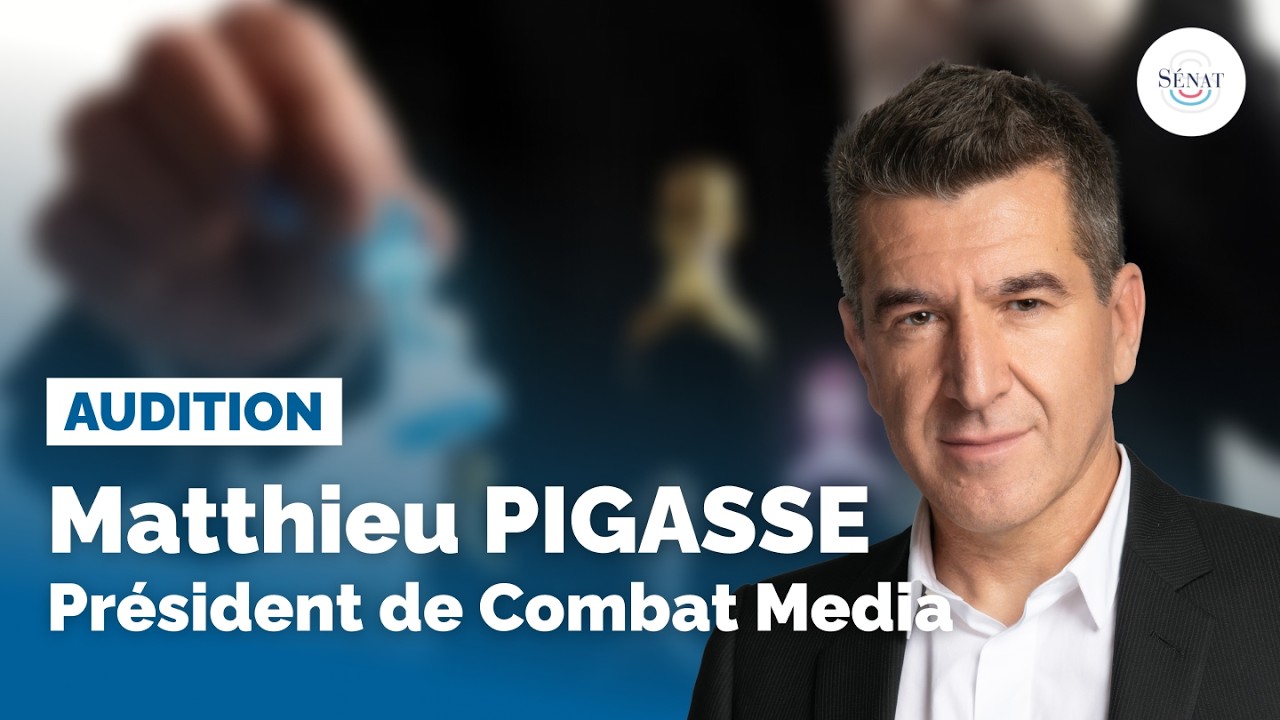
Audition de Matthieu Pigasse
Keywords
Summary
168 words
Critical Evaluation
Value of the Information & Strength of the Argument
The value of the information lies in its primary source nature: Pigasse and Hoog provide direct testimony about the operations and financing of Combat Media, offering insights into the media landscape and the relationship between private media ownership and public policy. The argumentation is structured and coherent, with Pigasse clearly articulating his position on editorial independence and the group’s cultural mission. However, the discussion is largely defensive, with Pigasse justifying his actions rather than engaging in a critical analysis of potential conflicts of interest. The senators’ questions are pointed and aim to uncover potential influence strategies, but the responses often rely on assertions of good faith and legal compliance rather than providing concrete evidence of safeguards.
Scientific Rigor, Source Quality, Title Accuracy
The hearing is a formal parliamentary proceeding, which lends high credibility to the statements made under oath. The sources cited are primarily the witnesses’ own declarations and references to their media outlets’ charters and legal frameworks. The title accurately reflects the content, as it is indeed an audition of Matthieu Pigasse. The discussion is rigorous in its legal and procedural context, but the lack of external sources or data limits the ability to verify claims independently. The senators’ questions are well-informed and demonstrate a thorough understanding of the issues, contributing to the overall rigor of the session.
228 words
Title / Content Match
The title accurately describes the content: a hearing of Matthieu Pigasse before a Senate commission.
Quality & Reliability
8/10
The content is a formal parliamentary hearing, providing primary source testimony under oath. The information is first-hand and legally binding, but the analysis is limited to the perspectives of the witnesses and senators.
Key Moments
Markers derived by PSI from the transcript: the creator did not define chapters.
- Opening of the hearing, oath-taking by Matthieu Pigasse and Emmanuel Hoog.
- Introduction by the commission president and rapporteur outlining the inquiry's scope.
- Pigasse's introductory remarks: his background, the creation of Combat Media, and his commitment to culture.
- Emmanuel Hoog details the group's structure: print, radio, audiovisual production, and festivals.
- Discussion on the group's profitability and market-based resources, with no public subsidies.
- Rapporteur questions Pigasse on the boundary between political engagement and influence.
- Pigasse explains the editorial independence and the 'étanchéité' between his personal engagements and the media.
- Discussion on the charters and governance mechanisms ensuring independence, referencing the Le Monde group.
- Questions about festivals and pressures from local authorities on programming, with examples like Kneecap.
- Further exchanges on the role of private financing in cultural events and the need for transparency.
Cited Sources
- Commission d'enquête sur le financement des politiques publiques par des structures de droit privé — The hearing is part of this commission's work, and the page provides context and related documents.
- Combat Media — Official website of the media group, mentioned as the entity owned by Matthieu Pigasse.
- Radio Nova — One of the group's radio stations, cited as an example of its media properties.
- Les Inrockuptibles — A print magazine owned by the group, mentioned in the hearing.
Concurring Sources
- Sénat - Commission d'enquête sur le financement des politiques publiques — The official commission page provides the mandate and context, aligning with the hearing's purpose.
Dissenting Sources
- Rapport d'information sur les ingérences étrangères — This report highlights risks of foreign interference in French media, which contrasts with Pigasse's assertion of full transparency and independence.
Contribution & Novelties
The hearing provides a unique primary source insight into the operations and governance of a French media group, particularly regarding the separation between owner’s political engagement and editorial independence. It contributes to the ongoing debate on media concentration and influence on public policy. The discussion on pressures on festival programming from local authorities is a novel aspect, highlighting a less-visible dimension of cultural policy influence.
Pour aller plus loin :
- French Senate inquiry commissions — Official page explaining the role and powers of Senate inquiry commissions.
- Media ownership and independence — Overview of media ownership structures and their implications for editorial independence.
- Cultural policy in France — Background on French cultural policy and the role of private actors.
- Cancel culture — Concept referenced by Pigasse in the context of pressures on festival programming.
133 words
Radar Profile
The radar profile shows high scores in information quantity, quality, and reliability, reflecting the primary source nature and formal setting. The technical level is moderate, as the discussion is accessible but involves legal and political nuances. The overall balance indicates a reliable and informative content, though limited in scope to the witnesses' perspectives.
💬 Sur les 0 commentaires analysés, aucune tendance n'est disponible.