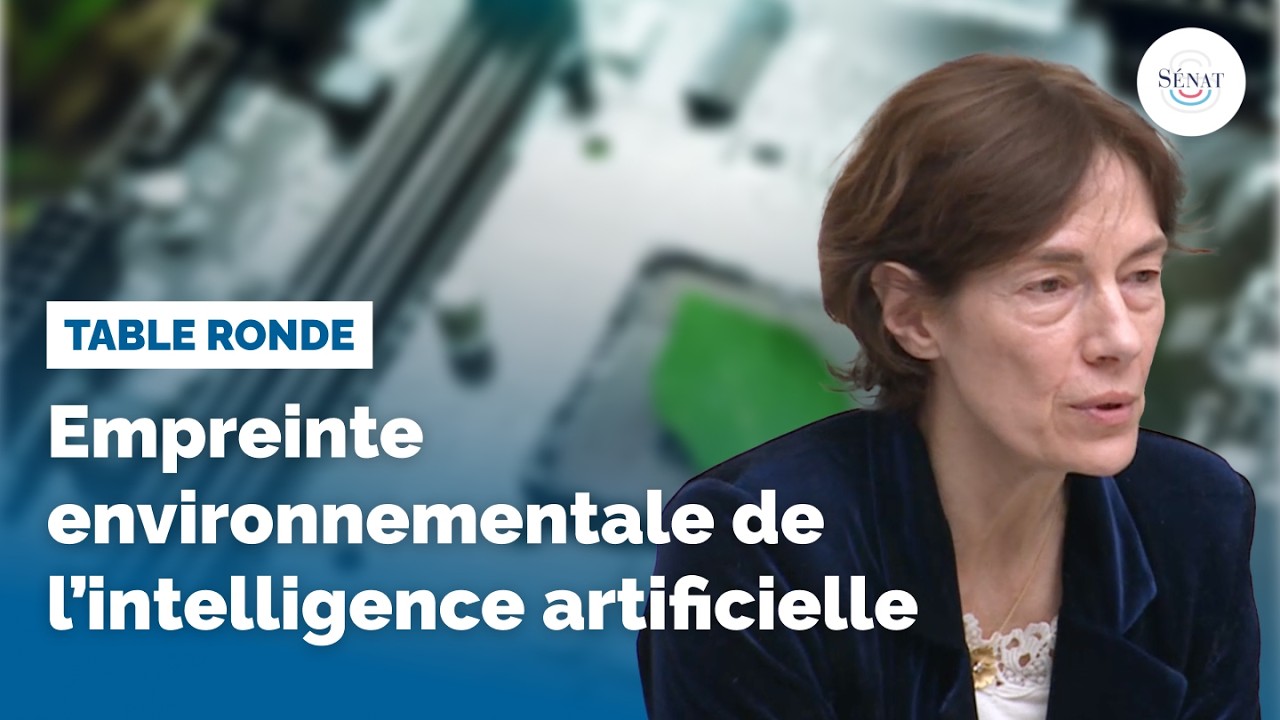
Empreinte environnementale de l’intelligence artificielle
Keywords
Summary
175 words
Critical Evaluation
Value of the Information & Strength of the Argument
The value of the information is high, as it provides a comprehensive overview of the environmental challenges posed by AI, supported by data and expert analysis. The argumentation is solid, with each expert contributing distinct perspectives: ADEME offers quantitative scenarios and policy recommendations, Pitron brings a critical view on material dependencies, Bouverot discusses institutional frameworks, and Mistral provides industry insights. The discussion is well-structured, with clear links between the environmental impacts and potential solutions. However, the debate format limits depth, and some claims, such as the ‘without regret’ relocation of data centers, are presented as consensus but may warrant further scrutiny.
Scientific Rigor, Source Quality, Title Accuracy
The scientific rigor is generally high, with references to specific studies (ADEME reports, ARCEP data) and reports (e.g., the September 2024 report). The sources are credible and relevant. The title accurately reflects the content. The discussion is well-informed, though it remains a political debate rather than a peer-reviewed analysis. The experts demonstrate expertise, and the moderation ensures a balanced exchange. No significant discrepancies between title and content were noted.
185 words
Title / Content Match
The title accurately reflects the content, which focuses on the environmental footprint of AI.
Quality & Reliability
8/10
The roundtable features recognized experts from ADEME, IRIS, the AI and Digital Council, and Mistral AI, providing a balanced and informed discussion. The content is institutional and fact-based, with references to specific studies and reports. However, as a political debate, it includes normative positions and lacks peer-reviewed rigor.
Key Moments
Markers derived by PSI from the transcript: the creator did not define chapters.
- Introduction by the commission president, outlining the mission and introducing the experts.
- Guillaume Chevrolier questions the experts on the bilan of the 2021 law and the role of the observatory.
- Damien Michalet asks about the material footprint of AI, focusing on critical metals and copper recycling.
- Simon Uzena raises questions about GPU lifecycle, frugal AI, and the need for transparent data.
- Baptiste Perrissin Fabert presents ADEME's findings on data center energy consumption and the importance of relocating to France.
- Guillaume Pitron discusses the material dependence and the role of critical metals in AI infrastructure.
- Anne Bouverot talks about the AI and Digital Council's recommendations and the need for international cooperation.
- Audrey Herblin-Stoop explains Mistral's life-cycle assessment and their commitment to transparency.
- Q&A session with senators, addressing policy implications and future actions.
- Concluding remarks and closing of the roundtable.
Cited Sources
- ADEME study on data center energy consumption — Baptiste Perrissin Fabert presents results from ADEME's prospective study on data center electricity consumption in France.
- ARCEP-ADEME report on digital environmental footprint — Mentioned as the basis for the 4.4% CO2 emissions figure for digital in France in 2022.
- Mistral AI life-cycle assessment — Audrey Herblin-Stoop discusses Mistral's publication of a full life-cycle assessment of their AI models.
- Report of September 16, 2024 — Simon Uzena references this report for recommendations on international cooperation and environmental impact assessment.
Concurring Sources
- ADEME report on digital environmental footprint — Consistent with the figures cited by Perrissin Fabert on the share of digital in CO2 emissions.
- IEA report on data centres and AI — The IEA has projected significant growth in data centre electricity consumption, aligning with the concerns raised.
Dissenting Sources
- Google's environmental report — Mistral's representative criticized Google's methodology for not including training phase in their footprint calculations, leading to underreported impacts.
Contribution & Novelties
This roundtable provides a unique multi-stakeholder perspective on the environmental footprint of AI, combining institutional, industrial, and geopolitical viewpoints. It highlights the shift from terminal manufacturing to energy consumption as the dominant impact, and the strategic importance of data center location. The discussion also underscores the need for transparency and standardized metrics, as exemplified by Mistral’s pioneering life-cycle assessment.
Pour aller plus loin :
- Life-cycle assessment — Methodological framework for evaluating environmental impacts.
- Critical raw materials — EU list of materials with high economic importance and supply risk.
- Green AI — Approaches to reduce the environmental impact of AI.
- Data center energy efficiency — Overview of energy consumption and efficiency measures.
111 words
Radar Profile
The radar profile shows high scores in quantity and quality of information, reflecting the depth and credibility of the discussion. The technical level is moderate, suitable for a parliamentary audience, while reliability is high due to the expertise of the speakers. The overall balance indicates a well-rounded and informative debate.
💬 No comments were provided for analysis.